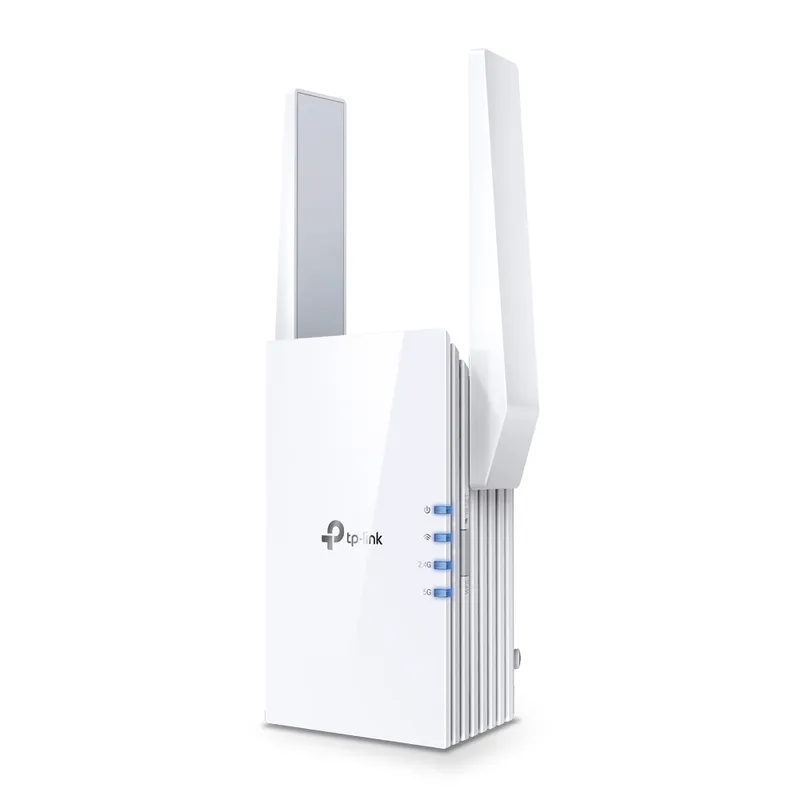
 Official manufacturer image
Extend WiFi without running Ethernet to the device
TP-Link RE705X
Check price on AmazonSponsored link · no live price shown

 Best picksBest WiFi Extenders for Different Homes in Ireland
 Best picksThe Best Dashcams for Cars in 2026
 Best picksBest Headlamp Torches for Hiking, Work and Everyday Use
 Best picksBest Meat Thermometers for Cooking, Roasting and BBQ
 Best picksBest cordless strimmers for Irish gardens: compared
 Best picksBest Winter Gloves for Cold, Wet Days in Ireland (2026)
 Best picksBest Portable Air Coolers for Irish Homes in 2026
 Best picksBest air purifier for bedroom in Ireland: five models compared
Gearjury may earn a commission from qualifying retailer links.
Head to head
Choose a range extender when a wireless relay suits the gap; choose an access point when you can run network cable to the coverage area.
Official manufacturer image
Extend WiFi without running Ethernet to the device
 Official manufacturer image
Add WiFi where a network cable and PoE are available
The verdict
TP-Link describes RE705X as a wireless range extender that can join a compatible EasyMesh router.
Ubiquiti identifies U6 Mesh as an access point with PoE power and flexible mounting.
RE705X also has AP mode through its Gigabit Ethernet port.
| Official manufacturer imageTP-Link RE705X | Official manufacturer imageUbiquiti UniFi U6 Mesh | |
|---|---|---|
| Product role | Range extender with AP mode | Access point |
| Wireless standard | WiFi 6 | WiFi 6 |
| Uplink | Wireless extender mode or Ethernet AP mode | Wired network connection |
| Ethernet | Gigabit port | Ethernet/PoE connection |
| Mesh ecosystem | EasyMesh-compatible router | UniFi Network |
| Placement | Socket near usable router signal | Mount where wired network and power are available |
| Check price on Amazon | Check price on Amazon |
Common questions
An access point creates WiFi from a wired network connection. A range extender usually receives WiFi from the router and relays it farther; some models can switch to wired access point mode.
A wired access point usually makes more sense when you can run Ethernet to the area. An extender is easier where cabling is impractical and the router signal remains usable at its location.
It needs an upstream connection to the router, either wireless or wired in access point mode. Without that connection, it cannot provide access to the router’s internet service.
Yes, if the network design and configuration support both. Place and configure each device to avoid unnecessary overlap, and follow the relevant manufacturer’s guidance.
Keep exploring

A WiFi extender can carry an existing router signal into a weak-coverage area. Choose a plug-in repeater for a simple dead zone, or consider powerline when walls make a wireless link unreliable.
For a general indoor pick, start with TP-Link RE705X: it has WiFi 6, a Gigabit Ethernet port and access point mode. RE550, RE315 and a powerline kit suit different budgets and layouts; outdoor use needs purpose-built hardware.
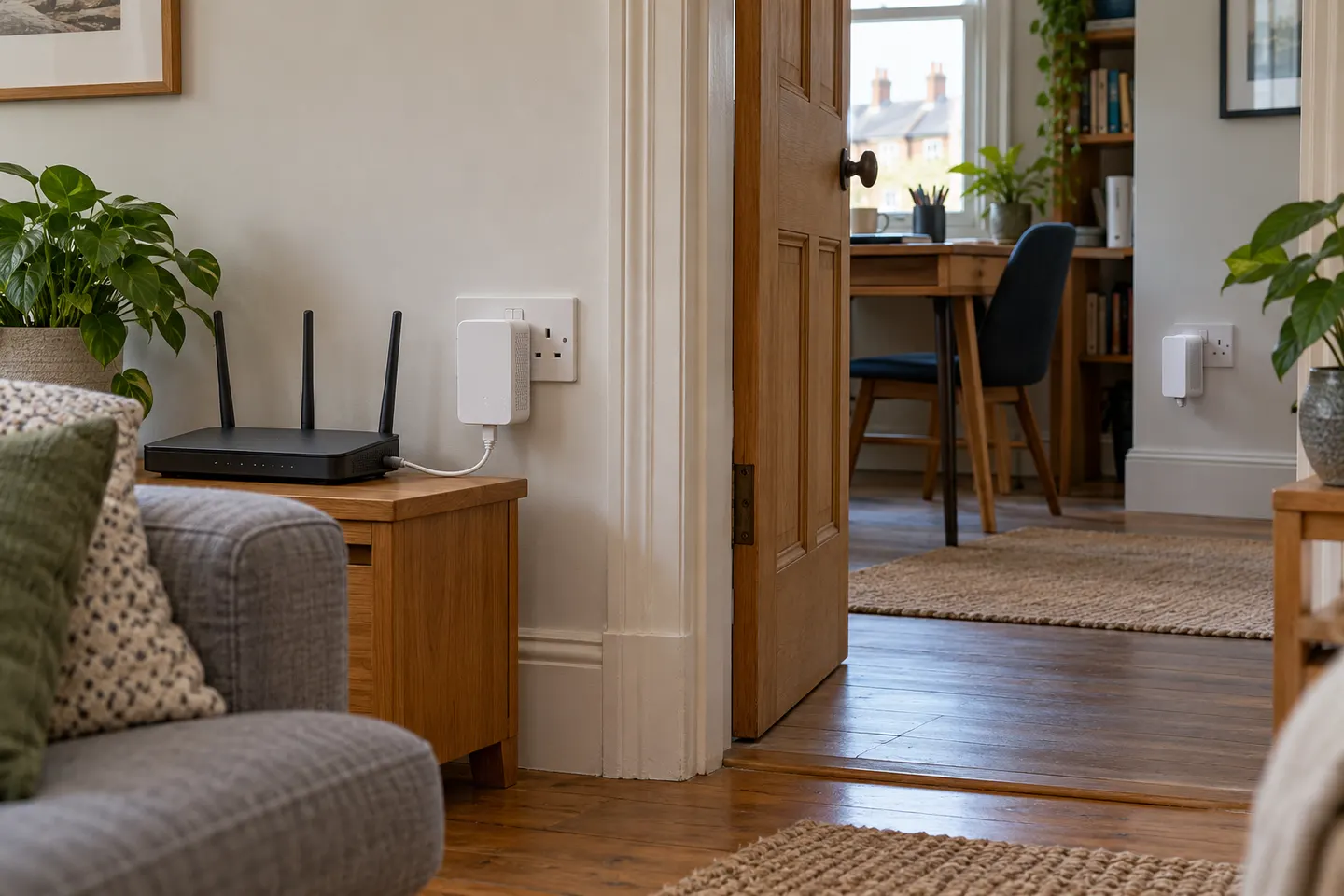
An extender relays WiFi; a powerline adapter sends network data over electrical wiring. The right option depends on the route between rooms.
The RE705X is the WiFi 6 pick with a Gigabit port; RE550 offers WiFi 5 and three external antennas. For a compact dual-band option, compare RE315.