Gearjury may earn a commission from qualifying retailer links. This does not change our editorial guidance.
Guide
The Difference Between an Air Conditioner and an Evaporative Cooler
An air conditioner uses a refrigerant cycle to move heat outdoors and can remove moisture. An evaporative cooler uses water evaporation to cool and humidify incoming air, making it a better fit for dry conditions.
GGearjury editorial team · Updated October 22, 2026· 5 min
01
What is the difference between an air conditioner and an evaporative cooler?
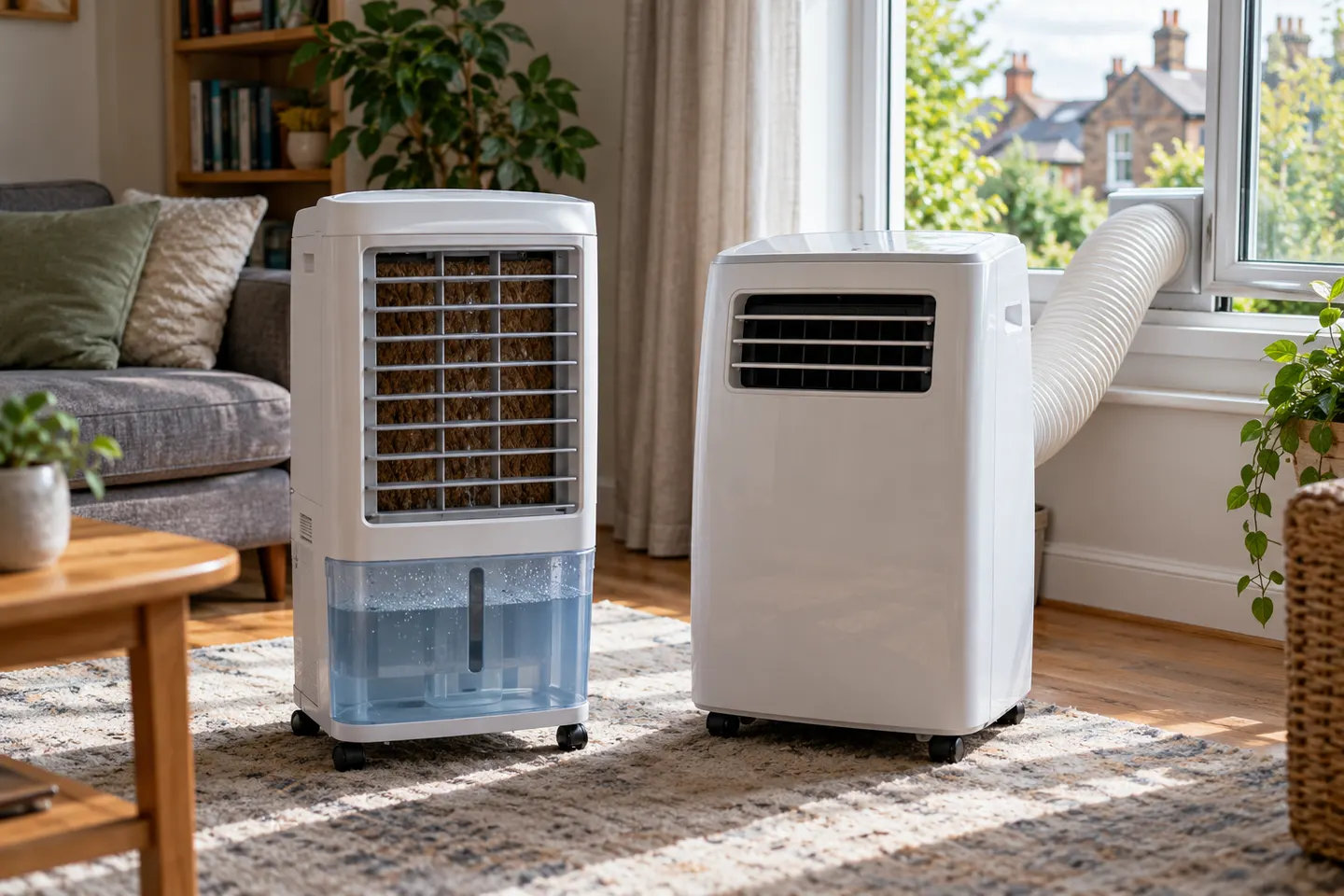
The difference between air conditioner and evaporative cooler design is the cooling process. A conventional air conditioner transfers heat through a refrigerant system; an evaporative cooler passes air over wet media, where evaporation lowers the air temperature while adding moisture. The two terms describe different equipment, not interchangeable versions of one appliance.
02
How does each system affect indoor humidity?
An air conditioner can remove moisture as indoor air passes across a cold coil. Direct evaporative cooling adds water vapor to the supply air. That makes humidity a key selection factor: extra moisture may be unwelcome in a humid room, while dry air can suit evaporative cooling better.
03
Which works better in a dry or humid climate?
Evaporative coolers are generally most suitable for hot, dry conditions because evaporation becomes less effective as humidity rises. A conventional air conditioner is more adaptable when outdoor air is humid and can help with moisture removal. Local climate, room layout and ventilation still affect results.
04
Portable air conditioner vs evaporative cooler
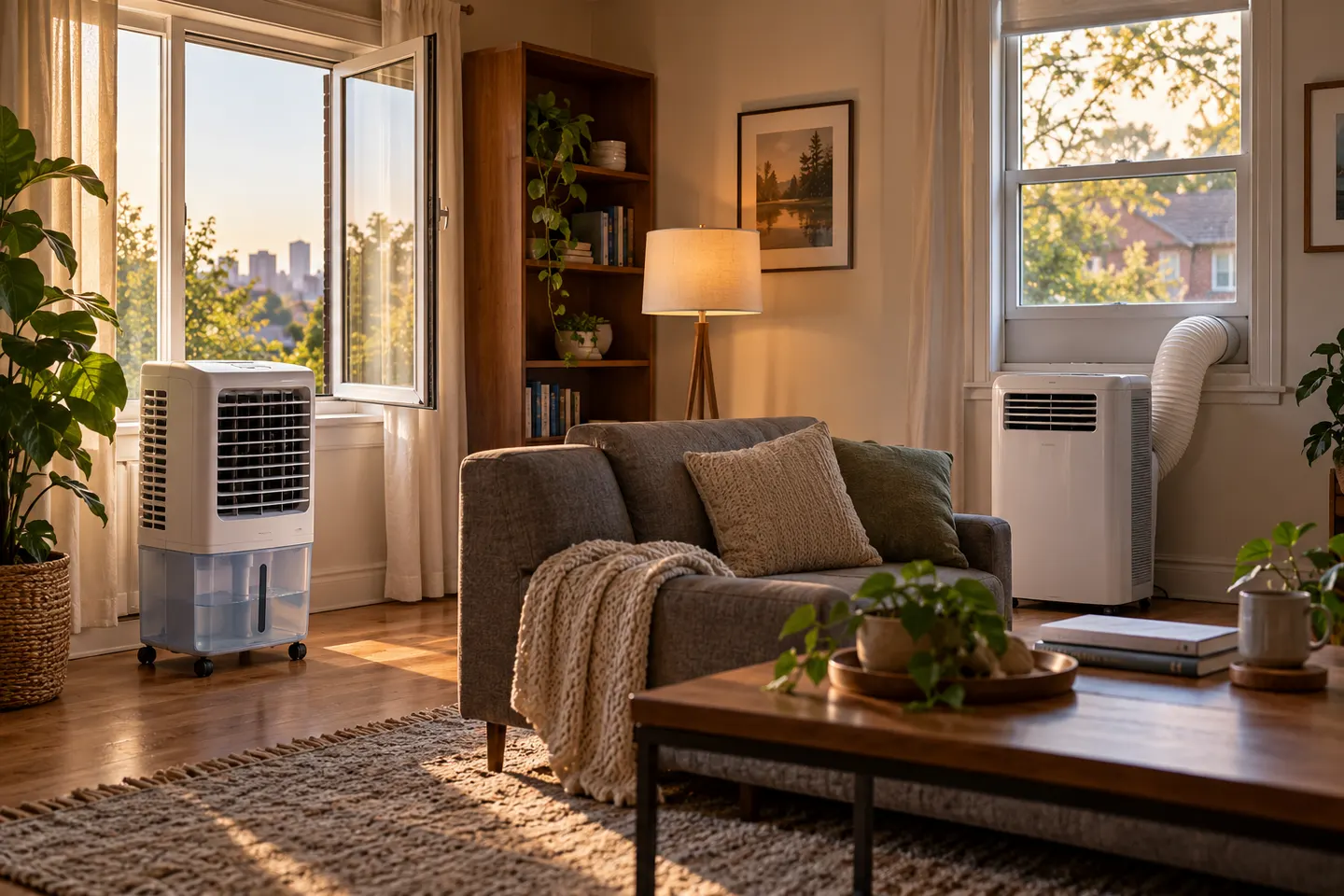
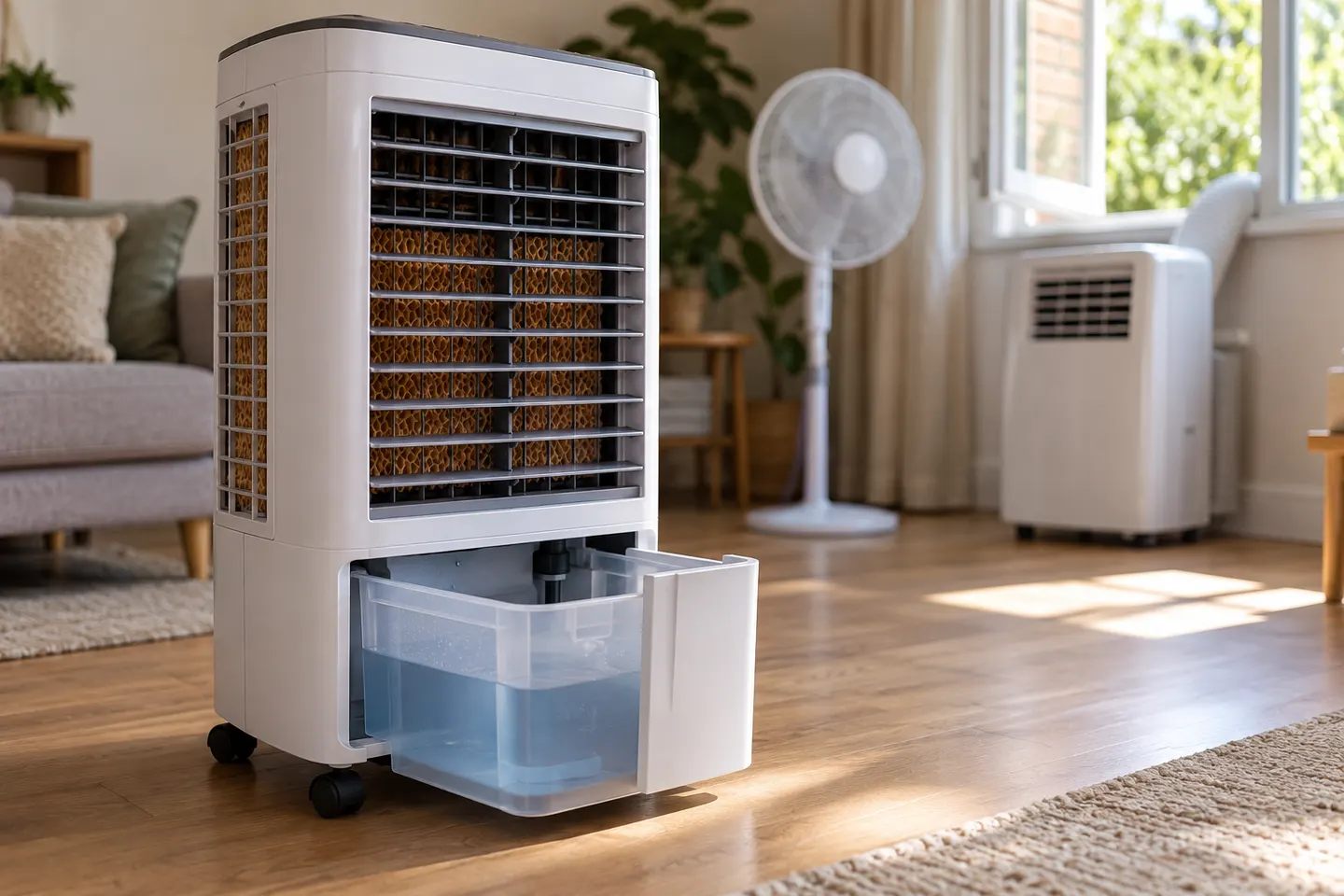
A portable air conditioner uses a compressor and typically needs an exhaust hose routed to a window; check the installation and drainage instructions for the specific unit. A portable evaporative cooler uses a water reservoir or supply and needs an appropriate path for air to move through the room. Compare the setup burden as well as the cooling method.
05
Air cooler vs portable air conditioner: what should you compare?
First check whether the listing means an evaporative cooler or merely a fan marketed as an air cooler. Then compare the stated operating conditions, room guidance, water or exhaust requirements, maintenance and electrical supply. A fan circulates air but does not use a refrigeration cycle to lower room temperature.
06
How to choose between the two
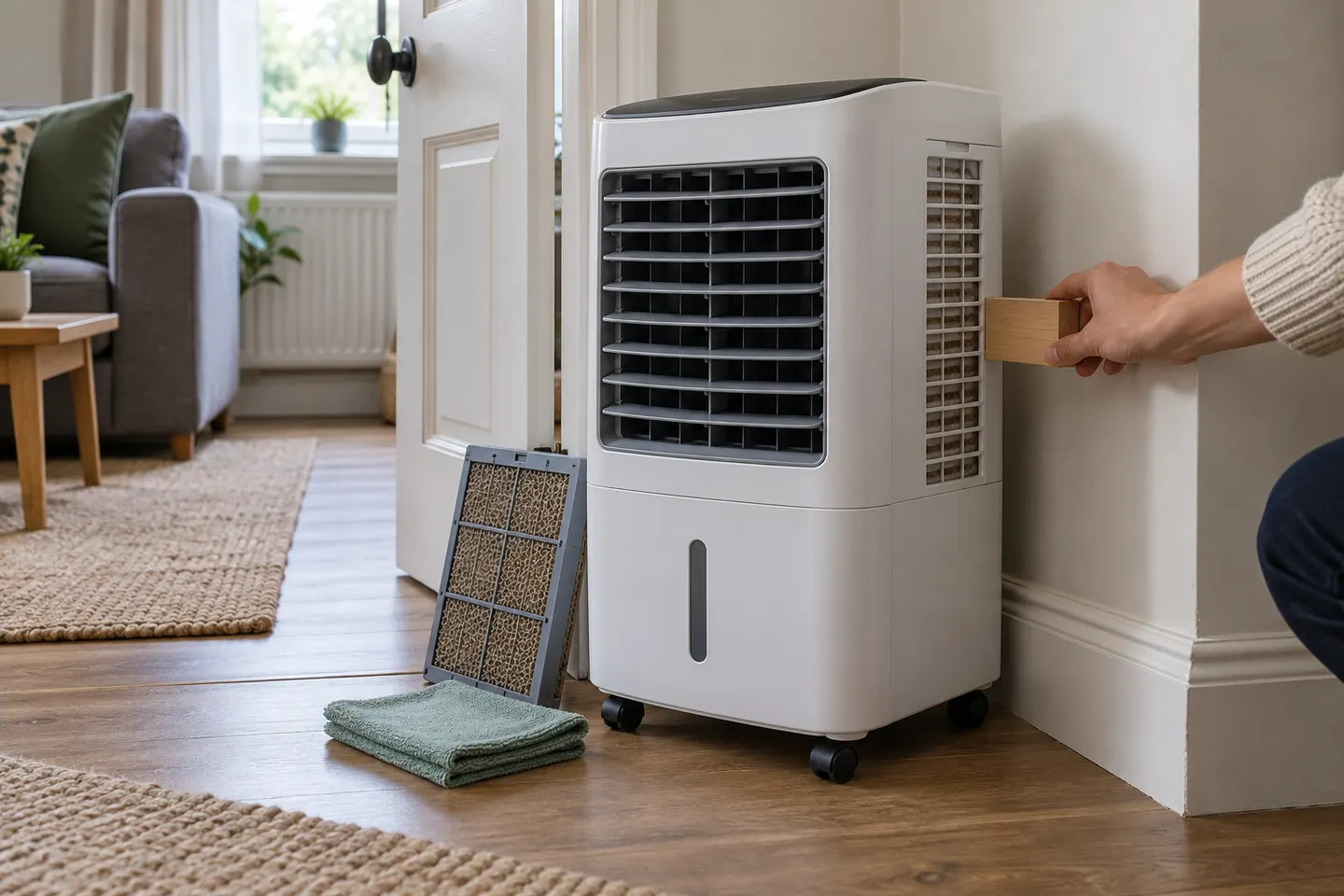
Choose by the problem you need to solve: lowering temperature while managing humidity, adding a breeze, or cooling a dry space through evaporation. Confirm the manufacturer's room and climate guidance, plan for window or ventilation needs, and account for filter, pad and water-system cleaning.
Common questions
Questions before you buy
What is the difference between air conditioner and evaporative cooler?
An air conditioner moves heat using a refrigerant system and can remove moisture. An evaporative cooler uses water evaporation, which cools and humidifies the air; it is usually better suited to dry climates.
What is the difference between an evaporative cooler and an air conditioner?
The evaporative cooler relies on water changing to vapor and needs suitable air movement. The air conditioner transfers heat through a refrigerant cycle and is generally the more suitable option when humidity control matters.
What is the difference between a portable air conditioner and an evaporative cooler?
A portable air conditioner usually exhausts heat through a window hose. An evaporative cooler uses water and does not use that same compressor-and-exhaust arrangement, but it adds humidity and needs ventilation suited to its operation.
Can an evaporative cooler work in a humid climate?
It may provide limited cooling, but high humidity reduces evaporation and can make the added moisture uncomfortable. Check the manufacturer's climate guidance and compare it with a refrigerant-based air conditioner.
Is an air cooler the same as a portable air conditioner?
No. Air cooler can mean a fan or an evaporative cooler, depending on the product. A portable air conditioner uses a refrigeration system, so check the product's stated cooling technology before comparing it.
An evaporative cooler can make a nearby breeze feel cooler, but it is not a portable air conditioner. Climate and ventilation determine which option fits.
Evaporative coolers circulate air through wet media; portable air conditioners move heat through an exhaust hose. The better choice depends on humidity and room setup.
Match an evaporative cooler’s airflow and water capacity to the area you occupy. These units move air and add moisture; they do not replace a refrigeration AC.
A portable air cooler can mean a fan-based evaporative unit or a portable air conditioner. Start with your climate: evaporative models add moisture and suit dry conditions, while air conditioners actively remove heat from a room.
Your privacy
We use cookies and similar technologies. Necessary ones keep the site working. With your permission we also use statistics cookies (Google Analytics and Microsoft Clarity) to understand which guides help readers. You can accept all, reject all or choose. You can change your choice at any time from "Cookie settings" at the bottom of every page. Cookie policy