Gearjury may earn a commission from qualifying retailer links.
Guide
What Is the Difference Between an Air Conditioner and an Evaporative Cooler?
An air conditioner refrigerates and recirculates indoor air; an evaporative cooler passes air over water and needs ventilation. Climate and home layout determine suitability.
GGearjury editorial team · Updated 22 October 2026· 5 min
01
How refrigerated air conditioning works
A conventional air conditioner transfers heat from indoor air to outside using a refrigeration cycle. A split system moves heat through indoor and outdoor units; a portable air conditioner generally exhausts hot air through a window hose.
02
How evaporative cooling works
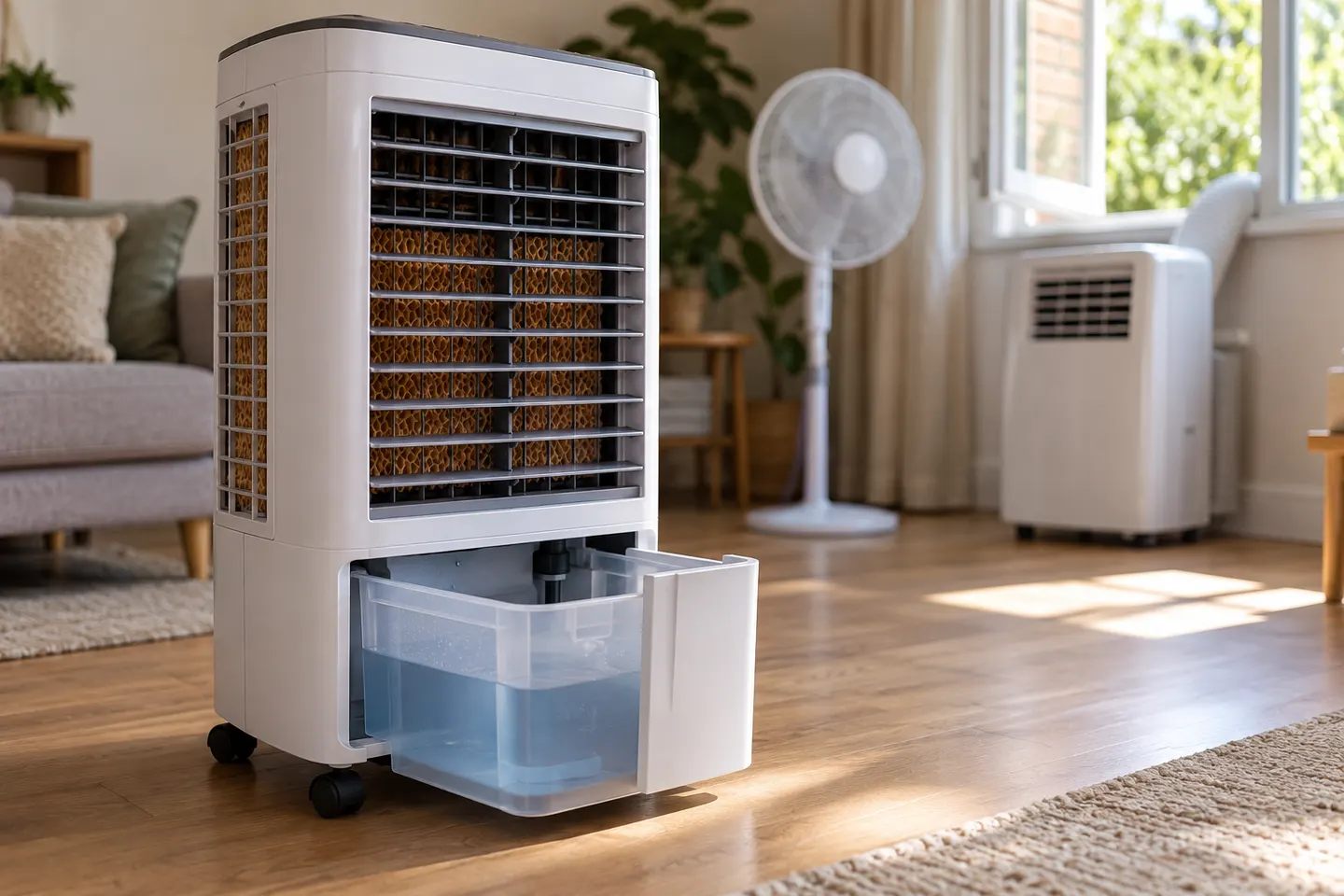
An evaporative unit draws outdoor air through wet pads. Water evaporation lowers the air temperature while adding moisture, and the system relies on a path for air to leave the home.
03
Difference between air con and evaporative cooler
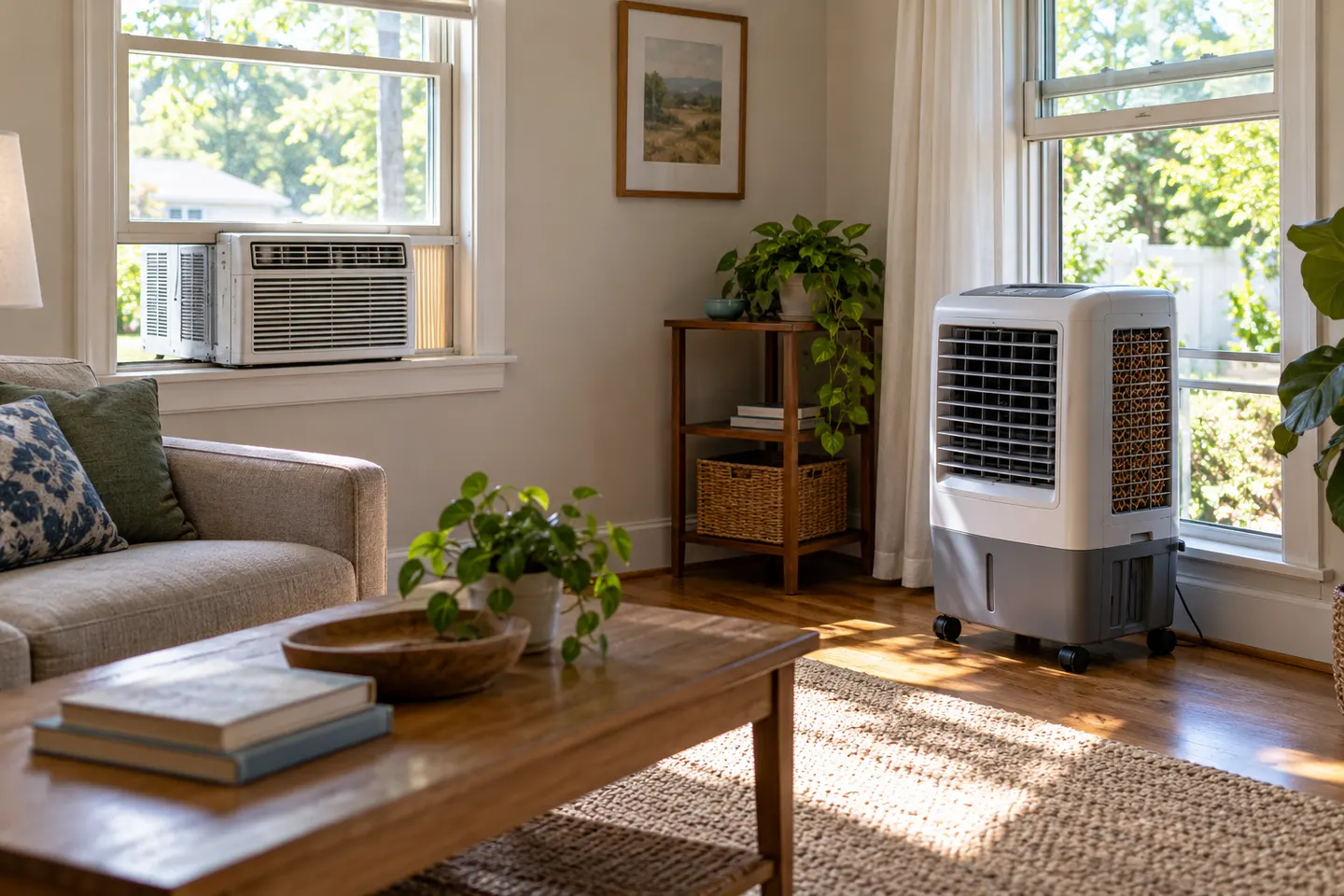
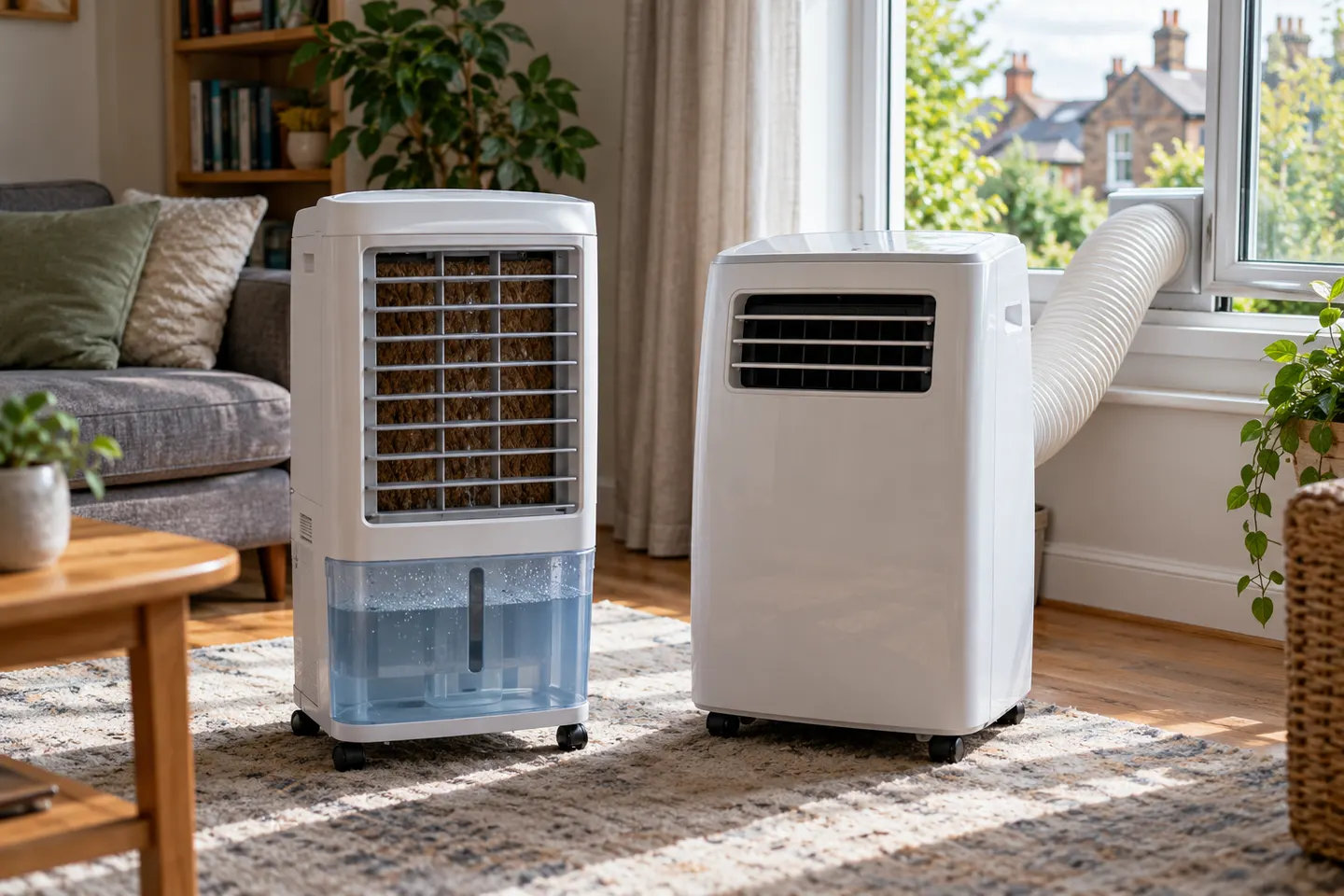
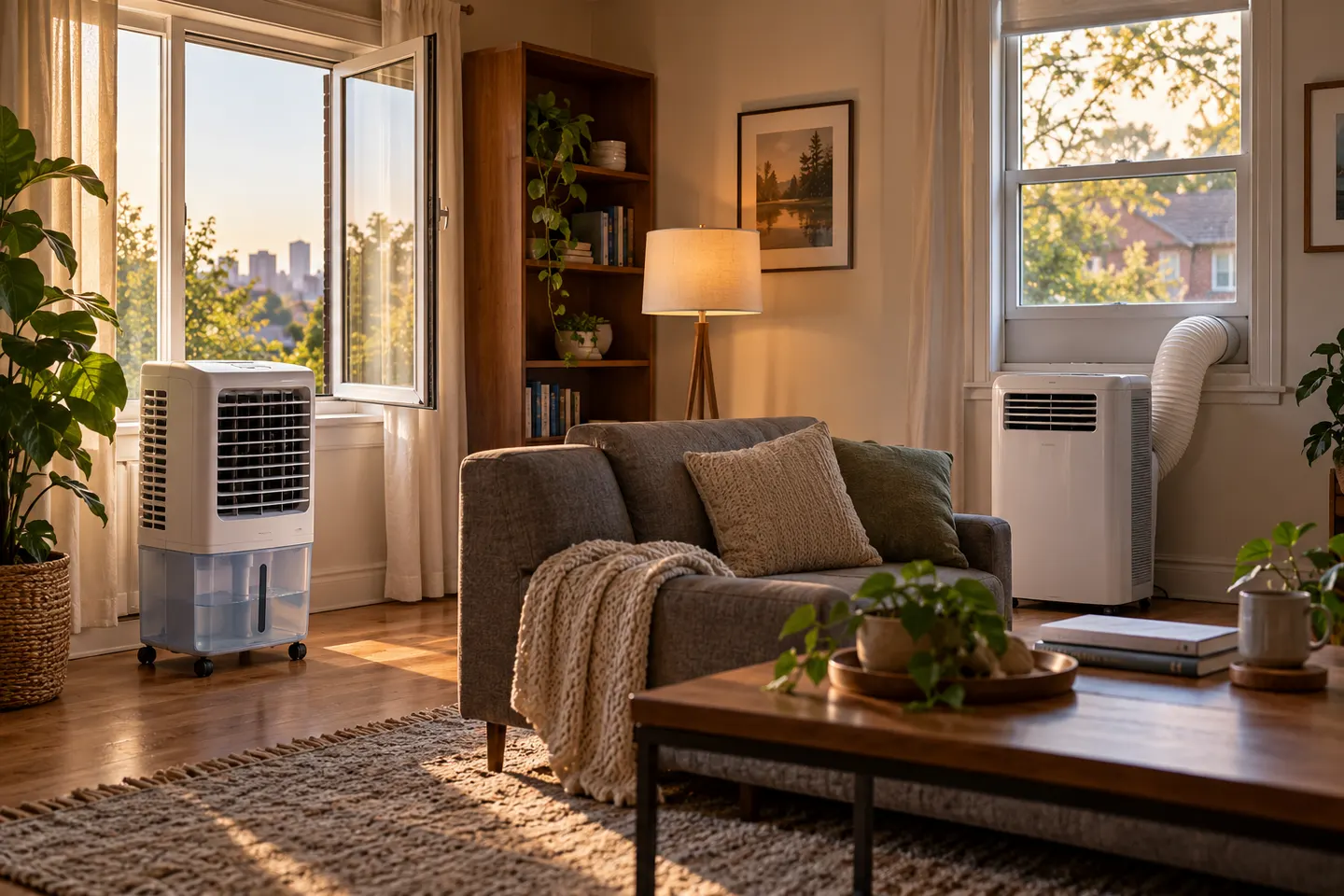
Refrigerated air conditioning can operate with windows closed and removes heat from the room. Evaporative cooling uses fresh outside air and performs best when the air is dry; it needs open windows or other exhaust ventilation.
04
Consider your local climate
Humidity affects evaporation. In humid conditions an evaporative cooler may feel less effective and can add unwanted moisture. Check local conditions and the manufacturer's suitability guidance.
05
Compare installation and running needs
A portable air conditioner needs a suitable exhaust route and condensate management as specified by its maker. A ducted evaporative system needs roof equipment, water and ventilation. Include installation, maintenance and electricity in your decision.
06
Choose by the problem you need to solve
For reliable temperature control across varying humidity, consider refrigerated air conditioning. For dry climates, fresh-air movement and a ventilated home, evaporative cooling may suit; compare the available system sizes at /au/air-coolers/conditioning/.
Common questions
Questions before you buy
What's the difference between air conditioner and evaporative cooler?
Air conditioning moves heat outside through a refrigeration cycle. Evaporative cooling uses water evaporation, adds moisture and requires ventilation.
What is the difference between air con and evaporative cooler?
Air con can cool while the room is closed; an evaporative cooler needs fresh air entering and warm air leaving. The latter is more dependent on dry outdoor conditions.
Is an evaporative cooler the same as a portable air conditioner?
No. A portable air conditioner uses a refrigeration system and exhaust hose, while an evaporative cooler uses water-wetted media and ventilation.
Which system works better in humid weather?
Refrigerated air conditioning is generally less dependent on outdoor humidity. Evaporative cooling loses effectiveness as humidity rises; check the unit guidance and conditions.
An evaporative cooler uses water and ventilation; a refrigerated air conditioner uses a compressor and can dehumidify. Climate and the result you need decide between them.
Bonaire Crown 10i is a practical shortlist choice for its published room guidance and portable design. Bonaire Duet suits a smaller spot; Dimplex DCEVP6WT adds a purifier function.
Evaporative air conditioning cools incoming air through water evaporation and needs an exhaust path. Its suitability depends strongly on outdoor humidity and the building layout.
A portable evaporative cooler suits hot, dry air and a ventilated room; a fan-only unit avoids adding moisture. Start with climate, airflow and cleaning needs.
Your privacy
We use cookies and similar technologies. Necessary ones keep the site working. With your permission we also use statistics cookies (Google Analytics and Microsoft Clarity) to understand which guides help readers. You can accept all, reject all or choose. You can change your choice at any time from "Cookie settings" at the bottom of every page. Cookie policy