Gearjury may earn a commission from qualifying retailer links.
Guide
The Difference Between an Air Cooler and an Air Conditioner
An air cooler uses water evaporation to create a cooler-feeling stream of air and adds moisture. An air conditioner uses refrigeration to remove heat from a room and expel it outdoors.
GGearjury editorial team · Updated 23 October 2026· 5 min
01
How an air cooler works
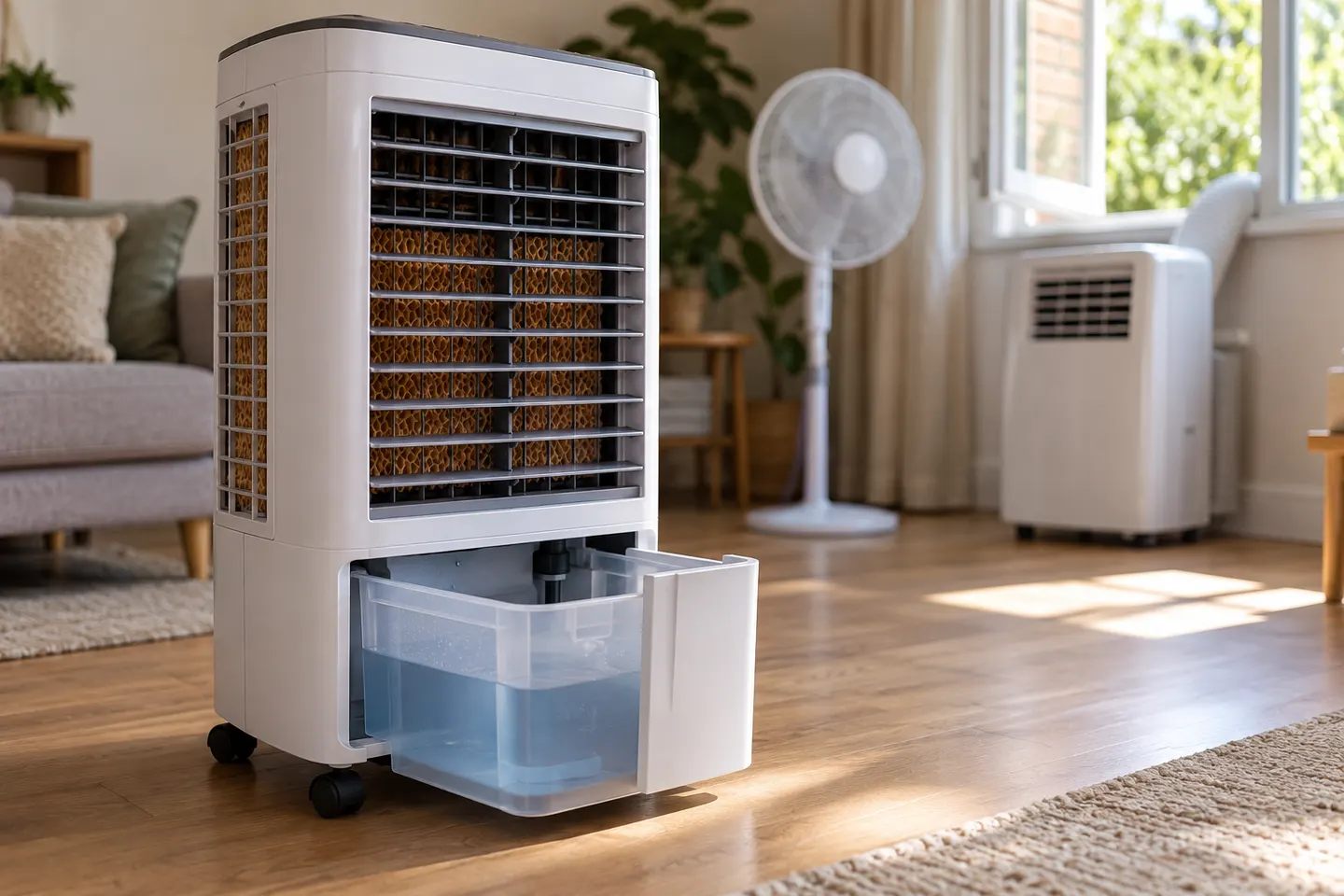
An evaporative air cooler draws air across a wet pad or water-fed medium. Some water evaporates and takes heat from the passing air; the fan then directs that stream into the room. The process also adds water vapour, so an air cooler is most useful when you want local airflow and the room can be ventilated.
02
How an air conditioner works
An air conditioner uses a refrigeration circuit to transfer heat from indoor air to the outside. A portable air conditioner normally needs an exhaust hose routed through a window or another suitable outlet. It can actively lower room temperature, while moisture often condenses as part of the cooling process.
03
Difference between an air cooler and a portable air conditioner
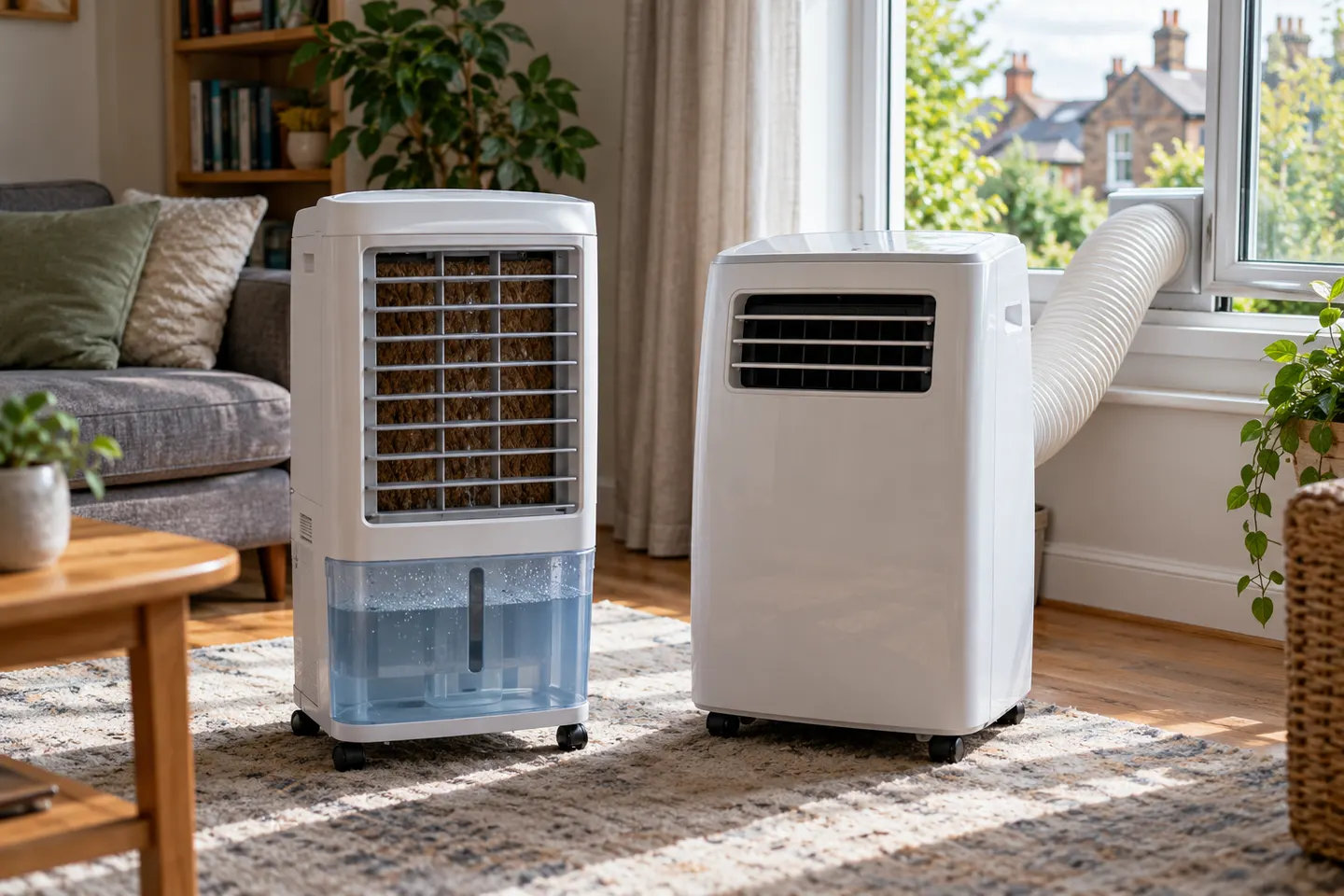
The key distinction is heat removal. An evaporative cooler changes the air passing through it and raises indoor moisture; it does not use an outdoor exhaust to carry room heat away. A portable air conditioner rejects heat outside and is designed to cool an enclosed room, provided it is installed and sized appropriately.
04
What humidity changes
Evaporation becomes less effective as the air holds more moisture, and the cooler adds further moisture while running. In a humid room this can leave you feeling clammy. Air conditioning is the more suitable mechanism when you need stronger temperature control or want to reduce indoor humidity.
05
Which option suits your room?
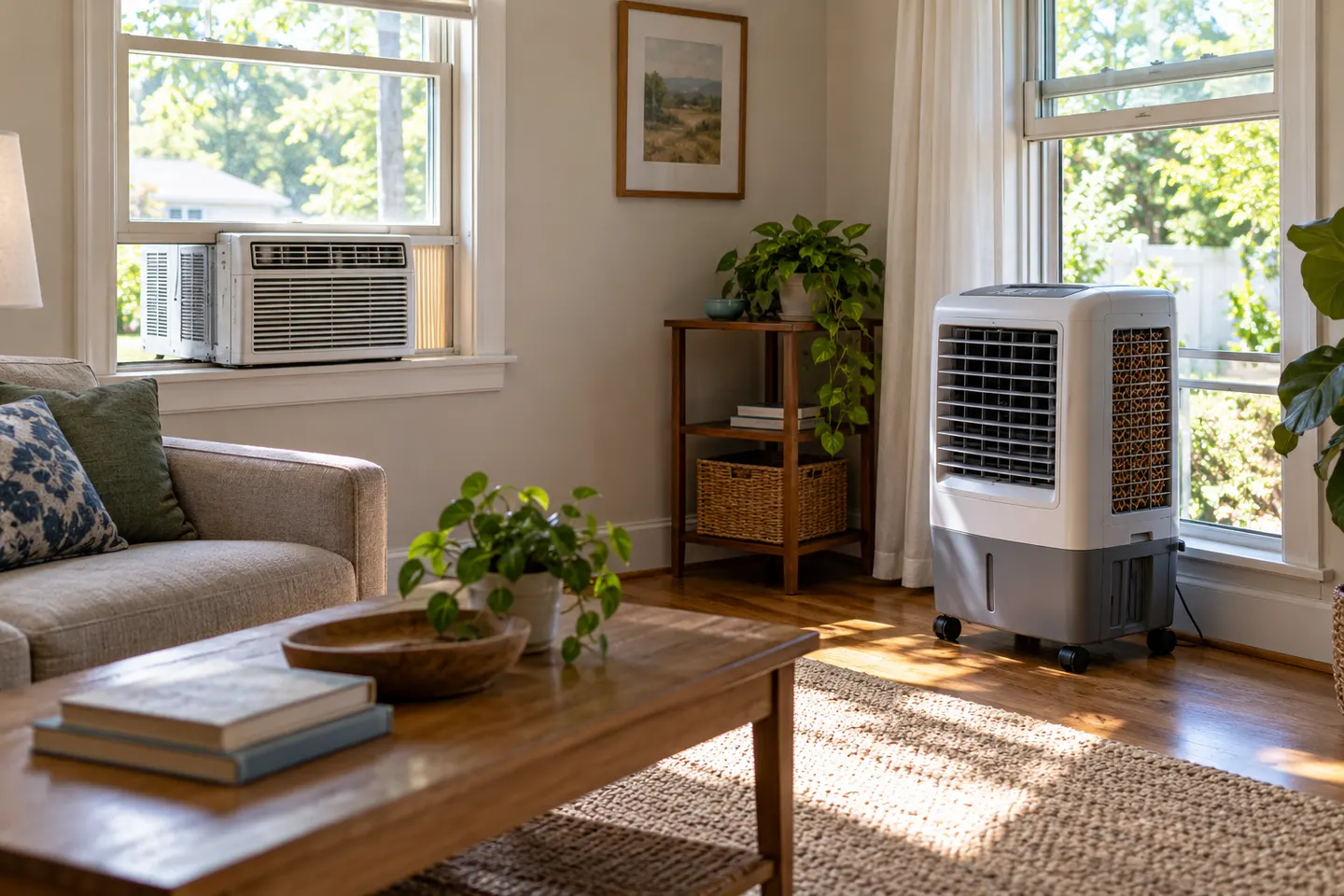
Choose an evaporative cooler if you mainly want a portable breeze nearby, can provide ventilation and accept weather-dependent results. Choose air conditioning if your priority is lowering the room temperature, especially during sustained heat. A fan can also be enough when moving air over people meets your need.
06
Setup and everyday use
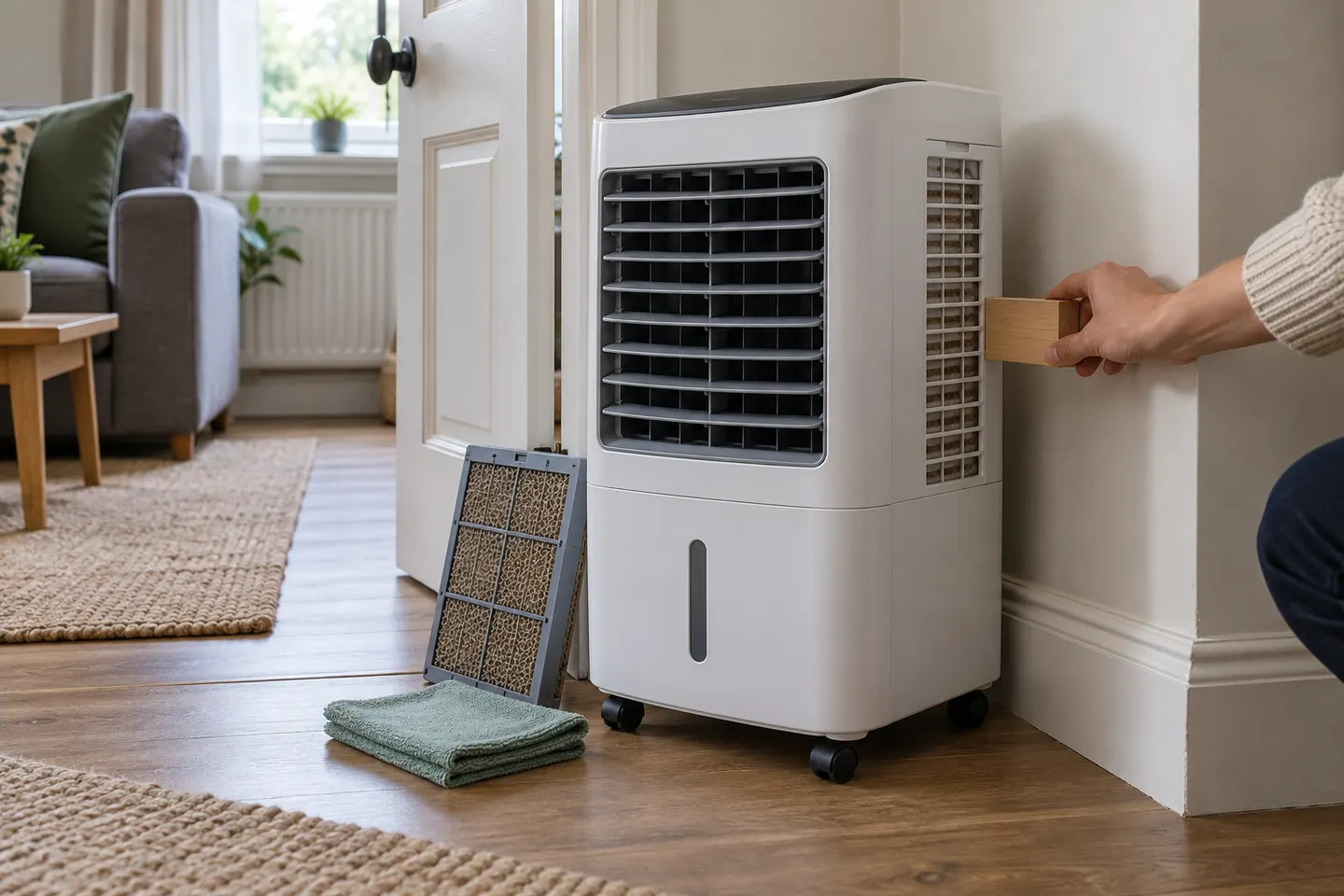
For an air cooler, follow the maker's filling, cleaning and ventilation instructions, and avoid letting stagnant water sit in the appliance. For portable air conditioning, check that a suitable exhaust route is possible and seal the window opening around it. In either case, consult the exact model's manual rather than assuming all units are operated alike.
Common questions
Questions before you buy
What is the difference between an air cooler and an air conditioner?
An air cooler uses evaporation to cool moving air and adds moisture. An air conditioner uses refrigeration to remove heat from the room and send it outside.
Is an evaporative cooler the same as an air conditioner?
No. An evaporative cooler relies on water evaporation and ventilation, while an air conditioner uses a refrigerant circuit to transfer heat outdoors.
Is an air cooler better than a portable air conditioner?
It depends on the job. An air cooler is portable and provides a local breeze with added moisture; a portable air conditioner is designed to lower room temperature but needs an exhaust route.
Does an air cooler reduce the temperature of the whole room?
It mainly affects the air stream near the unit, and its effect depends on humidity and airflow. Do not expect the same room-wide temperature control as air conditioning.
Do air coolers work in humid weather?
They are less effective when the air is already humid because evaporation slows, and operation adds moisture. Ventilation and the room's conditions matter.
A portable air cooler is not automatically an air conditioner. Check whether the appliance evaporates water, simply moves air or uses a refrigeration system.
A portable air cooler unit must be practical to live with. Measure its position, plan water access and read the cleaning routine before focusing on extra modes.
The best portable air cooler is one that suits the room's humidity and ventilation. Compare these real evaporative models only after confirming that this cooling method meets your needs.
A portable air cooler can mean an evaporative unit, a fan or a portable air conditioner in shopping results. Identify the cooling method before choosing a model.
Your privacy
We use cookies and similar technologies. Necessary ones keep the site working. With your permission we also use statistics cookies (Google Analytics and Microsoft Clarity) to understand which guides help readers. You can accept all, reject all or choose. You can change your choice at any time from "Cookie settings" at the bottom of every page. Cookie policy