Gearjury may earn a commission when you buy through a retailer link. Editorial guidance is based on cited sources.
Guide
Where to Put a Meat Thermometer in Chicken
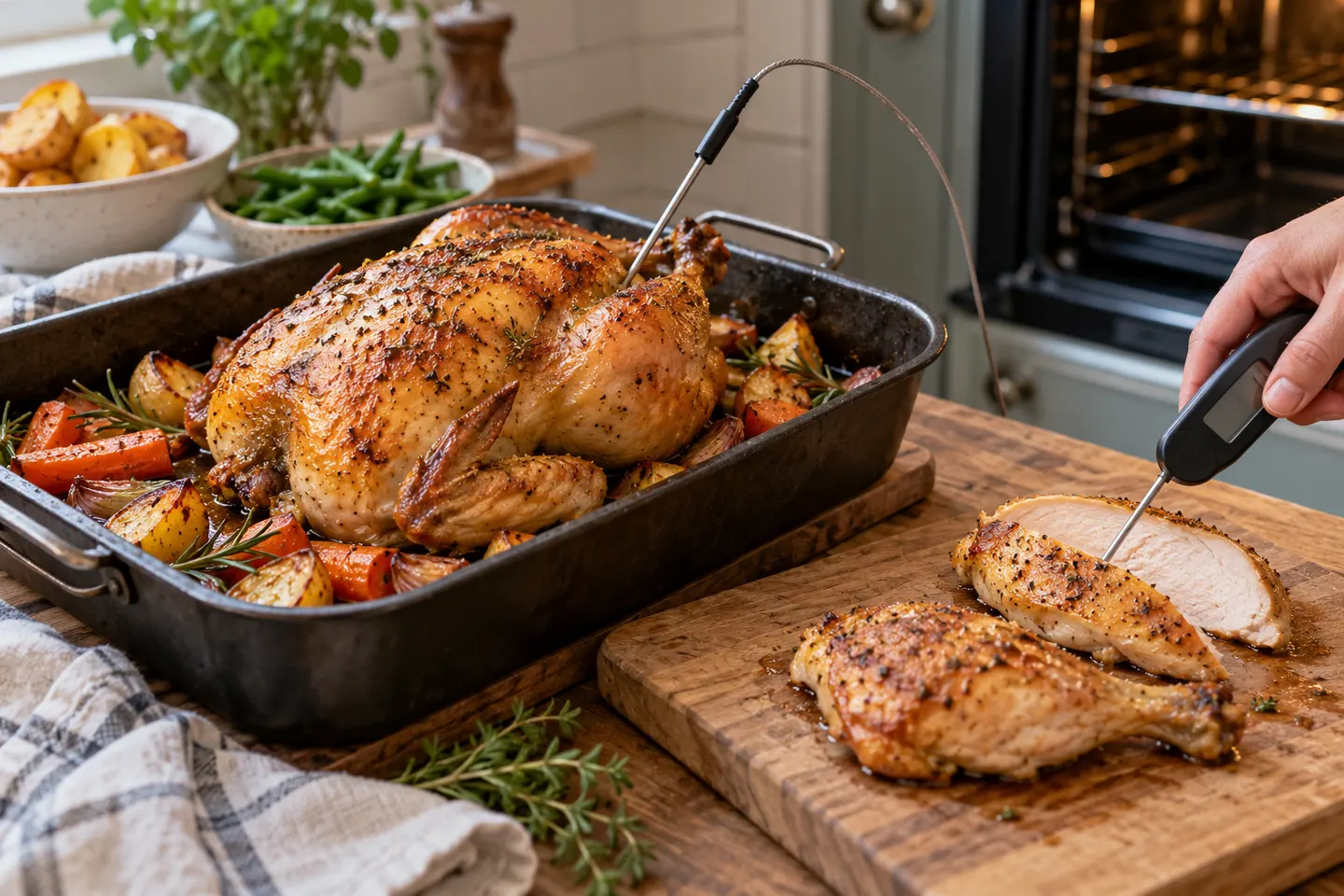
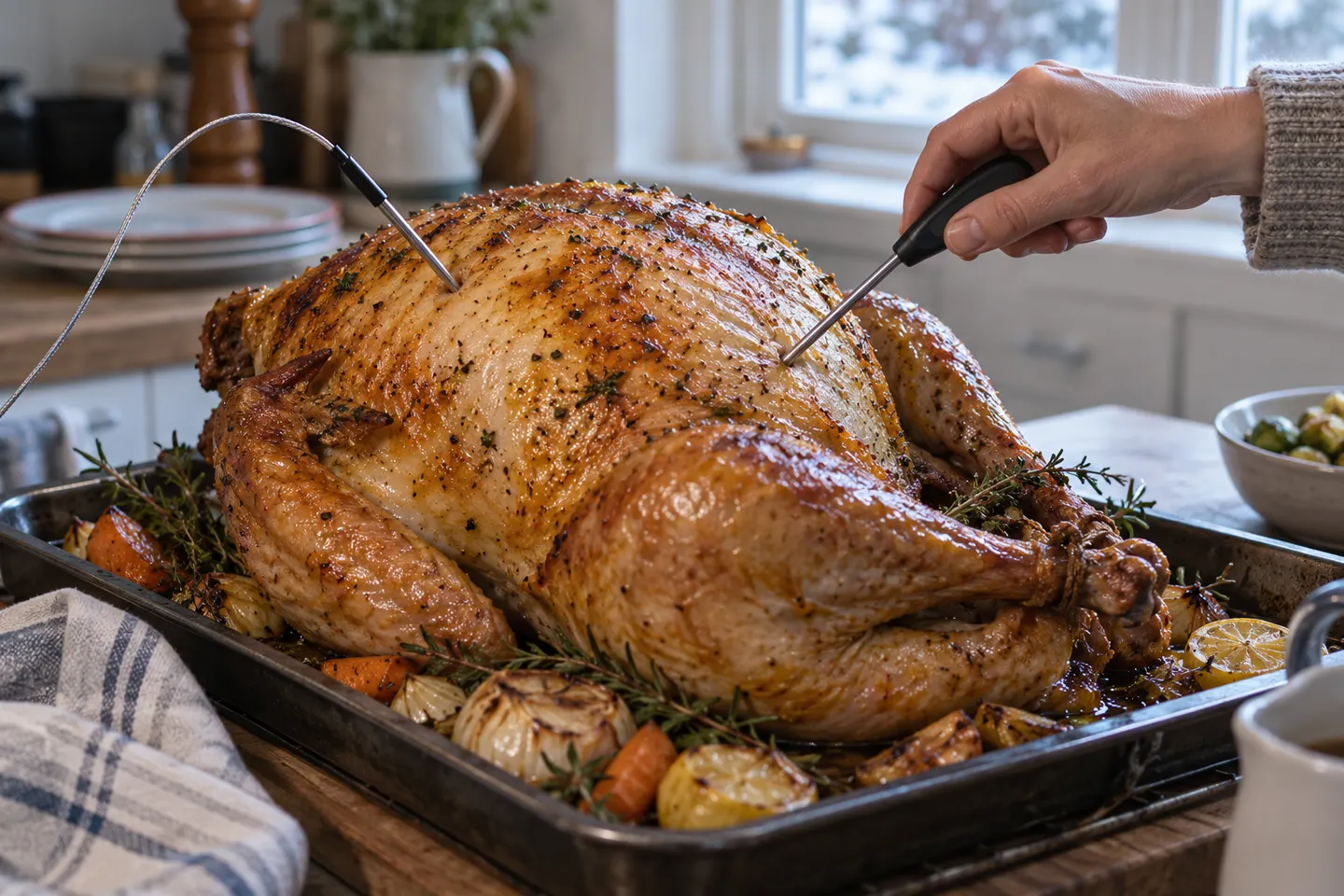
Insert the probe into the thickest part of the meat, away from bone, fat and the cavity. Check both the breast and innermost thigh of a whole bird.
GGearjury editorial team · Updated October 15, 2026· 4 min
01
Where does the thermometer go in a whole chicken?
Push the probe into the thickest breast area from the side, keeping the sensing tip away from the breastbone and cavity. Also check the innermost thigh where it meets the body without touching the joint.
02
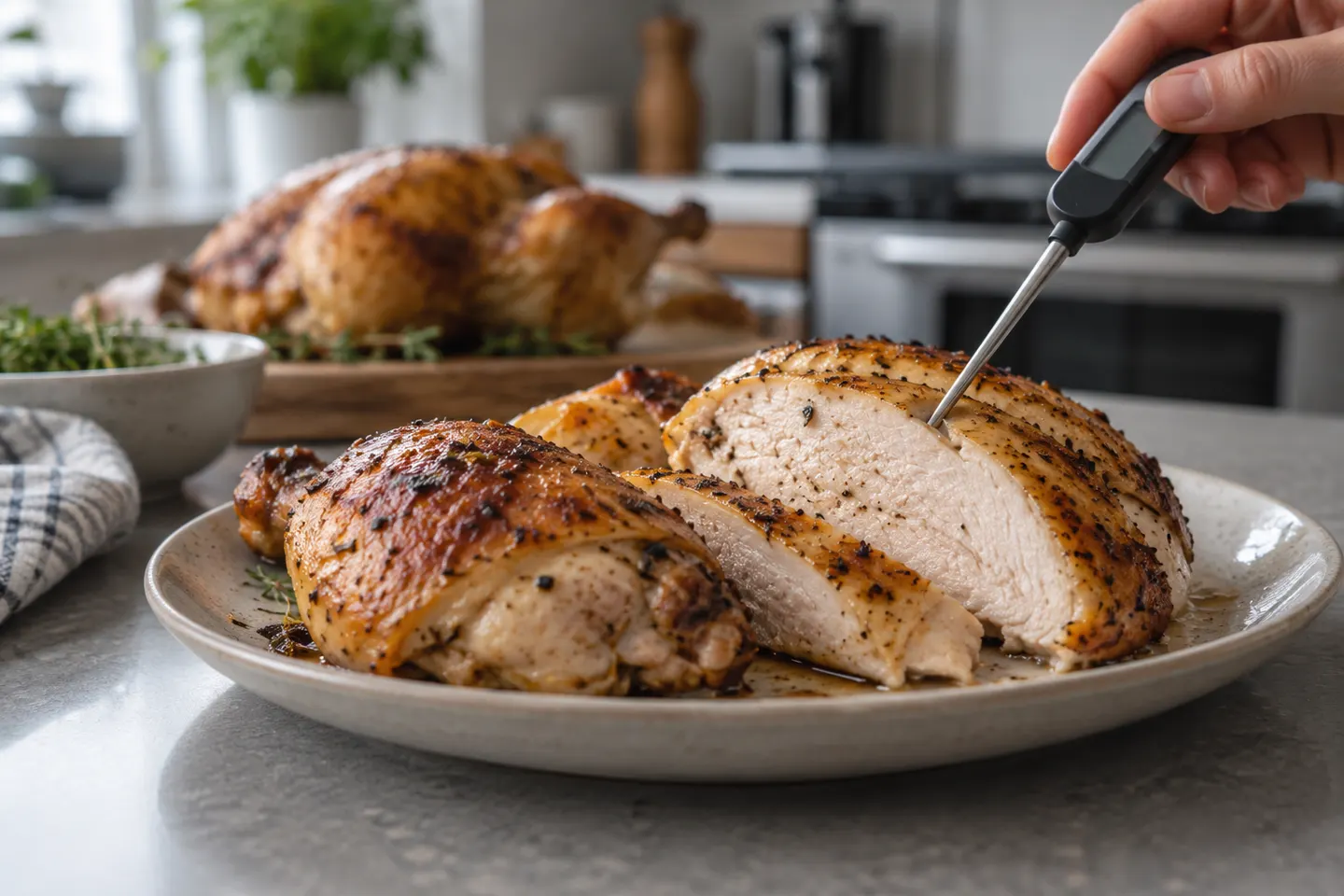
How do you check a chicken breast?
Insert from the side so the sensing area reaches the center of the thickest section. A shallow top-down insertion can leave the tip too close to the hot pan or outside the thermal center.
03
Where should you probe a chicken thigh?
Aim for the thickest muscle beside the joint. If the reading changes sharply when you move the probe, take several readings and use the lowest stable result.
04
When should you take the reading?
Check near the expected end of cooking and again in more than one spot. USDA guidance gives 165°F as the safe minimum internal temperature for all poultry.
05
Does bone affect a thermometer reading?
Yes. Bone can conduct heat differently from the surrounding meat, so contact may misrepresent the coldest edible portion. Pull back and reposition if the tip touches bone.
Common questions
Questions before you buy
Where is the thickest part of a whole chicken for a thermometer?
Check the thickest breast area and the innermost thigh near the body, without touching bone.
Can a meat thermometer touch chicken bone?
Avoid bone contact because it can distort the reading. Reinsert the probe into the center of the meat.
What temperature should chicken reach?
USDA guidance sets 165°F as the safe minimum internal temperature for poultry.
How far should the thermometer go into chicken?
Deep enough for the sensing area to sit in the center of the thickest muscle; the exact depth depends on the probe design.
Start with a dependable instant-read thermometer; add a leave-in or wireless probe when you want continuous monitoring.
Your privacy
We use cookies and similar technologies. Necessary ones keep the site working. With your permission we also use statistics cookies (Google Analytics and Microsoft Clarity) to understand which guides help readers. You can accept all, reject all or choose. You can change your choice at any time from "Cookie settings" at the bottom of every page. Cookie policy