









 Official manufacturer image
Our picks
Top picks
Official manufacturer image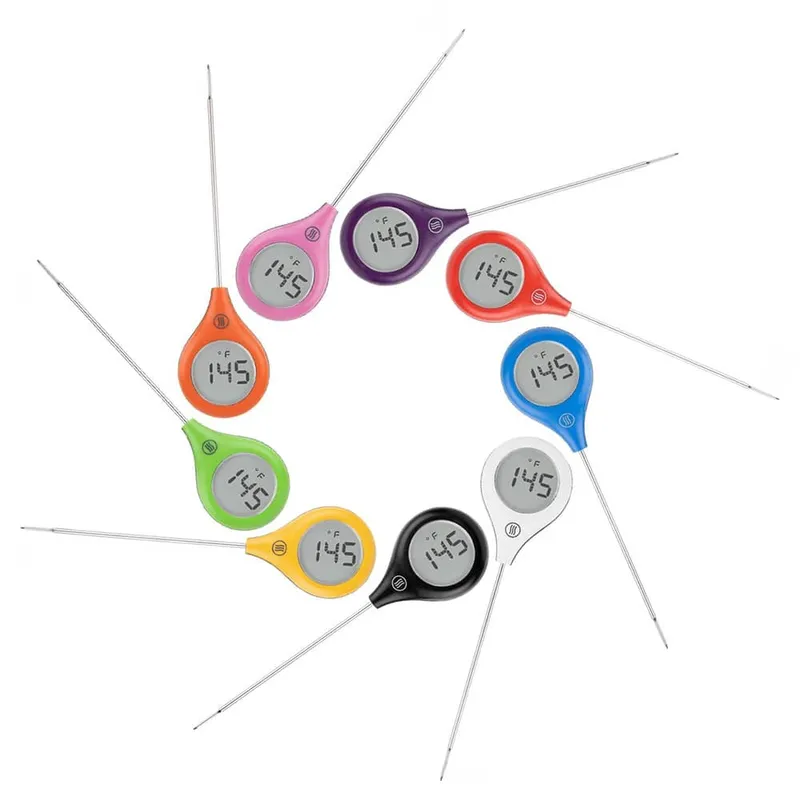 Official manufacturer image
ThermoWorks ThermoPop 2
Check price on Amazon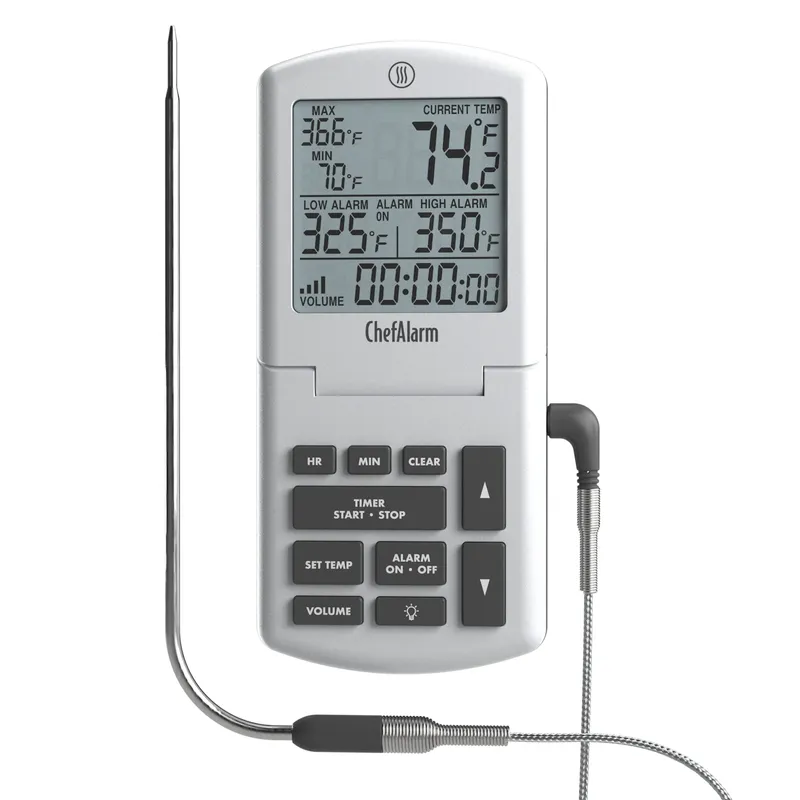 Official manufacturer image
ThermoWorks ChefAlarm
Check price on AmazonHow-to guides
More topics
Common questions
Questions before you buy
What accuracy must a food probe thermometer have?
The FDA Food Code 2026 specifies ±1°C for Celsius-only or dual-scale food temperature devices and ±2°F for Fahrenheit-only devices, throughout the intended range of use. Check which food code your jurisdiction has adopted.
Is food probe thermometer accuracy different in Fahrenheit and Celsius?
The FDA Food Code expresses the tolerance as ±1°C for Celsius or dual-scale devices and ±2°F for Fahrenheit-only devices. Those are regulatory tolerances, not an exact unit conversion of one another.
What is the normal food thermometer accuracy range for home use?
USDA consumer guidance says most food thermometers read within 2–4°F, but individual specifications vary. Compare the maker's stated accuracy across the temperatures you will actually measure.
What does the FDA Food Code require for a bimetallic thermometer?
The Code's accuracy rule applies to food temperature measuring devices by displayed scale, rather than giving bimetallic probes a separate tolerance. Dial bimetallic probes also need enough stem inserted to cover their sensing area.
How can I check a food probe thermometer for accuracy?
USDA recommends an ice-water check for most thermometers: keep the sensing area away from the glass, wait for a stable reading, and look for 32°F. Adjust only as the manufacturer's instructions allow; replace a device that remains outside its specified tolerance.