It receives the router network
A range extender listens for the router’s wireless network and establishes a link back to it. That link is often called the backhaul.

 Best picksBest WiFi Extenders for Different Homes in Ireland
 Best picksThe Best Dashcams for Cars in 2026
 Best picksBest Headlamp Torches for Hiking, Work and Everyday Use
 Best picksBest Meat Thermometers for Cooking, Roasting and BBQ
 Best picksBest cordless strimmers for Irish gardens: compared
 Best picksBest Winter Gloves for Cold, Wet Days in Ireland (2026)
 Best picksBest Portable Air Coolers for Irish Homes in 2026
 Best picksBest air purifier for bedroom in Ireland: five models compared
Gearjury may earn a commission from qualifying retailer links. Our editorial guidance is based on cited sources.
Guide
A Wi-Fi booster receives an existing router signal and rebroadcasts it to extend local coverage. It does not create broadband service or guarantee higher speeds.
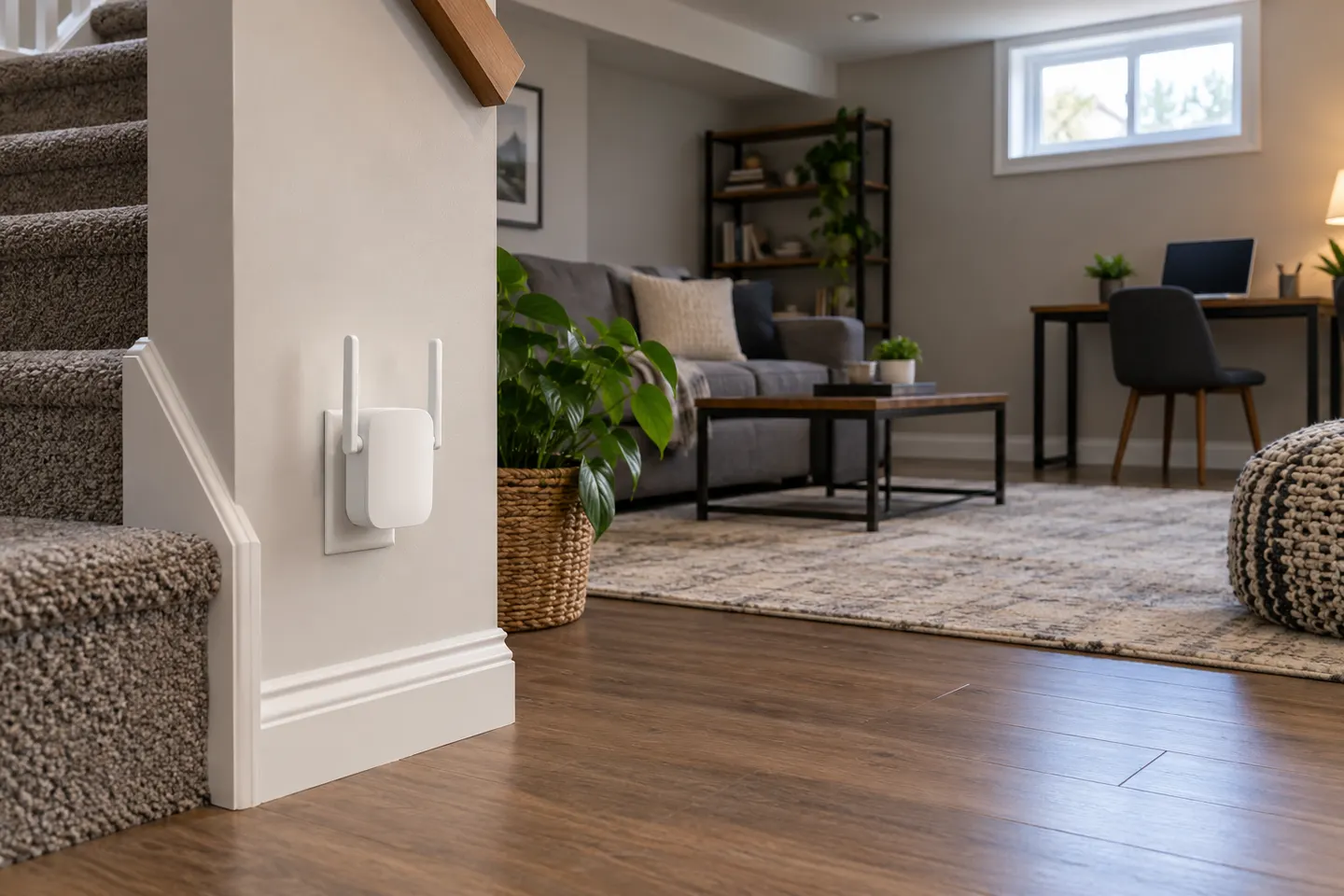
A range extender listens for the router’s wireless network and establishes a link back to it. That link is often called the backhaul.
The extender broadcasts a network for phones, TVs and other clients in the areas its signal reaches. Some models share the router’s network name; others use a separate name.
The unit must be close enough to the router to maintain a useful connection and close enough to the target room to improve coverage. Walls and interference influence both sides of that balance.
The extender cannot make the internet service itself faster or fix a provider outage. A weak backhaul can limit the connection even when a device shows a strong link to the extender.
A wired access point avoids a wireless backhaul, and a mesh system can coordinate multiple nodes. For one marginal area, a basic extender may be enough if the router signal reaches its location.
Common questions
It connects to a router’s Wi-Fi and retransmits the network so devices can connect in a farther area. Its backhaul connection to the router remains essential.
Not by itself. It can improve a weak device-to-router link in a dead zone, but it cannot raise the broadband speed supplied to the home.
The terms are often used for devices that relay an existing Wi-Fi network. Product modes differ, so check whether the model is an extender, mesh node or wired access point.
Place it between router and target area, where it can still receive a stable signal. Putting it inside the dead zone gives it a poor connection to repeat.
Keep exploring
For a general indoor pick, start with TP-Link RE705X: it has WiFi 6, a Gigabit Ethernet port and access point mode. RE550, RE315 and a powerline kit suit different budgets and layouts; outdoor use needs purpose-built hardware.
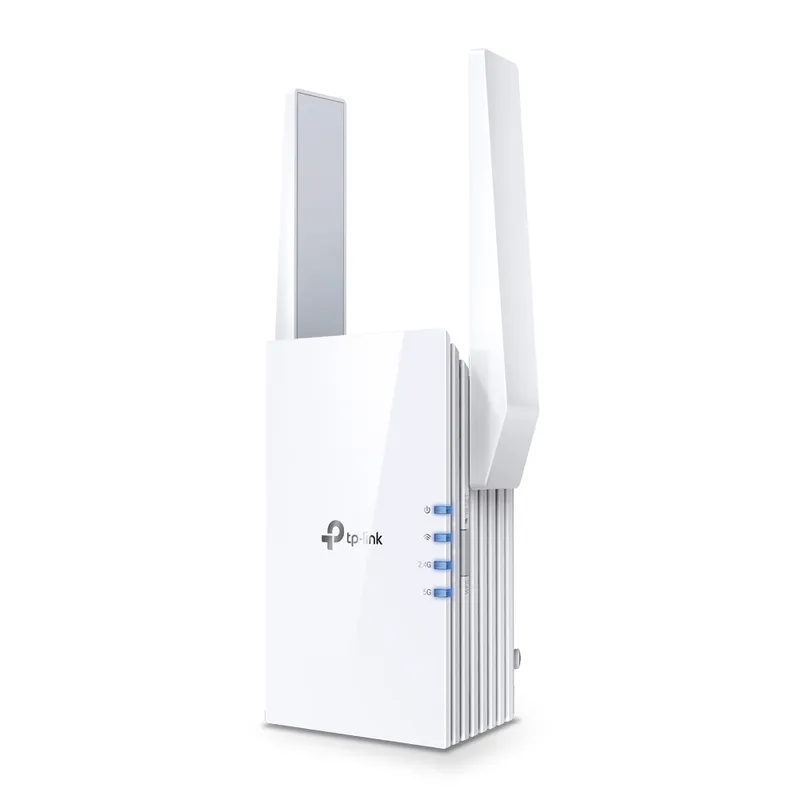
The RE705X is the WiFi 6 pick with a Gigabit port; RE550 offers WiFi 5 and three external antennas. For a compact dual-band option, compare RE315.
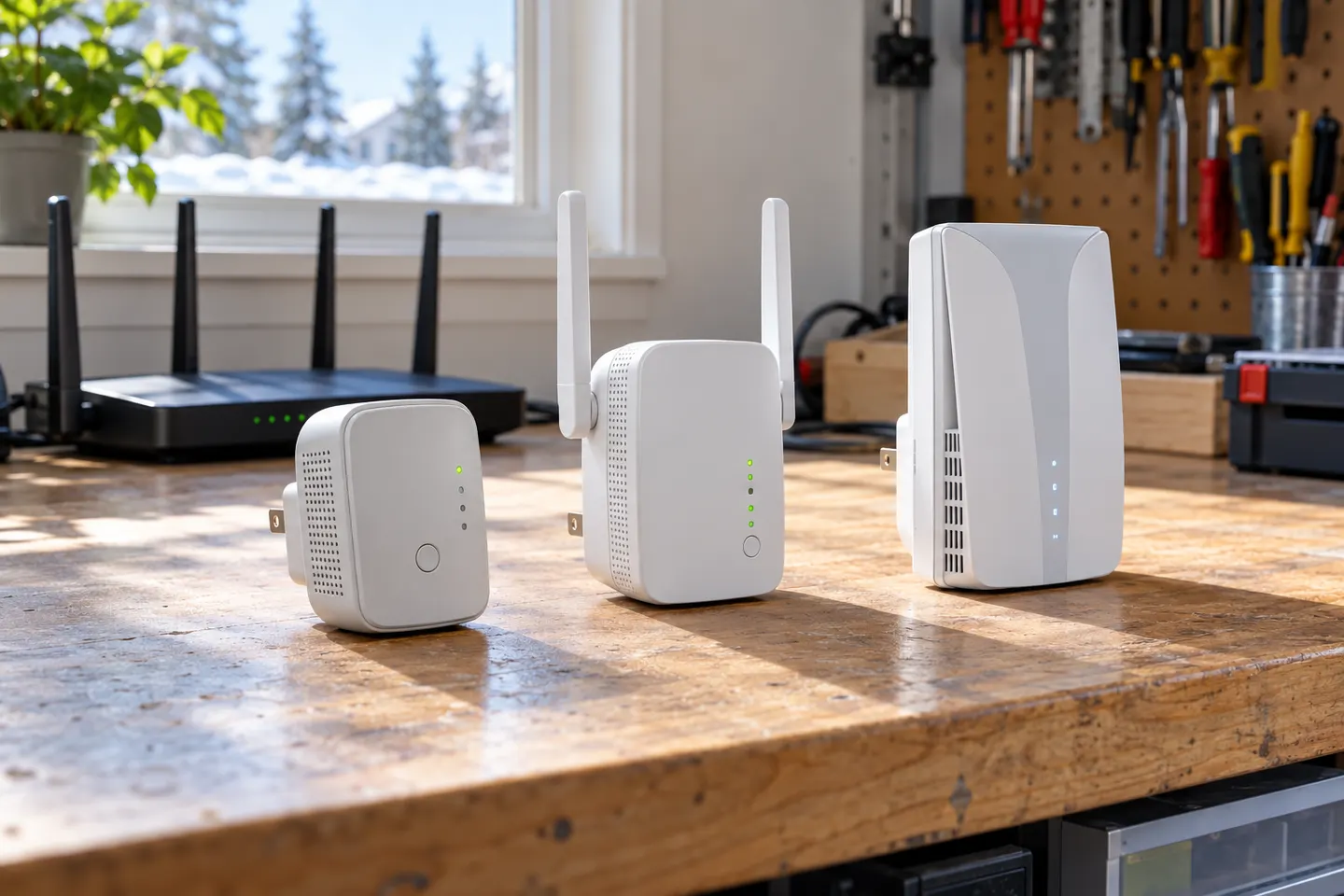
Choose a wireless range extender when it can receive a healthy signal; consider powerline when the route through the home is the main obstacle. TP-Link’s model range includes both approaches.
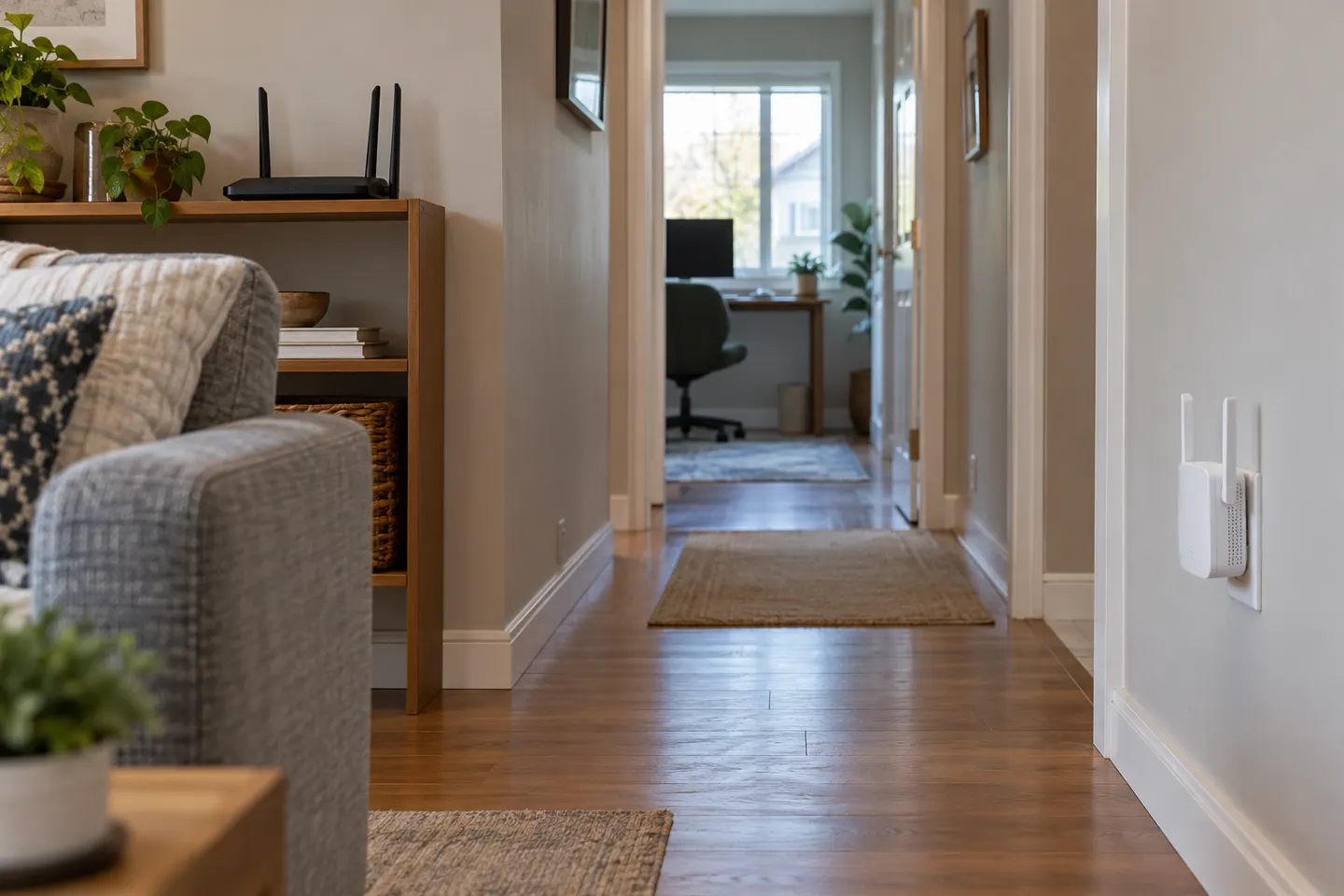
A WiFi extender can carry an existing router signal into a weak-coverage area. Choose a plug-in repeater for a simple dead zone, or consider powerline when walls make a wireless link unreliable.