Gearjury may earn a commission when you buy through a retailer link, at no extra cost to you.
Guide
Dashcam Meaning: What Does a Dash Cam Do?
The dashcam meaning is simple: it is a small camera fitted in or on a vehicle to record the road, the cabin or both. Most models save short video clips continuously and protect selected footage from being overwritten.
GGearjury editorial team · Updated 16 October 2026· 4 min
01
What does dash cam mean?
Dash cam is short for dashboard camera. The name now covers compact video cameras mounted on a windscreen, dashboard or another suitable part of a vehicle, even when the camera is not literally fixed to the dashboard. A dashcam usually records automatically when the vehicle is running.
02
What does a dashcam record?
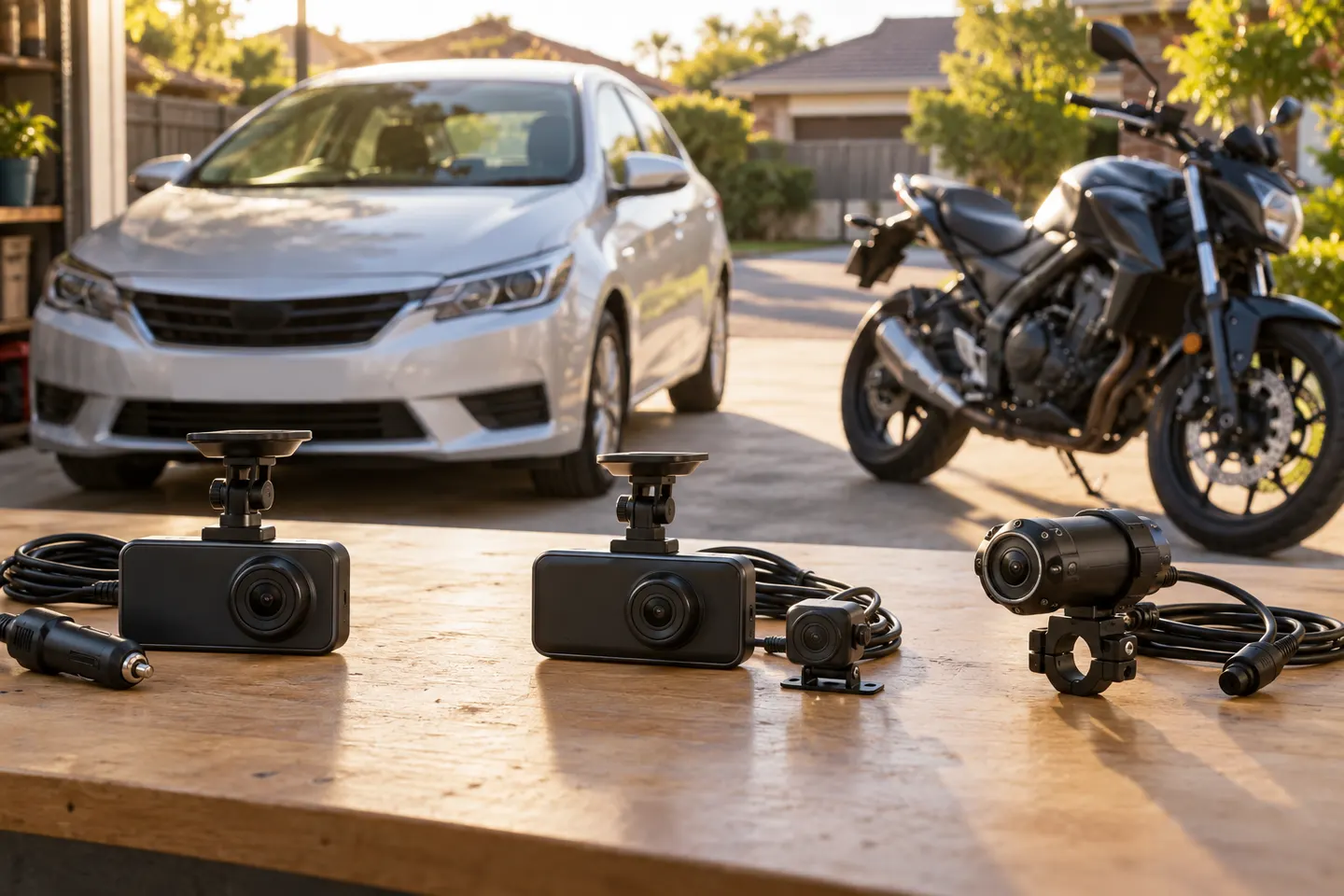
A forward-facing camera records the road ahead. Front-and-rear systems add a second view behind the vehicle, while cabin cameras face the occupants. Depending on the model and settings, a recording may also include sound, location, speed, date and time.
03
How does a dash cam store video?
Most dash cams divide video into short files and use loop recording. When storage fills, the oldest ordinary clip is overwritten. A collision sensor or manual save button can lock an important clip, but you should still copy wanted footage promptly and follow the maker's storage instructions.
04
Why do drivers use dash cams?
Drivers mainly use them to retain a visual record of a journey or road incident. Some police forces accept relevant footage through local submission portals, although a recording does not guarantee that action will be taken. The camera records your own driving as well as everybody else's.
05
Where should a dashcam be fitted?
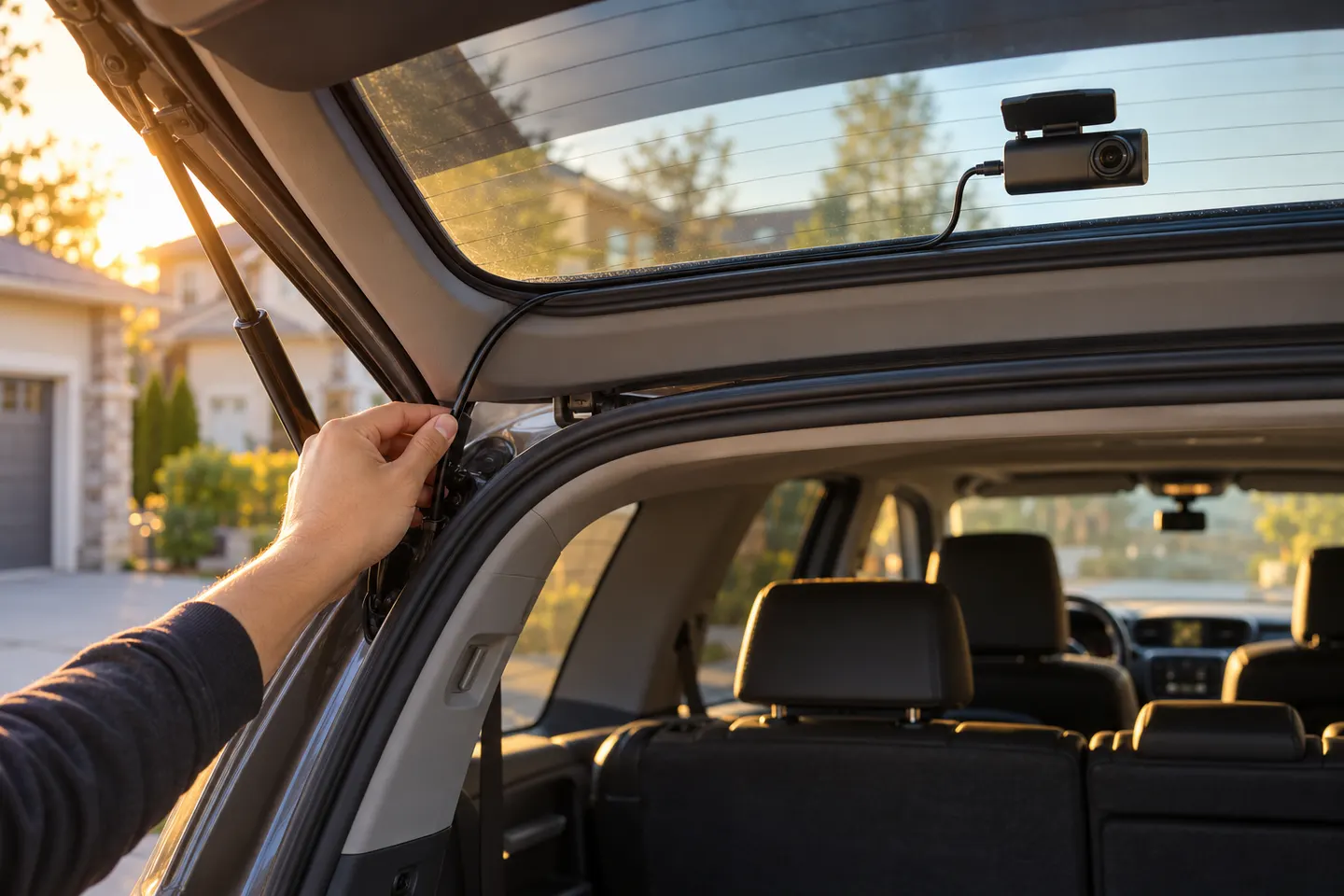
Position it where the lens has a clear view but the unit and cable do not obstruct your view of the road. The Highway Code says windscreens and windows must be kept clean and free from obstructions to vision. Check the camera instructions and your vehicle layout before fixing the mount.
06
Does dashcam footage affect privacy?
Video can capture identifiable motorists, pedestrians, passengers and number plates. The Information Commissioner's Office treats dashcams as video-surveillance systems in organisational use. Business and workplace recording therefore requires particular attention to lawful, transparent and secure handling; publishing footage can raise separate privacy issues.
07
How we prepared this guide
We reviewed current guidance from UK public authorities and police information about vehicle cameras, visibility and footage. We have not physically tested a dash cam for this explanatory guide.
Common questions
Questions before you buy
What is the meaning of dashcam?
A dashcam is a compact video camera used in a vehicle. The term comes from 'dashboard camera', although many are mounted on the windscreen.
Is dash cam one word or two?
Both forms are widely understood. 'Dash cam' reflects the shortened phrase 'dashboard camera', while 'dashcam' is a common closed spelling.
Does a dashcam record all the time?
Many record continuously in short loops while powered, but behaviour varies by model, wiring and settings. Parking recording normally needs a compatible power arrangement.
What is the difference between a dashcam and a front-and-rear dash cam?
A basic dashcam commonly records the road ahead with one camera. A front-and-rear system adds another camera to capture a second view behind the vehicle.
Can dashcam footage be sent to the police in the UK?
Some UK police forces accept relevant footage through online portals. Requirements and coverage differ, so use the guidance provided by the police force responsible for the area where the incident happened.
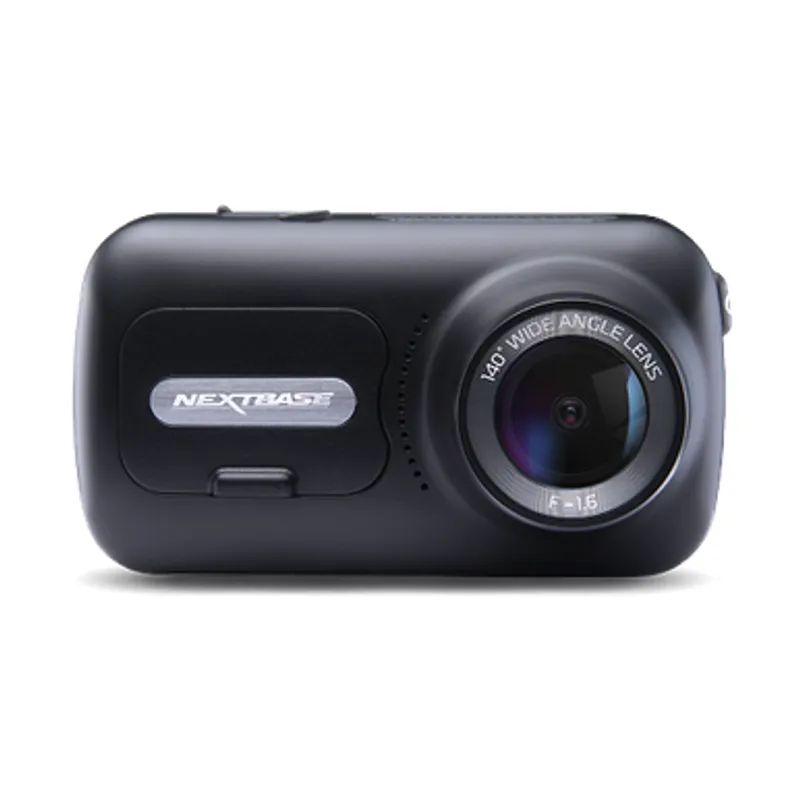
The Nextbase 622GW is our balanced UK pick for its detailed recording, stabilisation and accessible touchscreen. Garmin Mini 3 suits a discreet fit, while VIOFO A329S covers the front and rear at high resolution.
A dual-camera kit is the direct choice when you want the road ahead and traffic behind in the same recording system. Check rear resolution and cable length, not just the headline front-camera specification.
The 622GW has the strongest recording specification in this trio; the 522GW keeps the large touchscreen and polarising filter at 2K, while the 322GW covers the essentials.
Start with the coverage you need: a discreet front camera for the road ahead, or a front-and-rear system for evidence from both directions. Our guides then narrow the choice by installation, connectivity and brand.
Your privacy
We use cookies and similar technologies. Necessary ones keep the site working. With your permission we also use statistics cookies (Google Analytics and Microsoft Clarity) to understand which guides help readers. You can accept all, reject all or choose. You can change your choice at any time from "Cookie settings" at the bottom of every page. Cookie policy