Gearjury may earn a commission from qualifying purchases made through retailer links.
Best picks
Best Portable Air Coolers to Consider in Australia (2026)
Bonaire Crown 10i is a practical shortlist choice for its published room guidance and portable design. Bonaire Duet suits a smaller spot; Dimplex DCEVP6WT adds a purifier function.
GGearjury editorial team · Updated 18 October 2026· 8 min
Quick answer
Choose the Bonaire Crown 10i if its manufacturer-stated room guidance suits your space. For a smaller footprint, consider the Bonaire Duet; for cooling plus a separately specified air-purifier mode, compare the Dimplex DCEVP6WT. Evaporative models are most useful in dry, ventilated conditions.
Do portable air coolers work in humid Australian weather?
Evaporative performance falls as humidity rises because less water evaporates. Queensland Government guidance recommends considering local conditions and keeping suitable ventilation.
Does a portable evaporative cooler need an open window?
Usually it needs an outlet for air, such as an open window or door, so humid air can leave. Follow the model manual and avoid trapping moisture indoors.
Is a larger water tank always better?
A larger reservoir can mean fewer refills, but it does not establish stronger cooling. Compare airflow, manufacturer room guidance, controls and intended climate as well.
Can an air cooler replace refrigerated air conditioning?
Not in every room or climate. Evaporative units add moisture and are less effective in humid conditions; refrigerated systems use a different cooling process.
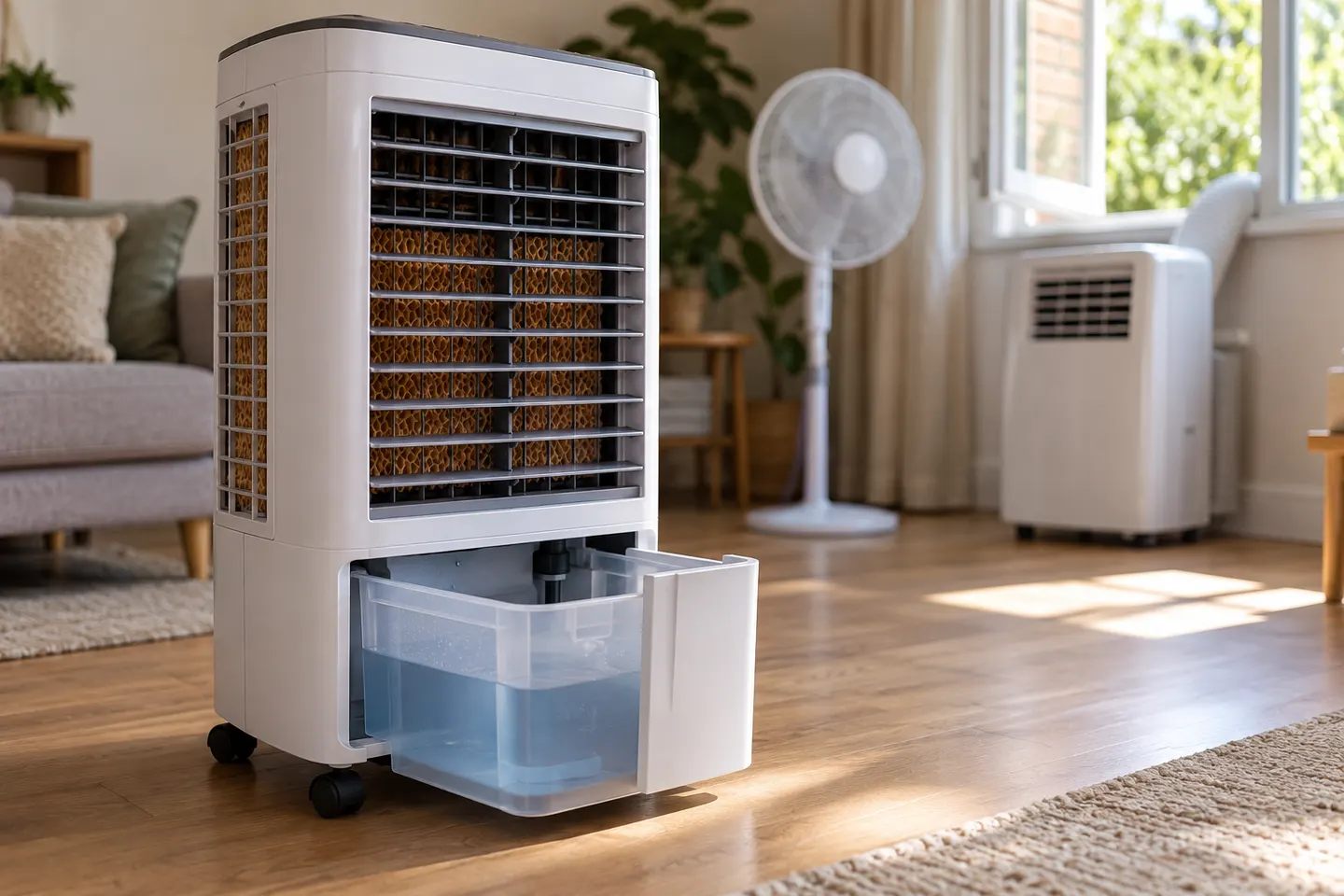
A portable evaporative cooler suits hot, dry air and a ventilated room; a fan-only unit avoids adding moisture. Start with climate, airflow and cleaning needs.
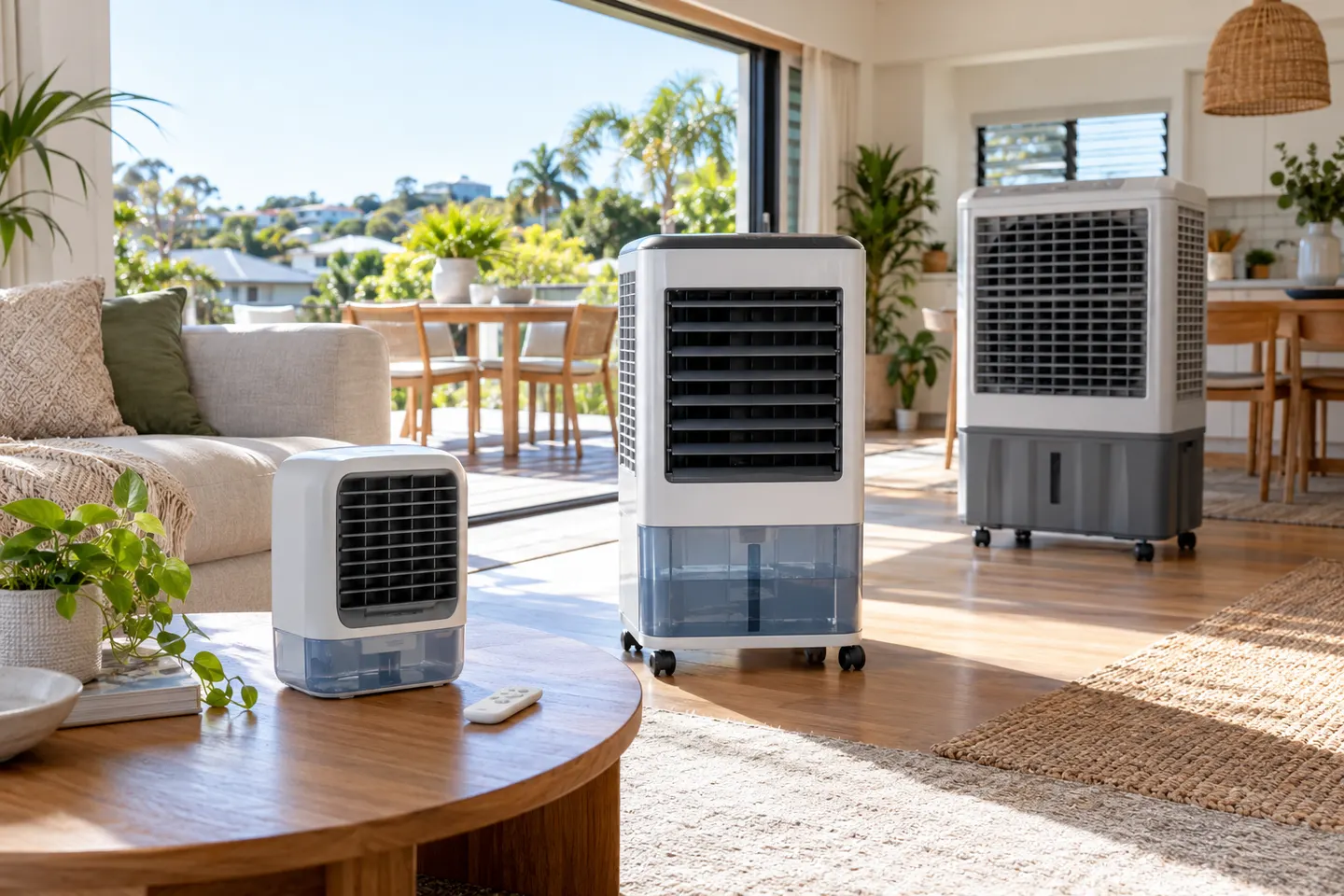
Bonaire Duet 6L is our compact-room pick; Bonaire Diet 12i suits a room needing more tank capacity, while Dimplex DCEVP6BW adds tower controls and a remote.
Bonaire’s portable evaporative range spans compact personal units and larger room coolers. Match the stated room coverage and tank capacity to your space.
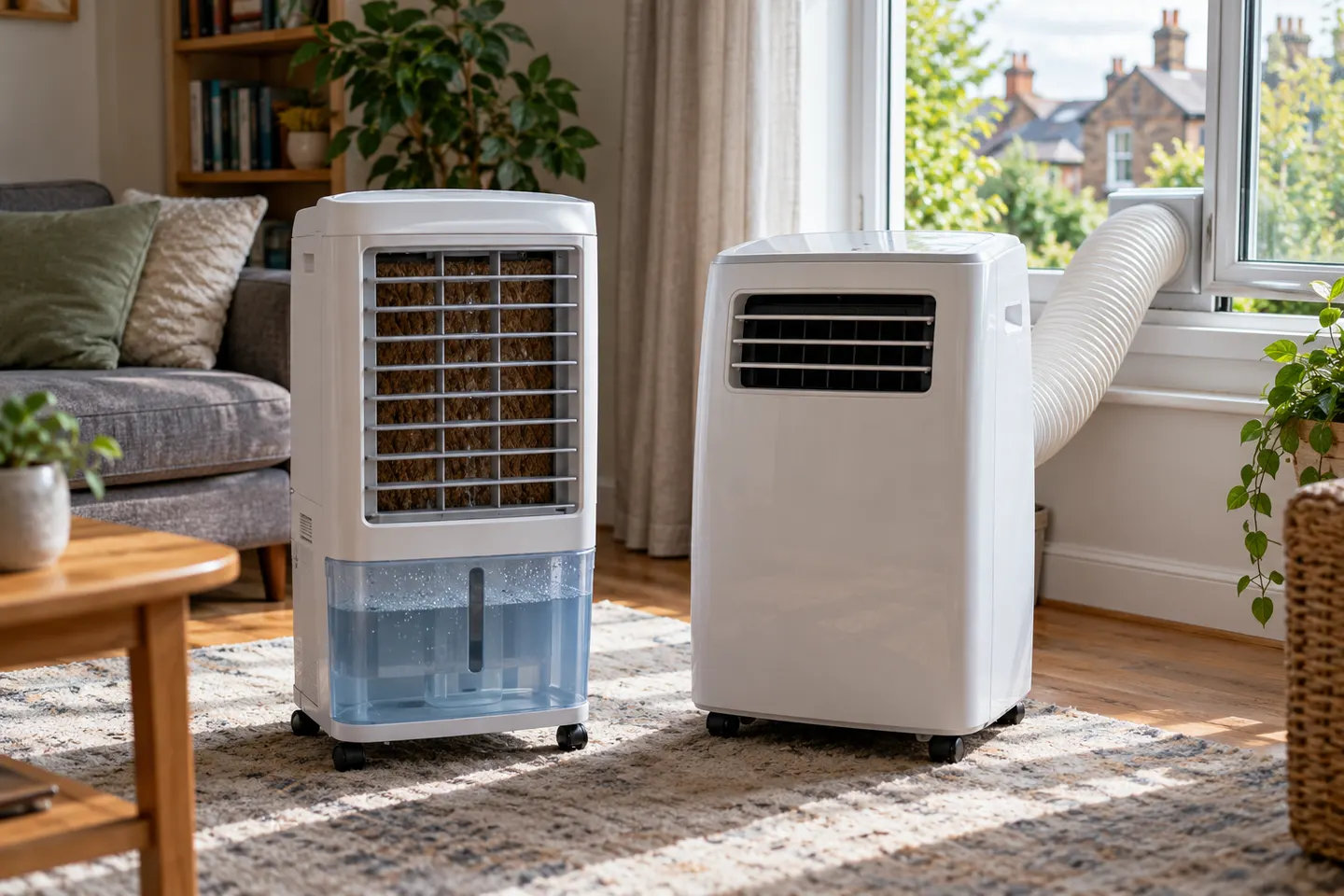
An evaporative cooler uses water and ventilation; a refrigerated air conditioner uses a compressor and can dehumidify. Climate and the result you need decide between them.
Your privacy
We use cookies and similar technologies. Necessary ones keep the site working. With your permission we also use statistics cookies (Google Analytics and Microsoft Clarity) to understand which guides help readers. You can accept all, reject all or choose. You can change your choice at any time from "Cookie settings" at the bottom of every page. Cookie policy









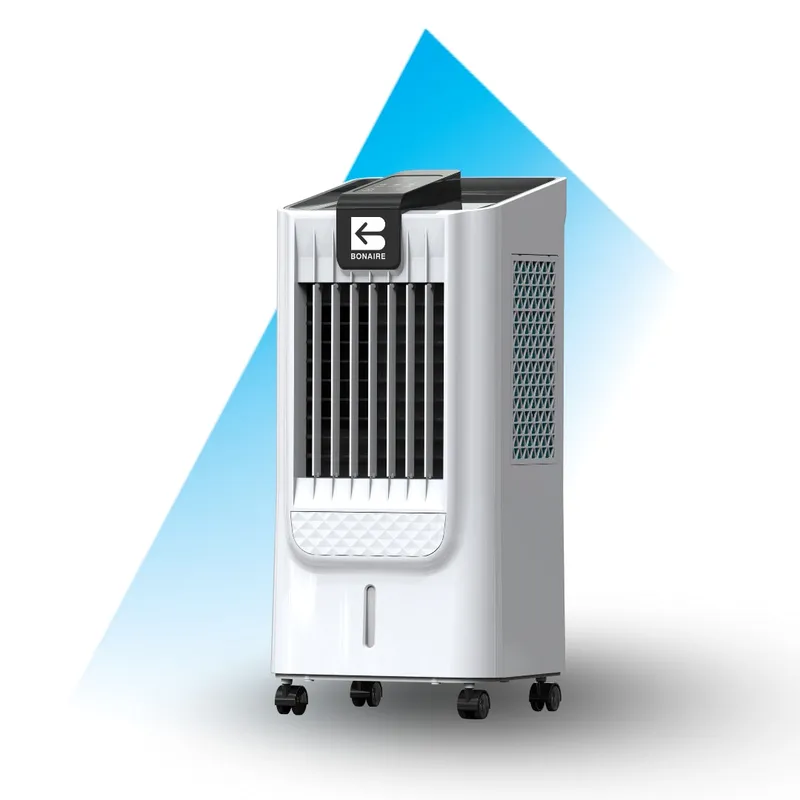 Official manufacturer image
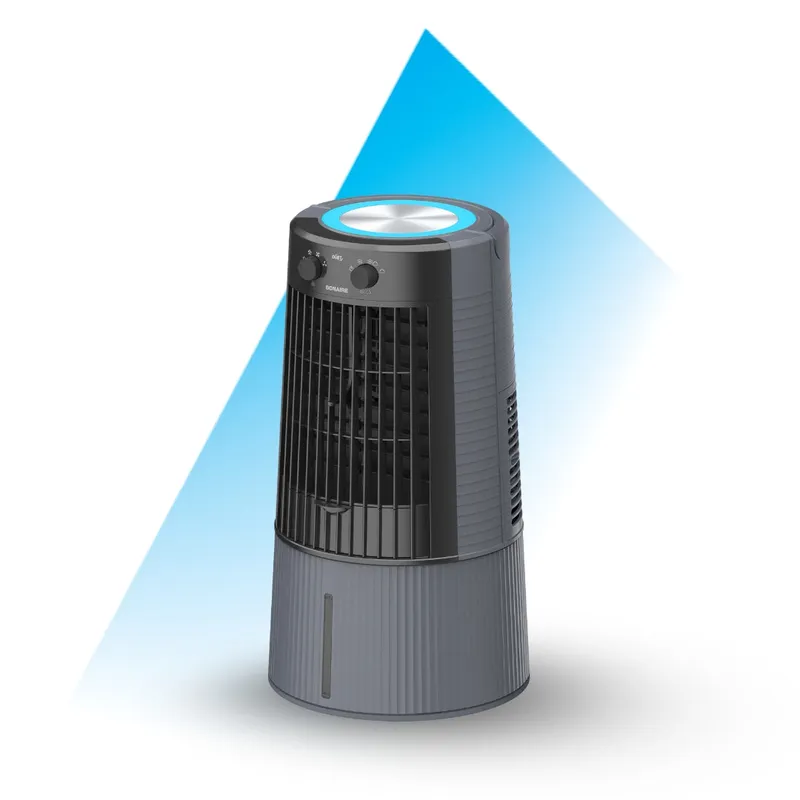 Official manufacturer image