






Reduce room temperature in humid weather
Gearjury may earn a commission from retailer links. Comparison points are drawn from cited government guidance.
Head to head
Air Conditioner vs Swamp Cooler: Which Suits Your Climate?
Choose refrigerated air conditioning when you need controlled room cooling, especially in humid conditions. An evaporative or swamp cooler suits drier air and needs ventilation, but adds moisture.
Spot cooling in relatively dry air
De’Longhi EV250.WH
The verdict
These are different technologies rather than interchangeable versions of one appliance. Use local humidity and ventilation needs to decide; neither model is a universal winner.
Reduce room temperature in humid weather: De’Longhi Pinguino PACEL110ERFWIFI
A refrigerated portable air conditioner is designed to remove heat; De’Longhi specifies an exhaust setup near a window or door.
Spot cooling in relatively dry air: De’Longhi EV250.WH
EV250.WH is an evaporative cooler with a 4.5 L tank and 460 m³/h airflow, though the manufacturer’s operating conditions apply.
Keep windows closed during operation: De’Longhi Pinguino PACEL110ERFWIFI
Portable air conditioning uses an exhaust duct to send heat outside, whereas evaporative cooling relies on ventilation.
Compare them side by side
| De’Longhi Pinguino PACEL110ERFWIFI | De’Longhi EV250.WH | |
|---|---|---|
| Cooling method | Refrigeration and exhaust | Water evaporation |
| Published capacity | — | 460 m³/h airflow; 800 ml/h evaporative capacity |
| Water tank | — | 4.5 L |
| Ventilation | Exhaust duct to outside | Open-air path recommended |
| Humidity fit | Useful when evaporative cooling is ineffective | Best in drier conditions |
| Power | — | 70 W |
Common questions
Questions before you buy
What is the difference between an air conditioner and a swamp cooler?
An air conditioner removes heat using refrigeration. A swamp cooler uses water evaporation, which cools moving air while increasing its moisture content.
Is a swamp cooler better than an air conditioner in Australia?
It depends on location and humidity. Evaporative coolers work best in low-humidity inland regions; refrigerated air conditioning is more suitable when humidity is high or windows need to stay closed.
Does a portable evaporative cooler need an open window?
It needs ventilation so humid air can leave the space. Follow the manual and position openings to maintain airflow through the room.
Can an evaporative cooler lower room temperature like air conditioning?
It can cool incoming air through evaporation, but results depend strongly on humidity and ventilation. It does not use the same heat-removal process as refrigerated air conditioning.
What does portable air conditioner vs swamp cooler mean for setup?
A portable air conditioner needs its hot-air exhaust routed outside, commonly through a window. An evaporative cooler needs an airflow path and usually works with windows or doors open.
Sources and how we chose
- Australian Government — Heating and cooling · 2026-10-18
- De’Longhi Australia — EV250.WH · 2026-10-18
- De’Longhi Australia — Portable air conditioners · 2026-10-18
Keep exploring
Related guides
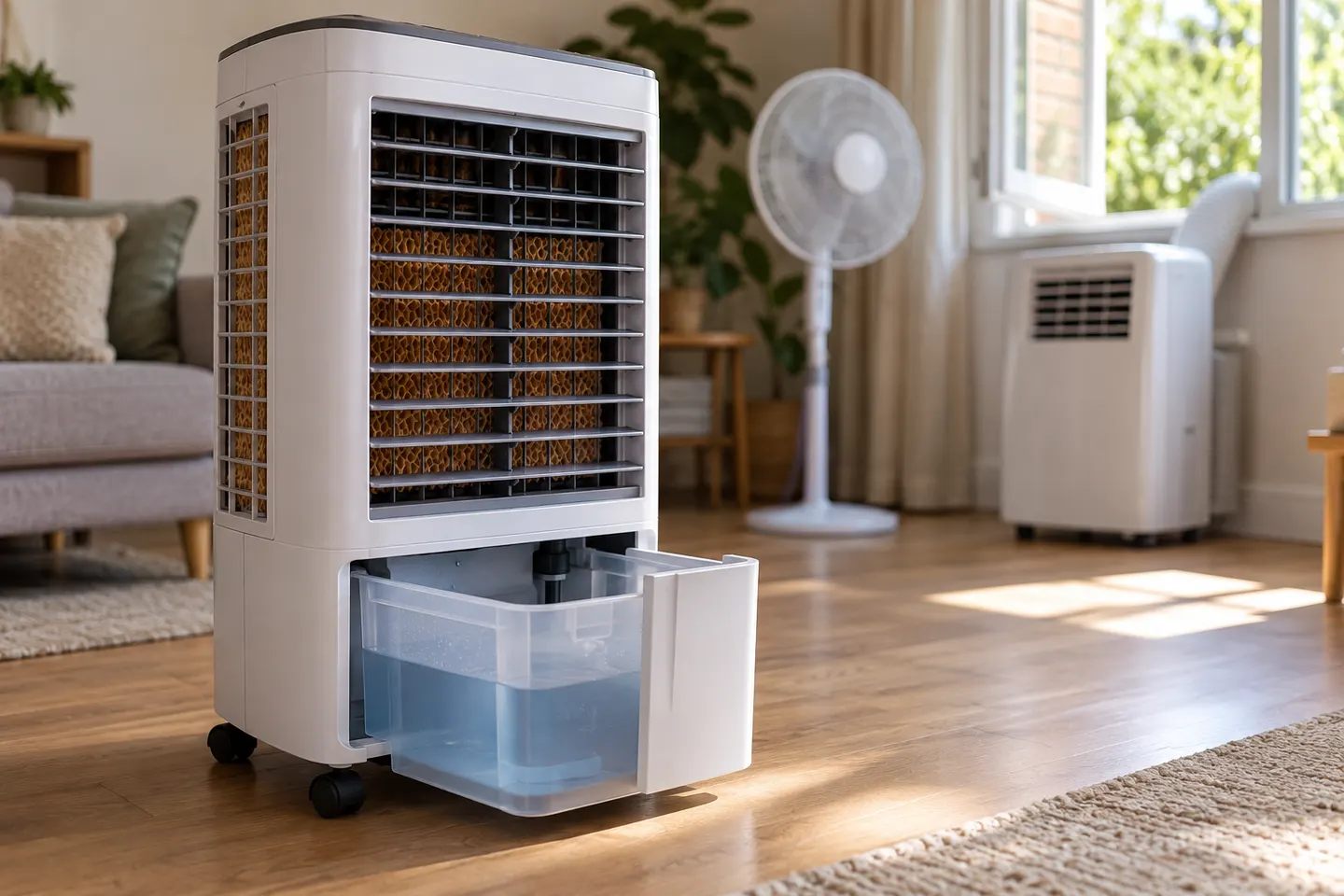
Portable Air Coolers for Australian Homes
A portable evaporative cooler suits hot, dry air and a ventilated room; a fan-only unit avoids adding moisture. Start with climate, airflow and cleaning needs.
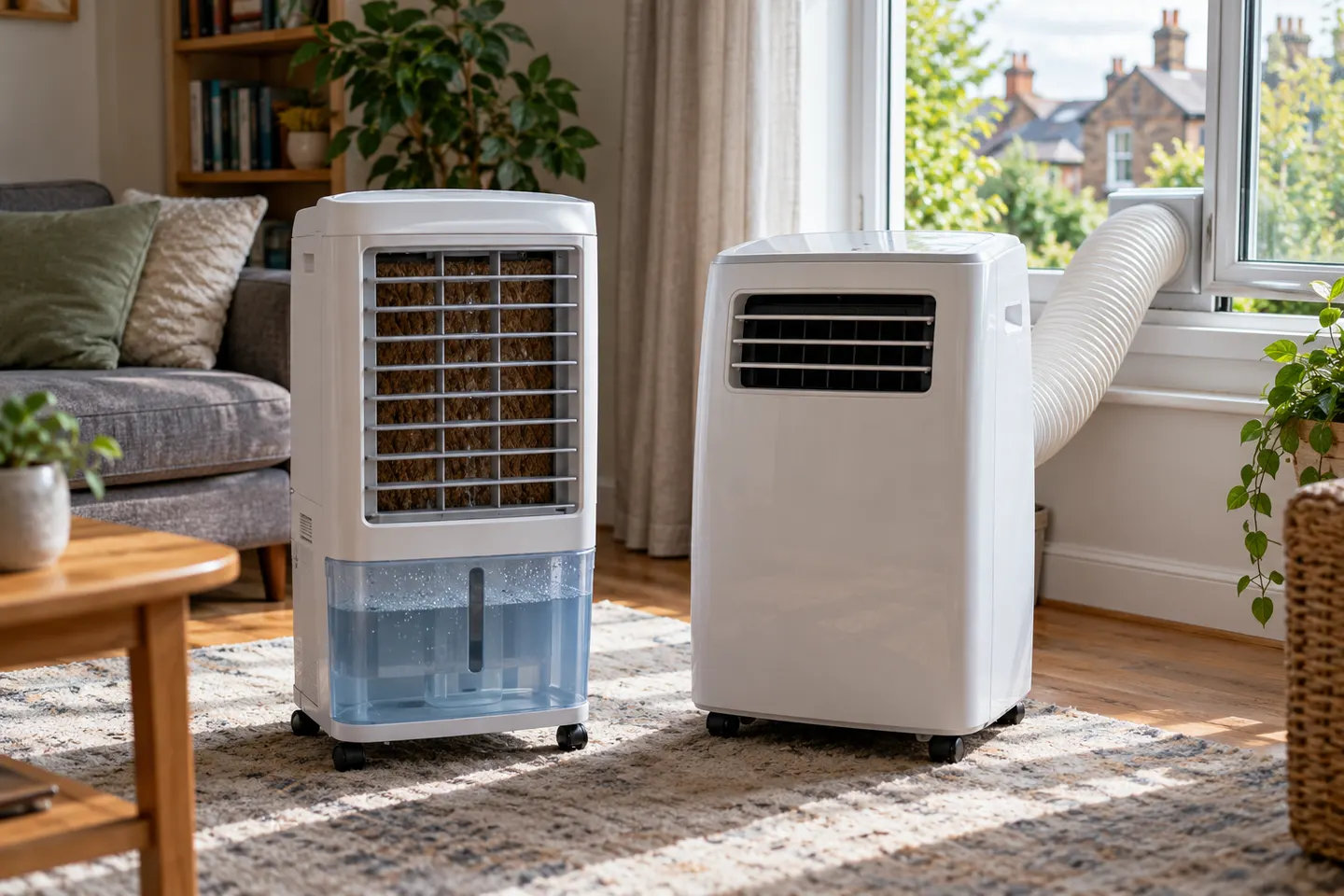
Air Conditioner or Evaporative Cooler: How to Choose
An evaporative cooler uses water and ventilation; a refrigerated air conditioner uses a compressor and can dehumidify. Climate and the result you need decide between them.

Best Portable Air Coolers to Consider in Australia (2026)
Bonaire Crown 10i is a practical shortlist choice for its published room guidance and portable design. Bonaire Duet suits a smaller spot; Dimplex DCEVP6WT adds a purifier function.
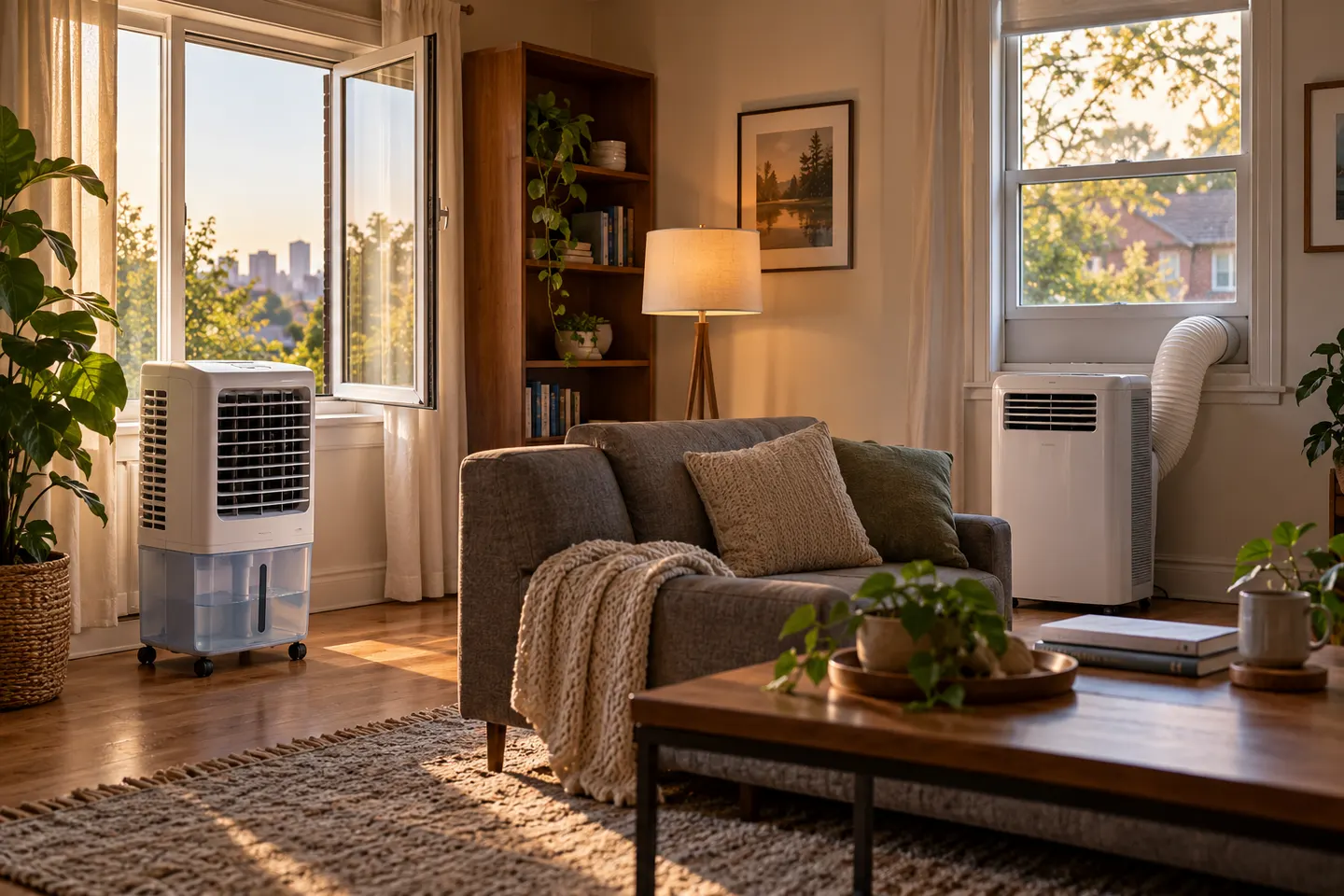
Evaporative Cooler Air Conditioning: What It Does
Evaporative air conditioning cools incoming air through water evaporation and needs an exhaust path. Its suitability depends strongly on outdoor humidity and the building layout.