






Dry climate and fresh-air movement through the house
Gearjury may earn a commission when you buy through a retailer link. Editorial conclusions are based on cited evidence.
Head to head
Evaporative Cooler Versus Air Conditioner: Which Fits?
An evaporative cooler uses water and fresh-air movement; an air conditioner uses a refrigeration cycle. Climate, humidity and the need to ventilate are decisive.
Cooling with windows and doors closed
Daikin Lite Series Split System
The verdict
The evaporative cooler versus air conditioner choice turns on climate and operating needs. Evaporative cooling can suit dry conditions and fresh-air ventilation; air conditioning is more suitable when humidity control and closed-room temperature control are priorities.
Dry climate and fresh-air movement through the house: Breezair Extraordinaire
Breezair is a fixed evaporative system designed to supply outside air through a whole-home installation.
Cooling with windows and doors closed: Daikin Lite Series Split System
A split system recirculates conditioned indoor air rather than relying on evaporative ventilation.
Reducing indoor humidity while cooling: Daikin Lite Series Split System
Air conditioning removes heat and moisture through its refrigeration process; direct evaporative cooling adds moisture.
Compare them side by side
| Breezair Extraordinaire | Daikin Lite Series Split System | |
|---|---|---|
| Cooling process | Evaporation | Refrigeration cycle |
| Effect on moisture | Adds moisture to supply air | Removes moisture during cooling |
| Air source | Outside air | Recirculated indoor air |
| Typical installation | Ducted rooftop system | Wall-mounted indoor and outdoor units |
| Climate fit | Dry conditions | Suitable across more humidity conditions, subject to sizing |
| Model-specific capacity | — | — |
Common questions
Questions before you buy
What is the difference between a swamp cooler and an air conditioner?
A swamp cooler is an evaporative cooler that uses water and airflow; an air conditioner uses a refrigeration cycle to remove heat. Evaporative systems add moisture, while air conditioning can dehumidify.
Is an evaporative cooler cheaper to run than air conditioning?
Running costs depend on equipment, local tariffs, operating hours and climate. Compare the exact system's published power and have a designer estimate expected use rather than relying on a blanket claim.
Can an evaporative cooler work with windows closed?
Direct evaporative systems need air to pass through the space and leave through a relief path. A closed room can retain moisture and does not match typical operating guidance.
Which is better in a humid climate?
Air conditioning is generally a more suitable choice when humidity reduction matters. Evaporative cooling adds moisture and is less effective when the air is already humid.
Sources and how we chose
- Seeley International, Breezair evaporative cooling · 2026-10-18
- Daikin Australia Lite Series · 2026-10-18
- US Department of Energy, Evaporative Coolers · 2026-10-18
Keep exploring
Related guides
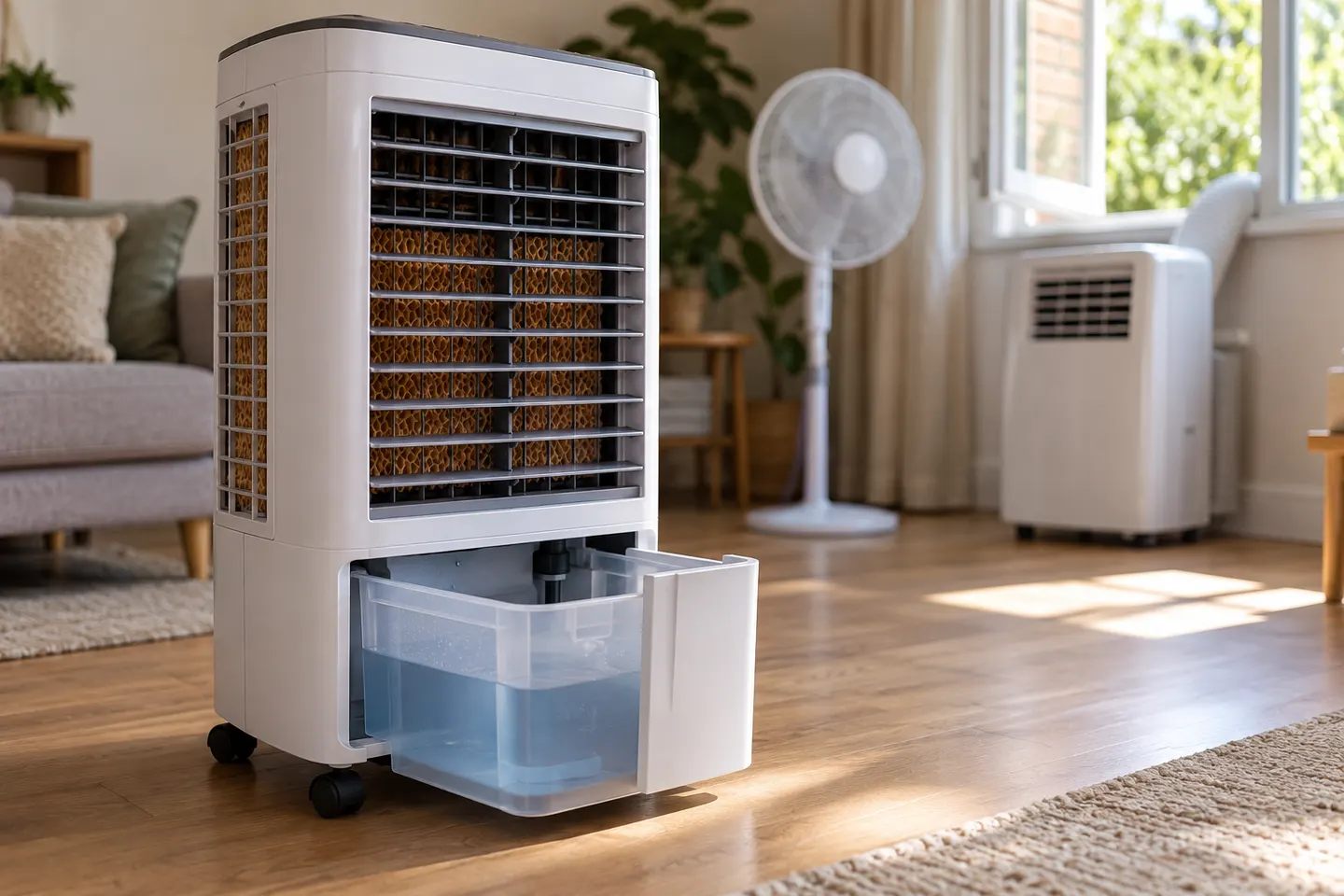
Portable Air Coolers for Australian Homes
A portable evaporative cooler suits hot, dry air and a ventilated room; a fan-only unit avoids adding moisture. Start with climate, airflow and cleaning needs.
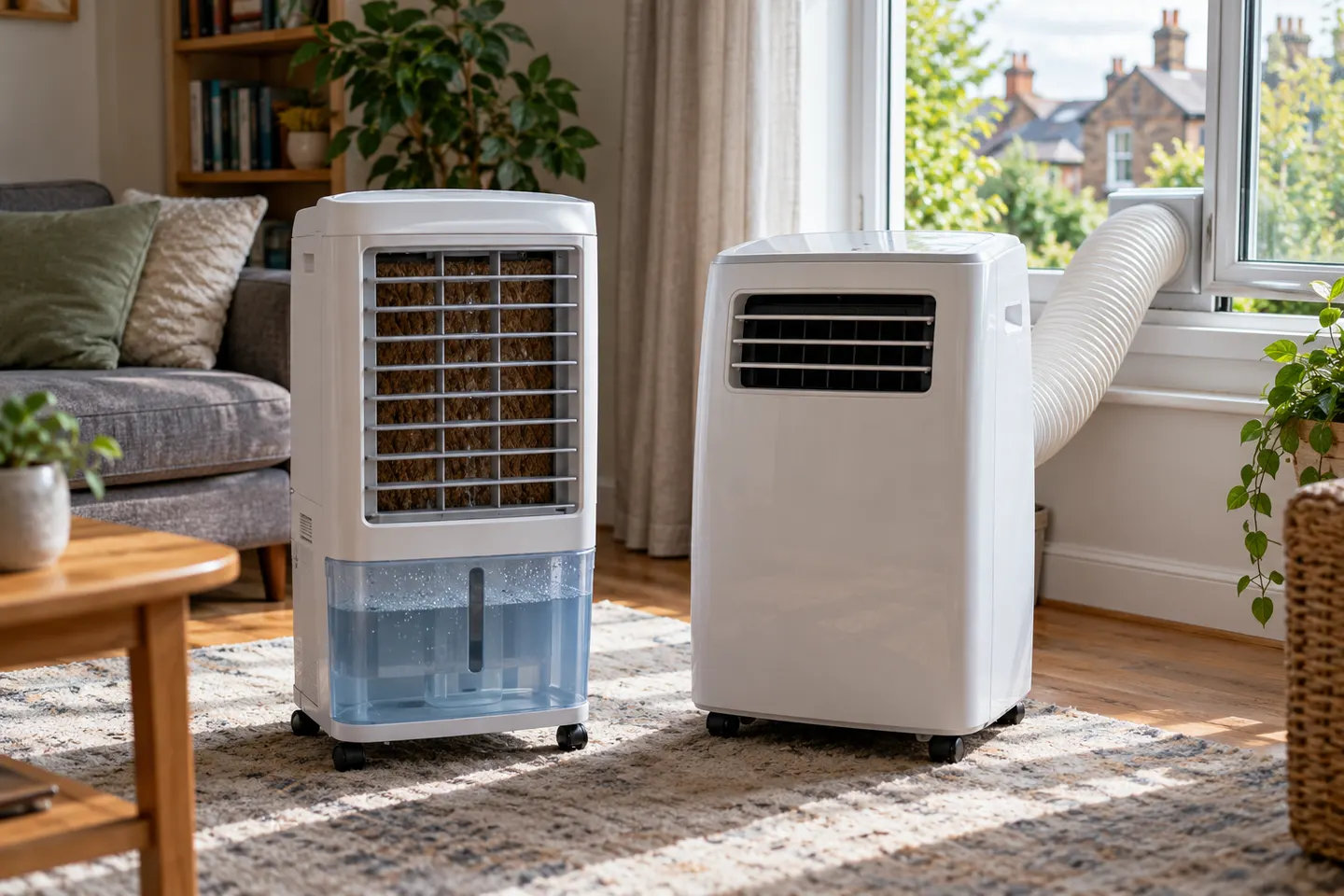
Air Conditioner or Evaporative Cooler: How to Choose
An evaporative cooler uses water and ventilation; a refrigerated air conditioner uses a compressor and can dehumidify. Climate and the result you need decide between them.

Best Portable Air Coolers to Consider in Australia (2026)
Bonaire Crown 10i is a practical shortlist choice for its published room guidance and portable design. Bonaire Duet suits a smaller spot; Dimplex DCEVP6WT adds a purifier function.
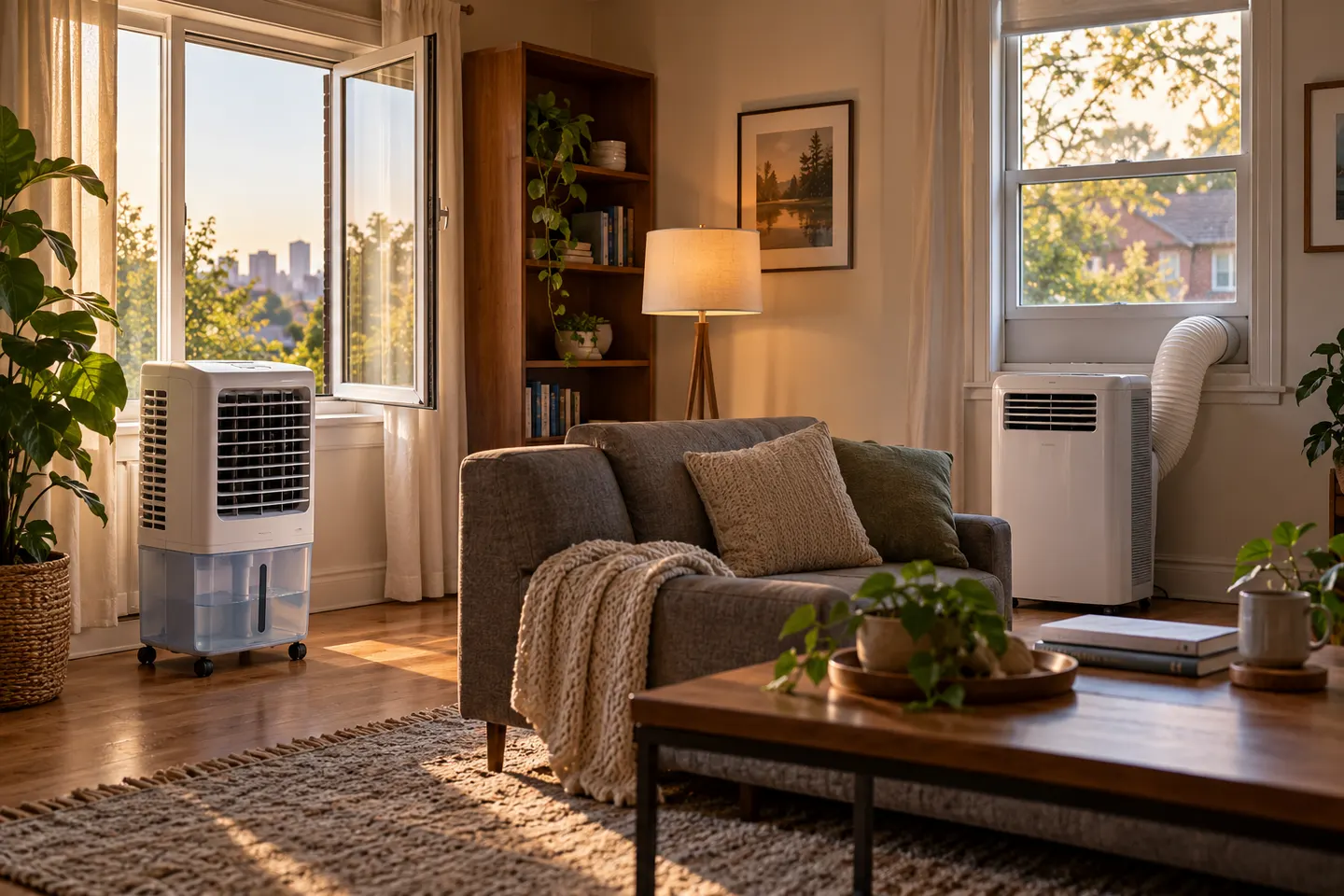
Evaporative Cooler Air Conditioning: What It Does
Evaporative air conditioning cools incoming air through water evaporation and needs an exhaust path. Its suitability depends strongly on outdoor humidity and the building layout.