






Dry air and a ventilated home
Gearjury may earn a commission if you buy through links on this site. Our editorial guidance is based on cited information.
Head to head
Evaporative Cooler vs Refrigerated Air: Which Suits Your Home?
Evaporative cooling suits drier conditions and needs an air outlet. Refrigerative air conditioning is more adaptable to humidity and closed rooms.
Closed-room temperature control
Refrigerative air conditioning
The verdict
Neither system is universally better. Climate, room layout, ventilation, installation and running needs determine the sensible choice.
Dry air and a ventilated home: Evaporative cooling system
Evaporation suits drier conditions and needs an outlet path for air.
Closed-room temperature control: Refrigerative air conditioning
Refrigerative systems do not rely on evaporating water into the room.
Portable spot cooling: Evaporative cooling system
Choose this only where the climate and ventilation suit the specific model.
Compare them side by side
| Evaporative cooling system | Refrigerative air conditioning | |
|---|---|---|
| Cooling principle | Air passes through wetted media | Refrigeration cycle moves heat |
| Indoor moisture | Adds moisture | May remove moisture in cooling mode |
| Ventilation | Needs an air exit path | Typically operates with doors and windows closed |
| Climate fit | Best in dry conditions | Works across a wider range of humidity |
| Installation | Portable, ducted or roof-mounted designs | Portable, split or ducted designs |
| Conversion | Not a simple appliance setting change | Usually requires a suitable replacement system |
Common questions
Questions before you buy
What is the difference between an evaporative cooler and refrigerated air?
An evaporative cooler passes air through wetted media, cooling and humidifying it. Refrigerative air conditioning uses a refrigeration cycle and can operate without adding moisture to the room.
Is a portable refrigerated air cooler the same as an evaporative cooler?
No. Listings sometimes use ?air cooler? loosely; check whether the device has a refrigeration cycle or a water tank and wetted pad.
Can I convert an evaporative cooler to refrigerated air?
Usually this means replacing or substantially redesigning the system, not changing a setting. A qualified HVAC professional can assess ducts, electrical capacity, drainage and local requirements.
Which system suits humid Australian weather?
Evaporative cooling loses effectiveness as humidity rises. Refrigerative air conditioning is generally more suitable when moisture removal and closed-room control matter.
Sources and how we chose
- US Department of Energy, evaporative cooling · 2026-10-18
- Australian Government Energy Rating, Heating and cooling · 2026-10-18
Keep exploring
Related guides
Air Conditioner or Evaporative Cooler: How to Choose
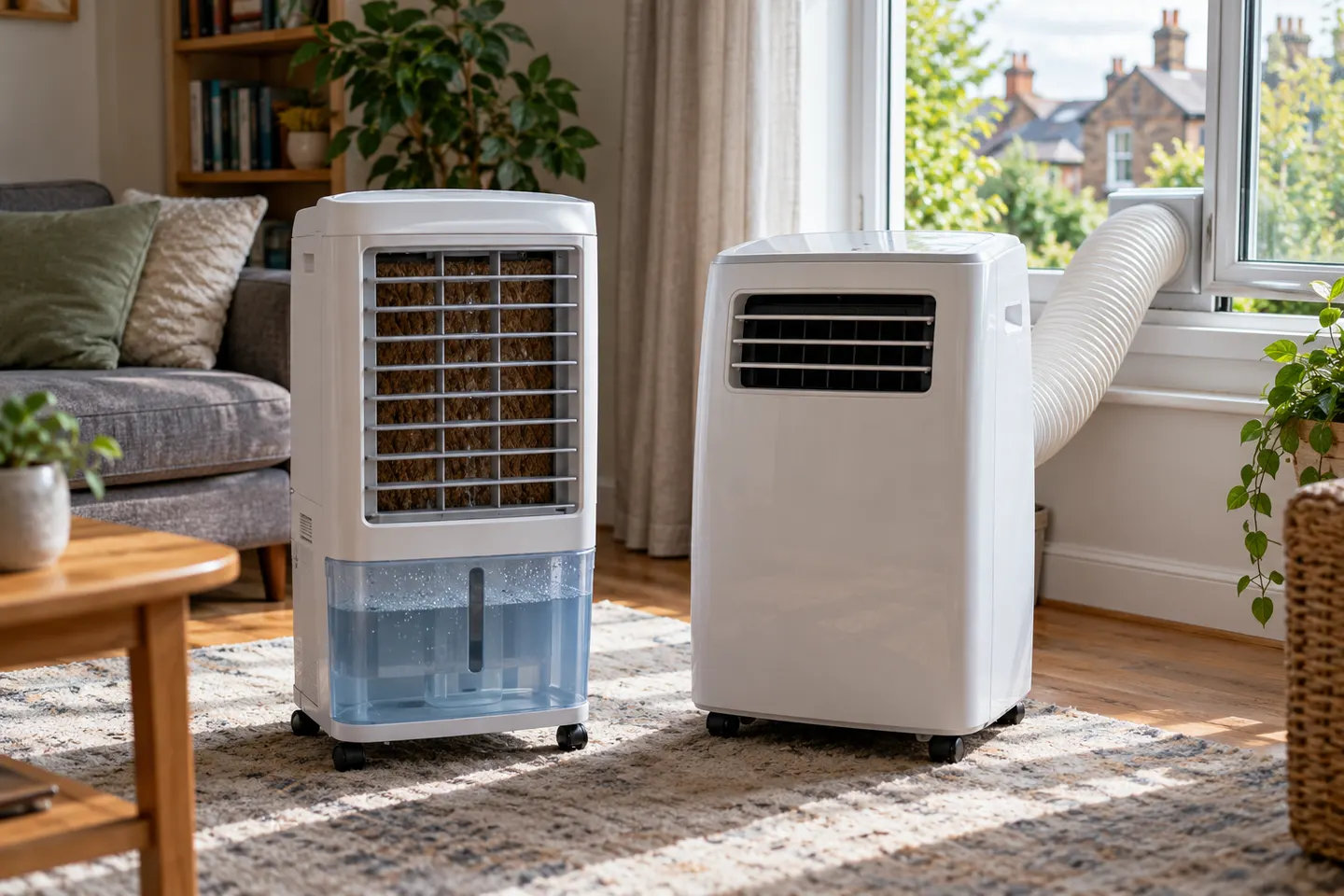
An evaporative cooler uses water and ventilation; a refrigerated air conditioner uses a compressor and can dehumidify. Climate and the result you need decide between them.

Best Portable Air Coolers to Consider in Australia (2026)
Bonaire Crown 10i is a practical shortlist choice for its published room guidance and portable design. Bonaire Duet suits a smaller spot; Dimplex DCEVP6WT adds a purifier function.
Evaporative Cooler Air Conditioning: What It Does
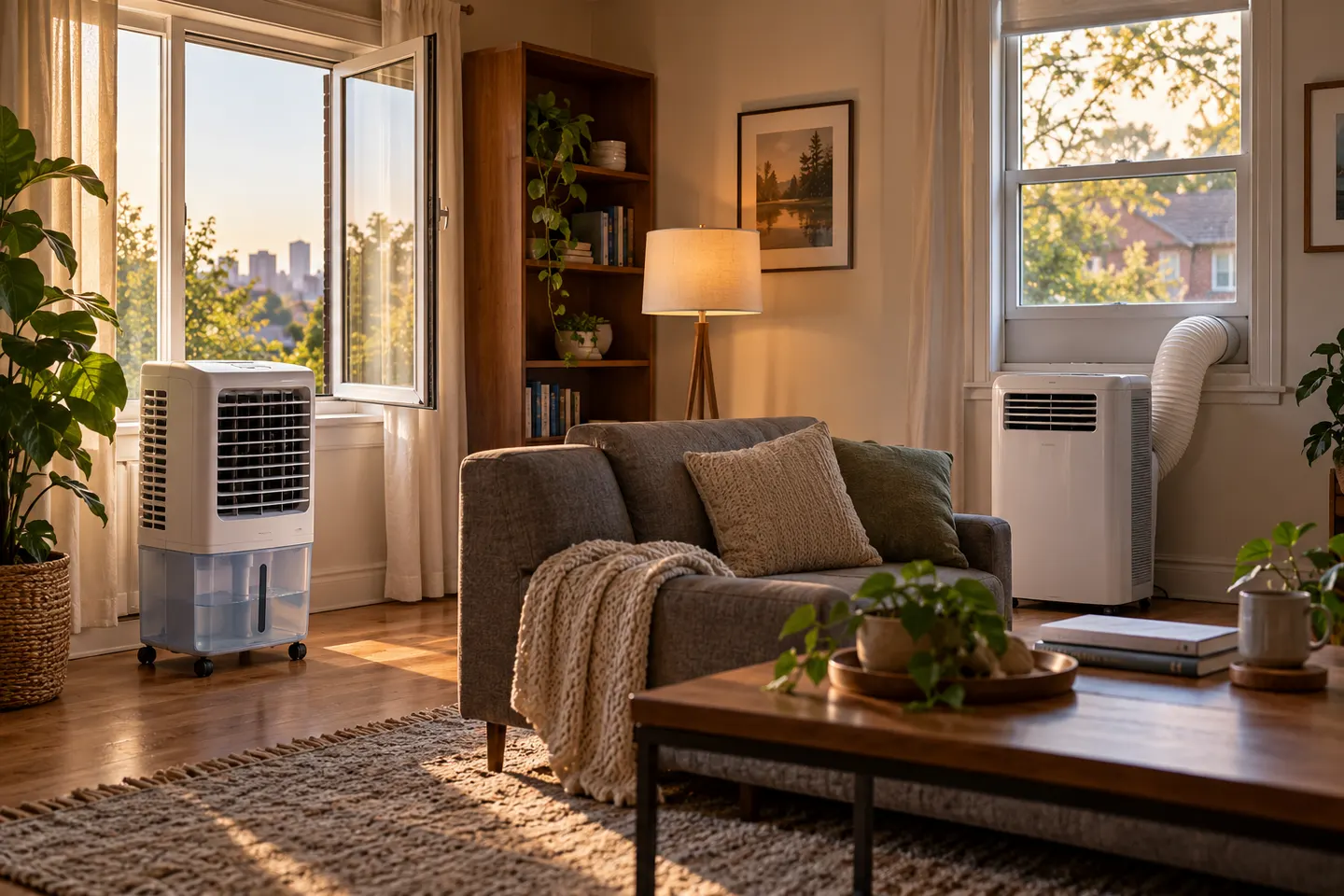
Evaporative air conditioning cools incoming air through water evaporation and needs an exhaust path. Its suitability depends strongly on outdoor humidity and the building layout.
Portable Air Coolers for Australian Homes
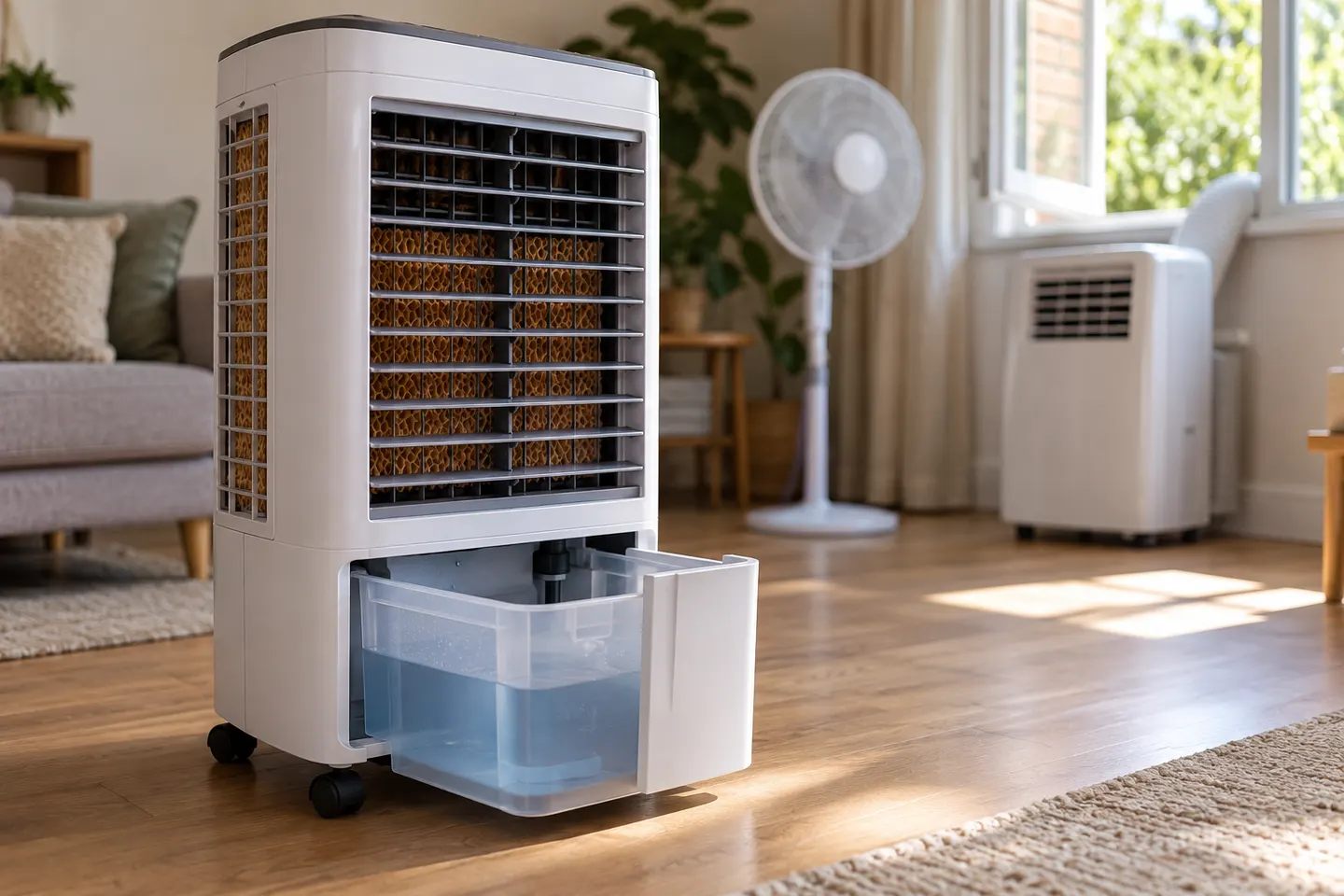
A portable evaporative cooler suits hot, dry air and a ventilated room; a fan-only unit avoids adding moisture. Start with climate, airflow and cleaning needs.