Gearjury may earn a commission from qualifying retailer links. This does not affect our setup instructions.
Guide
How to Setup a NETGEAR WiFi Extender at Home
Set up a NETGEAR extender beside your router using WPS or the web setup flow, then move it to a position where it still receives a useful signal. Button names vary by model.
GGearjury editorial team · Updated 18 October 2026· 5 min
01
Prepare the extender
Plug the extender into a socket in the same room as the router and wait for its power light to settle. If it was previously configured, you may need to reset it before beginning. Use the model label and manual to identify the correct controls.
02
Set up with WPS
Press the router's WPS button, then press the extender's WPS button within the time window given in its manual. Wait for the connection indicator before unplugging it. Some routers disable WPS or use a different pairing method, so use browser setup if pairing does not start.
03
Set up without WPS or a computer
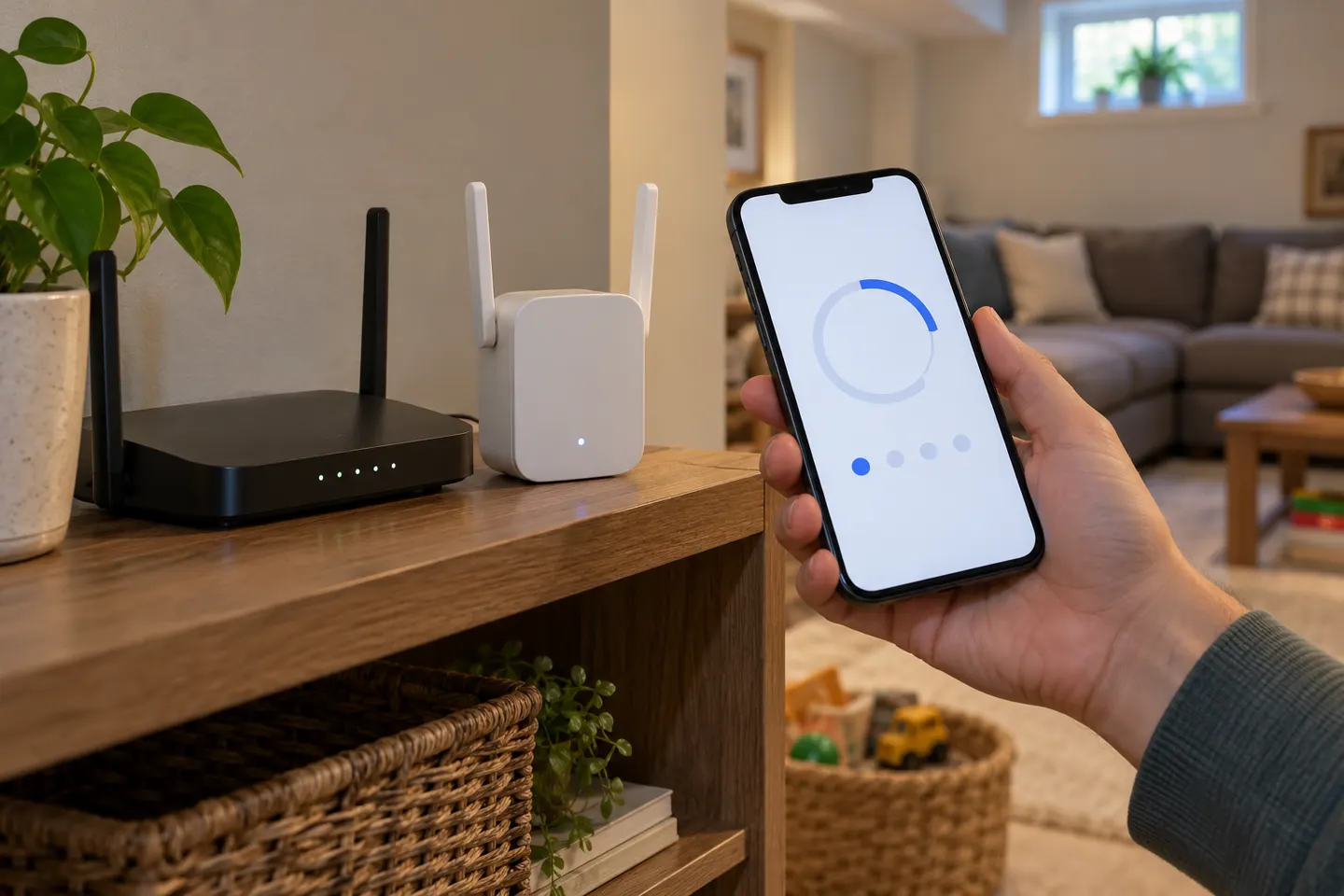
Join the extender's temporary WiFi network from a phone or tablet, then follow NETGEAR's setup page or model-specific app instructions. Choose your home network and enter its password. You do not need a desktop computer if the browser-based flow is supported by your model.
04
Configure an AC1200, AC750 or N300 model
The WiFi standard and setup controls vary across NETGEAR model families, including AC1200, AC750 and N300 extenders. Treat those labels as performance classes, not exact model numbers; use the full model printed on the unit to find its specific setup instructions.
05
Move it to a useful location
Once paired, place the extender between the router and the area needing coverage. Confirm its router-link indicator remains good and avoid locations where thick walls or appliances obstruct the path. Connect client devices to the extender's network name or use Ethernet if your model provides that option.
06
Reset the extender if setup is stuck
A factory reset erases saved network settings. With the unit powered, press and hold its Reset button for the duration specified in its manual, then release it and wait for reboot. Do not assume every model uses the same hold time or button location.
07
Fix a setup that will not complete
Verify the router password, try setup near the router, and check whether router security or access controls restrict new devices. Restart both units and use NETGEAR's current model-specific troubleshooting steps. If the extender joins but offers no useful coverage, reposition it before repeating a factory reset.
Common questions
Questions before you buy
How do I set up a NETGEAR AC1200 WiFi range extender?
Use WPS if both router and extender support it, or join the extender's temporary WiFi and complete browser setup. Confirm the precise model number because AC1200 covers several products with different instructions.
How do I reset a NETGEAR WiFi extender?
With the extender powered, press and hold its Reset button as directed in that model's manual. The reset clears its configuration, after which you must run setup again.
Can I set up a NETGEAR extender without WPS?
Yes, many models support setup through a phone or computer browser connected to the extender's temporary network. Follow the instructions for the exact model.
Can I set up a NETGEAR WiFi extender without a computer?
Often, yes. Use a phone or tablet browser, or the supported NETGEAR app if the model offers that setup route.
Why is my NETGEAR extender setup not working?
Common causes include an incorrect WiFi password, weak router signal during pairing, disabled WPS or router access restrictions. Try setup beside the router and consult the model-specific troubleshooting page.
Can I connect to a NETGEAR extender using my phone?
Yes. Join its temporary network to configure it, then connect to its configured WiFi network for normal use. Your phone may need to switch away from mobile data during setup.
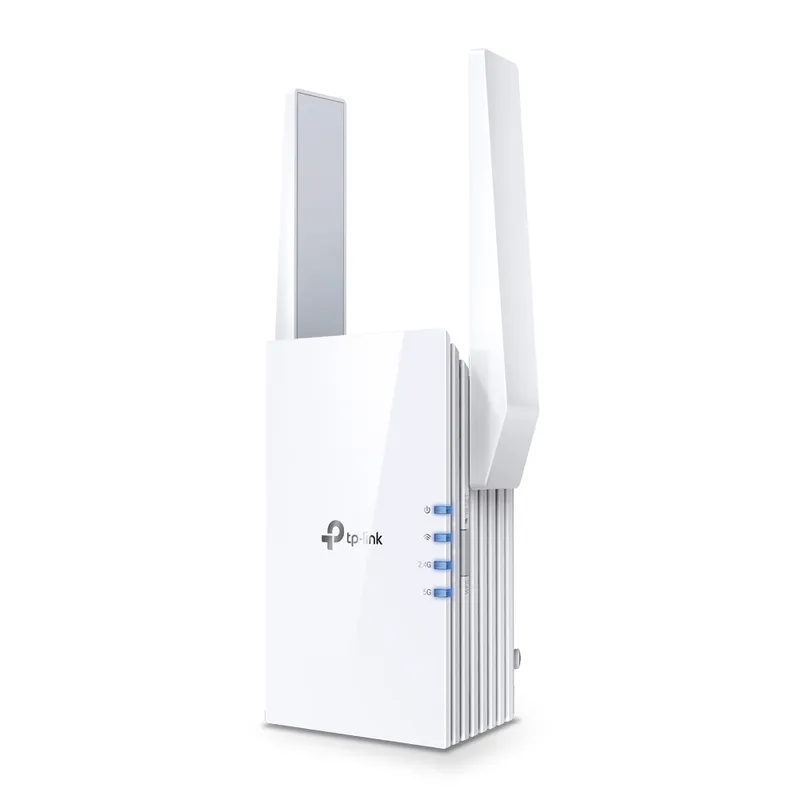
For a general indoor pick, start with TP-Link RE705X: it has WiFi 6, a Gigabit Ethernet port and access point mode. RE550, RE315 and a powerline kit suit different budgets and layouts; outdoor use needs purpose-built hardware.
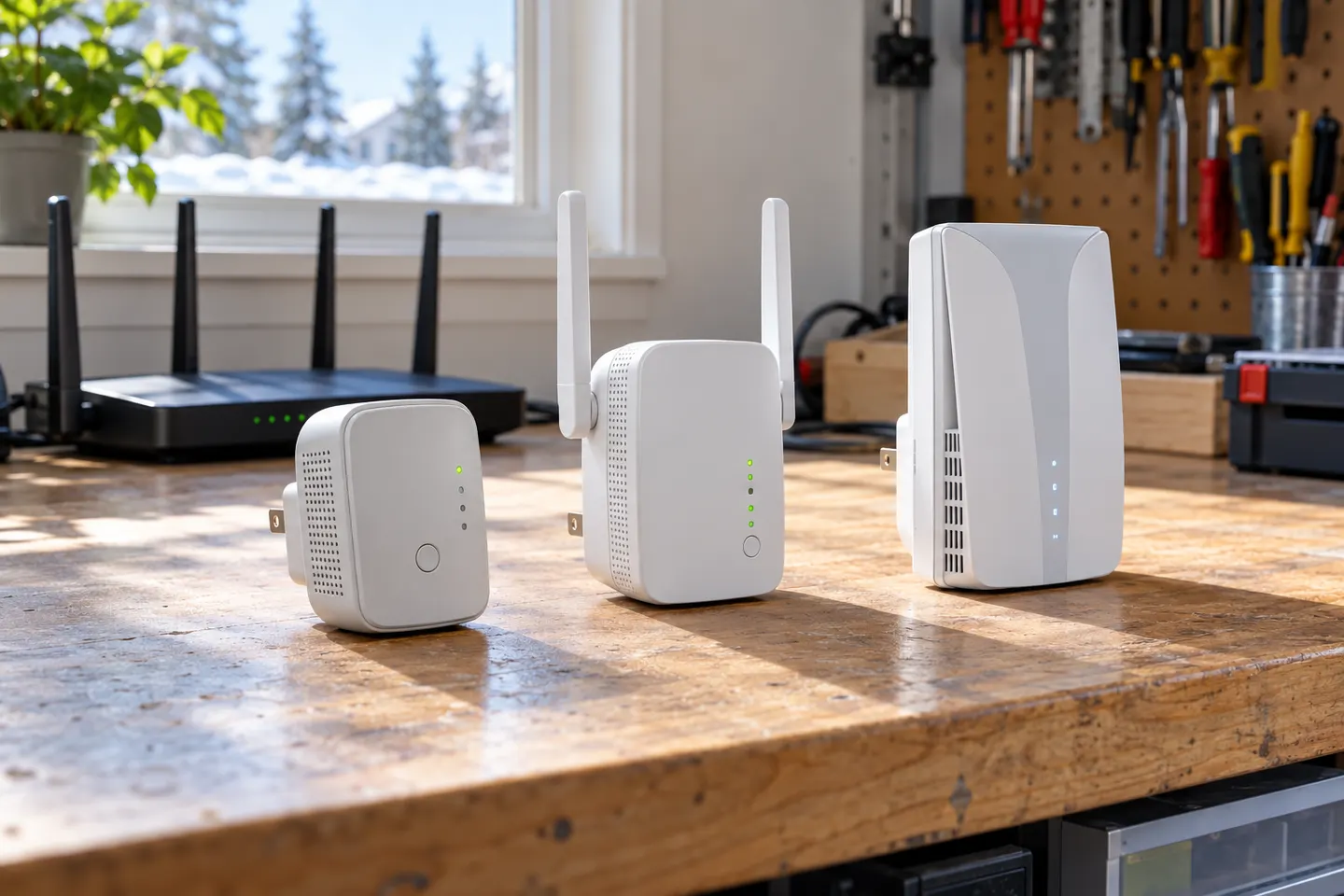
Choose a wireless range extender when it can receive a healthy signal; consider powerline when the route through the home is the main obstacle. TP-Link’s model range includes both approaches.
A WiFi extender can carry an existing router signal into a weak-coverage area. Choose a plug-in repeater for a simple dead zone, or consider powerline when walls make a wireless link unreliable.
Your privacy
We use cookies and similar technologies. Necessary ones keep the site working. With your permission we also use statistics cookies (Google Analytics and Microsoft Clarity) to understand which guides help readers. You can accept all, reject all or choose. You can change your choice at any time from "Cookie settings" at the bottom of every page. Cookie policy