







A directed breeze without hose installation
Gearjury may earn a commission when you buy through a retailer link. Our editorial guidance is based on cited sources.
Head to head
Air Cooler versus Air Conditioner: Which Suits Your Home?
Choose an evaporative cooler for a close, water-assisted breeze when added humidity is acceptable. Choose air conditioning when you need active room cooling and can manage the exhaust or installation.
Active heat removal from a room
Portable air conditioner (type)
The verdict
Neither type is universally better. Match the mechanism to the room: evaporation provides a moist moving breeze, while air conditioning actively removes heat and needs an appropriate exhaust path.
A directed breeze without hose installation: Tristar AT-5450
Tristar describes the AT-5450 as a water-based cooler and lists a 4.5-litre tank.
Active heat removal from a room: Portable air conditioner (type)
An air conditioner transfers heat out; portable models route the exhaust outdoors.
Already humid conditions: Portable air conditioner (type)
Evaporative cooling adds moisture, which may reduce comfort when indoor humidity is high.
Compare them side by side
| Tristar AT-5450 | Portable air conditioner (type) | |
|---|---|---|
| Cooling method | Evaporates water into airflow | Refrigeration cycle moves heat outside |
| Water reservoir | 4.5 litres | — |
| Exhaust hose | Not listed | Usually required for portable models |
| Effect on humidity | Adds moisture | Can remove moisture |
| Room temperature control | No set-point claim on cited page | Model-dependent thermostat/control |
| Installation | Fill reservoir and position unit | Window or other exhaust arrangement |
Common questions
Questions before you buy
What is the difference between an evaporative cooler and an air conditioner?
An evaporative cooler moves air across water, adding moisture; an air conditioner uses refrigeration to transfer heat away from the room. The first gives a local breeze, while the second is designed for temperature control.
Is a swamp cooler the same as an air conditioner?
A swamp cooler is another name for an evaporative cooler. It does not work like a refrigerant-based air conditioner and is more dependent on dry incoming air.
Do evaporative coolers work in humid weather?
Their cooling effect can be limited when the air is already humid because evaporation becomes less effective and indoor moisture rises. Ventilation and the manufacturer’s instructions matter.
Does an air conditioner need a hose?
Portable air conditioners generally need to exhaust heat outdoors, commonly through a hose and window arrangement. Fixed systems use a different installation.
Sources and how we chose
- Tristar AT-5450 · 2026-10-18
- Energy Saving Trust, keeping a home cool · 2026-10-18
- US Department of Energy Building America, evaporative cooling · 2026-10-18
Keep exploring
Related guides
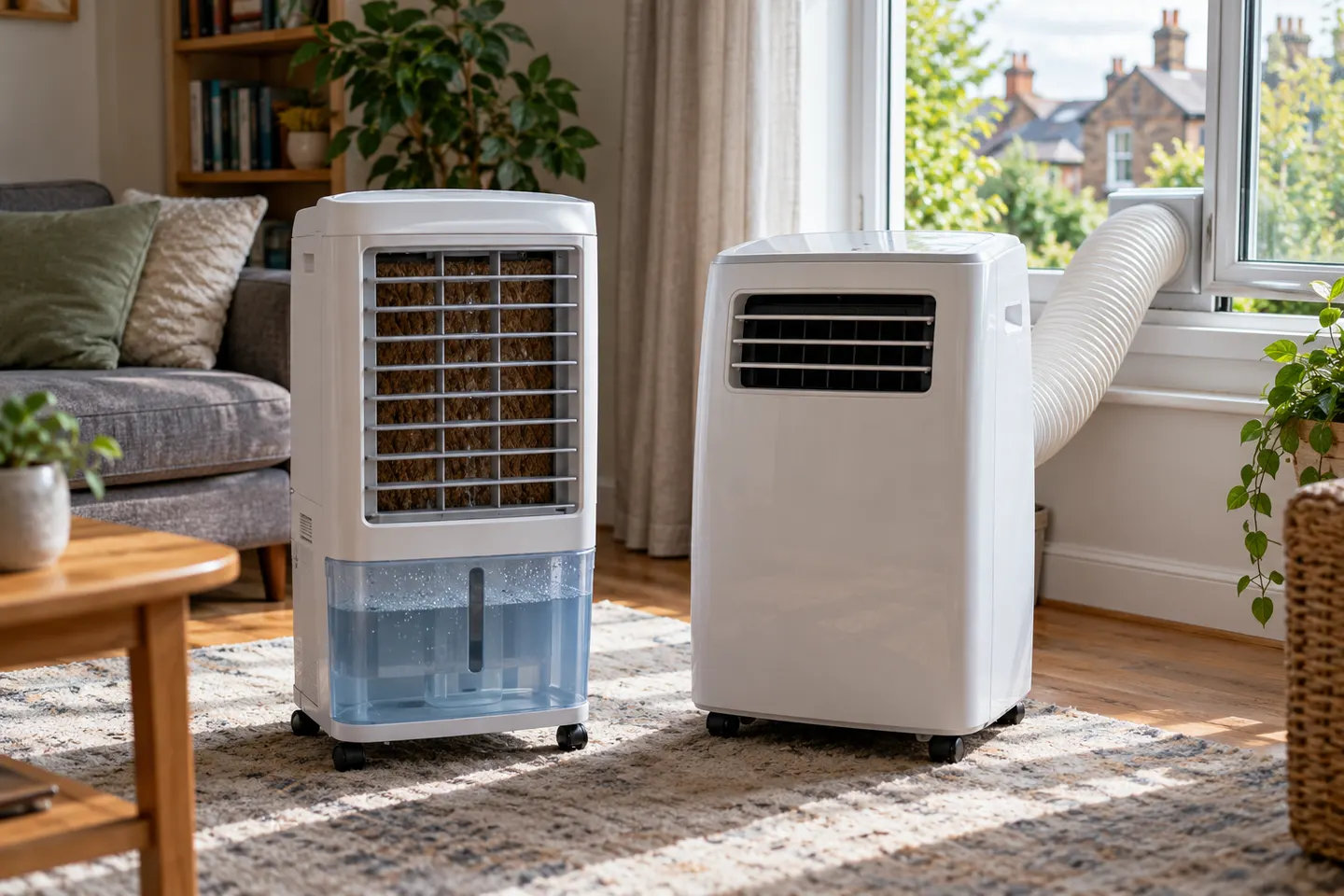
Portable Air Coolers and Air Conditioners: Know the Difference
A portable air cooler is not automatically an air conditioner. Check whether the appliance evaporates water, simply moves air or uses a refrigeration system.
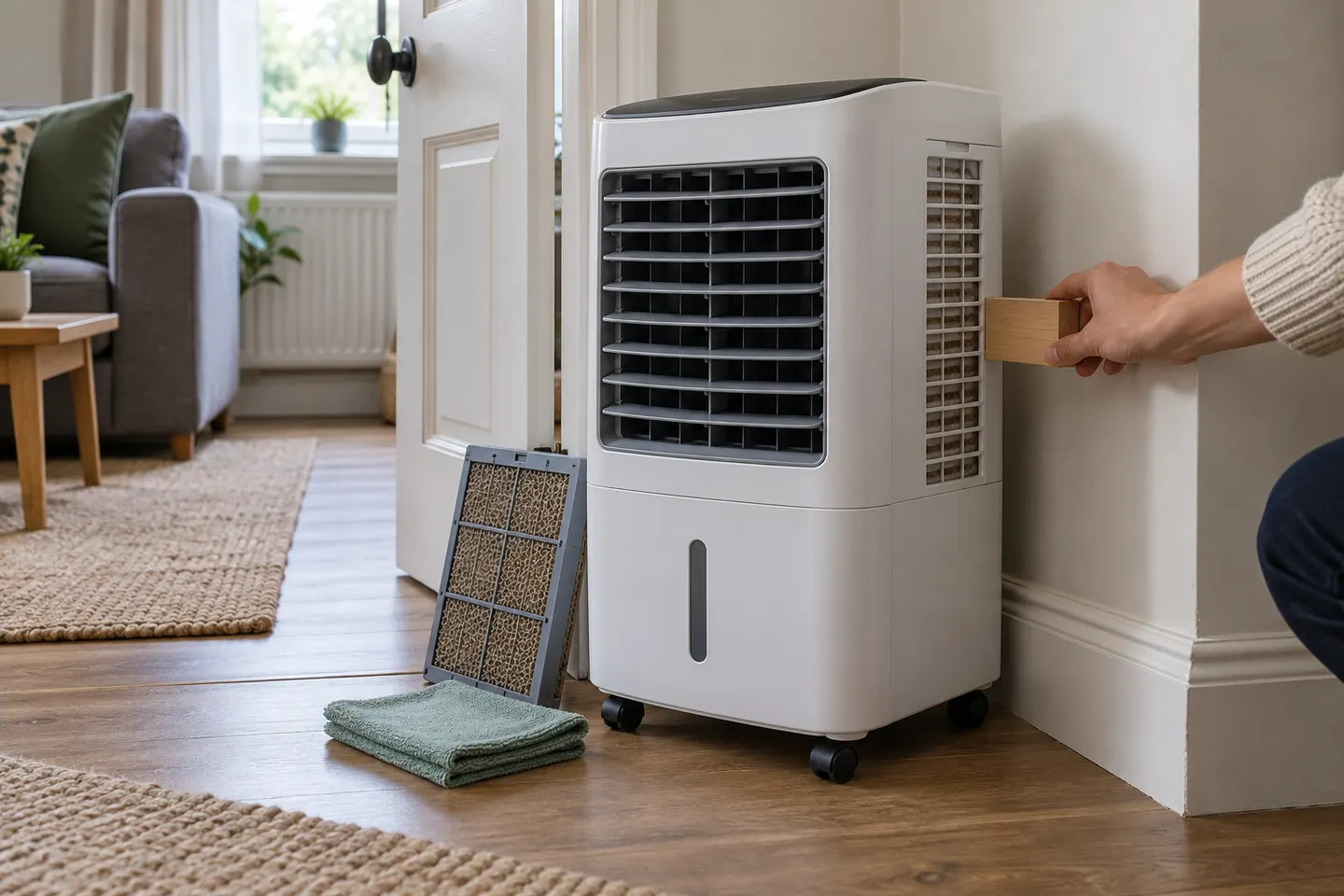
Portable Air Cooler Units: Check Access, Space and Maintenance
A portable air cooler unit must be practical to live with. Measure its position, plan water access and read the cleaning routine before focusing on extra modes.

Best Portable Air Coolers: Five Models to Compare for 2026
The best portable air cooler is one that suits the room's humidity and ventilation. Compare these real evaporative models only after confirming that this cooling method meets your needs.
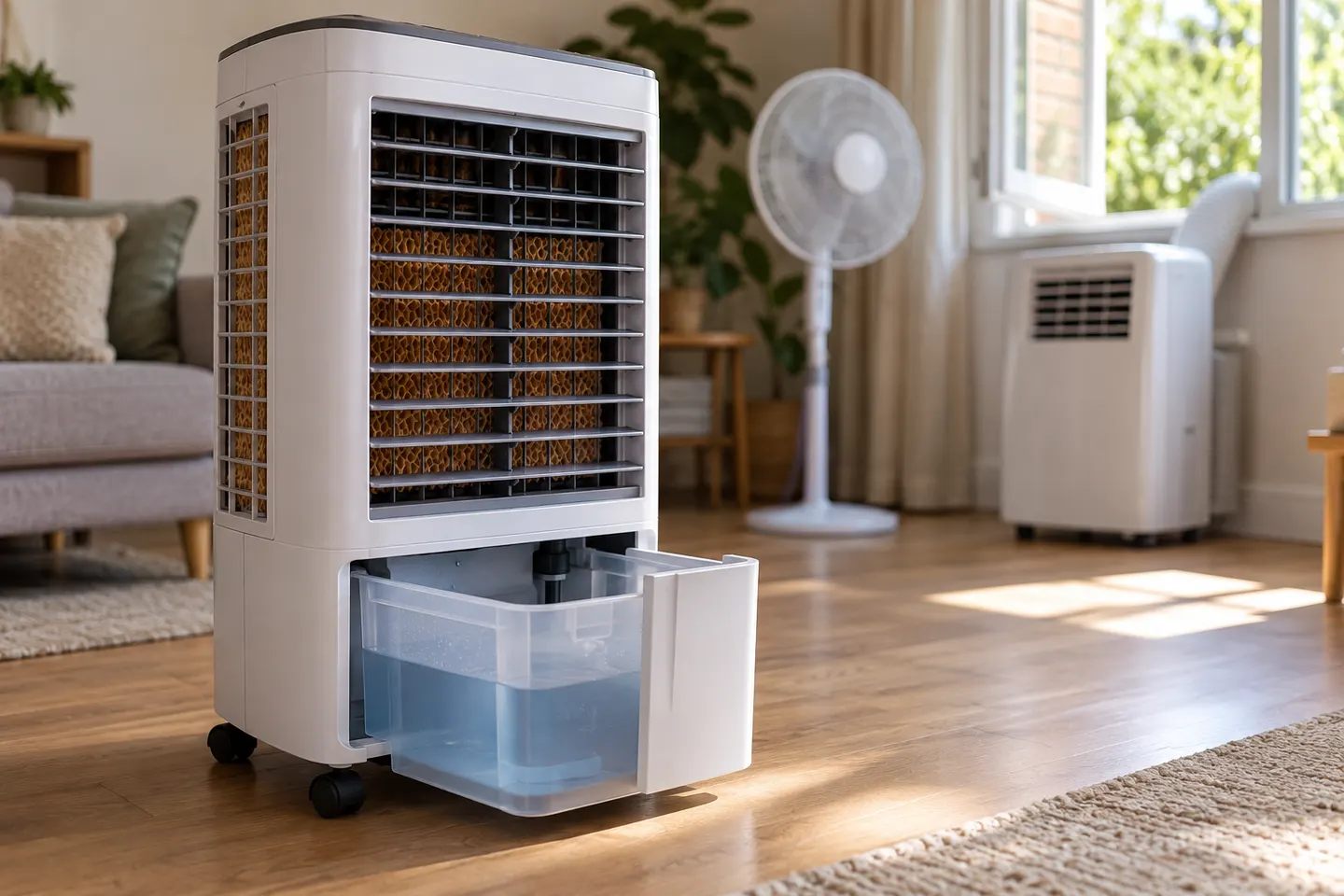
Portable Air Coolers: Understand the Options Before Buying
A portable air cooler can mean an evaporative unit, a fan or a portable air conditioner in shopping results. Identify the cooling method before choosing a model.