 Official manufacturer image
No exhaust hose
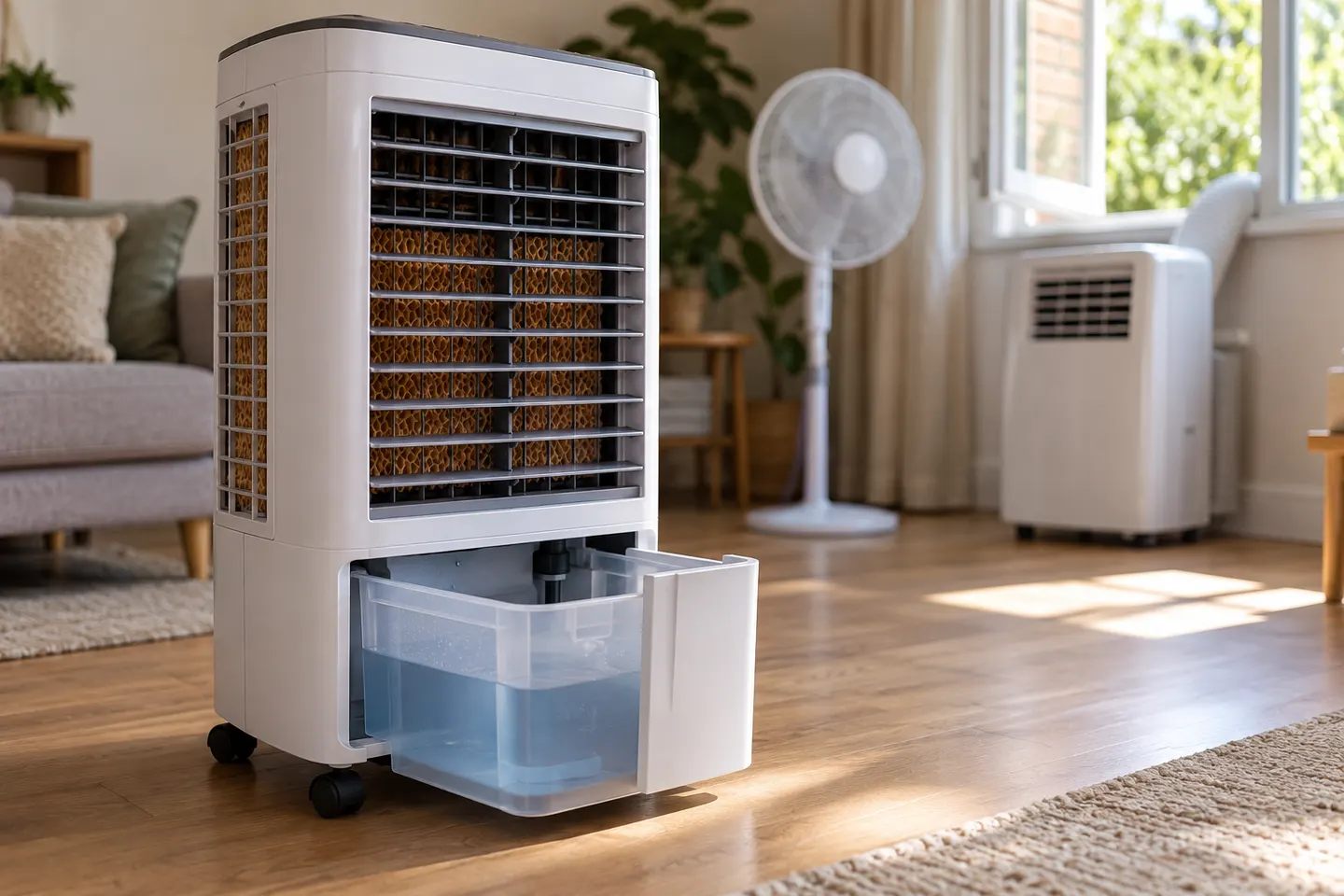
Evaporative air cooler
Check price on Amazon UKSponsored link · no live price shown

 Best picksBest WiFi Extenders in the UK: Compare Five Practical Options
 Best picksThe Best Dashcams in the UK for 2026
 Best picksBest Portable Air Coolers: Five Models to Compare for 2026
 Best picksBest Meat Thermometers in the UK for 2026
 Best picksBest Headlamp Torches in the UK: Five Choices for 2026
 Best picksBest Winter Gloves in the UK: Five Activity-Based Choices for 2026
 Best picksBest Radar Detectors in the UK: Models Compared for 2026
 Best picksBest Value Cordless Strimmers in the UK (2026)
 Best picksBest Air Purifiers in the UK for Different Rooms and Needs
Gearjury may earn a commission from qualifying retailer links.
Head to head
An evaporative air cooler uses water and adds moisture; AC uses refrigeration to remove heat. Choose around the humidity, cooling goal and venting options in your room.
Official manufacturer image
No exhaust hose
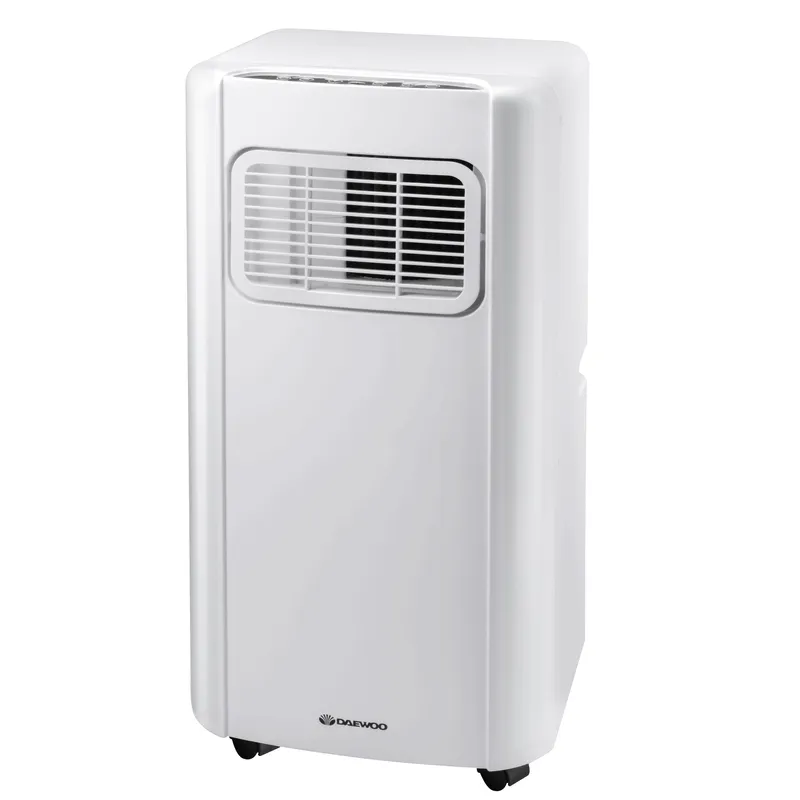 Official manufacturer image
Active temperature reduction
The verdict
An evaporative cooler generally avoids an exhaust hose but still needs appropriate ventilation.
AC uses refrigeration to remove heat and expels it outdoors.
Evaporative cooling adds moisture, making it a poorer fit when humidity is already high.
| Official manufacturer imageEvaporative air cooler | Official manufacturer imageDaewoo 3-in-1 Portable Air Conditioner with Fan & Dehumidifier, 5000 BTU | |
|---|---|---|
| Mechanism | Evaporation | Refrigeration |
| Humidity impact | Adds moisture | Can remove moisture |
| Exhaust | Usually no hose | Portable units vent hot air outside |
| High humidity | Less effective | More suitable for active cooling |
| Primary benefit | Directed cooler-feeling airflow | Room temperature control |
| Check price on Amazon UK | Check price on Amazon UK |
Common questions
An evaporative cooler moves air across water and relies on evaporation; AC uses a refrigeration cycle. They have different effects on room temperature and humidity.
An evaporative cooler usually has no exhaust hose, but it needs suitable ventilation. A portable AC generally needs an exhaust route to discharge heat.
Portable AC is better suited to active room cooling; an evaporative cooler may suit a ventilated space where a directed breeze is enough. Consider humidity and installation.
Follow the manual, but evaporative coolers need air exchange to manage the added moisture. A closed room can become increasingly humid.
A conventional AC generally removes some moisture as it cools. An evaporative cooler adds moisture through evaporation.
Keep exploring
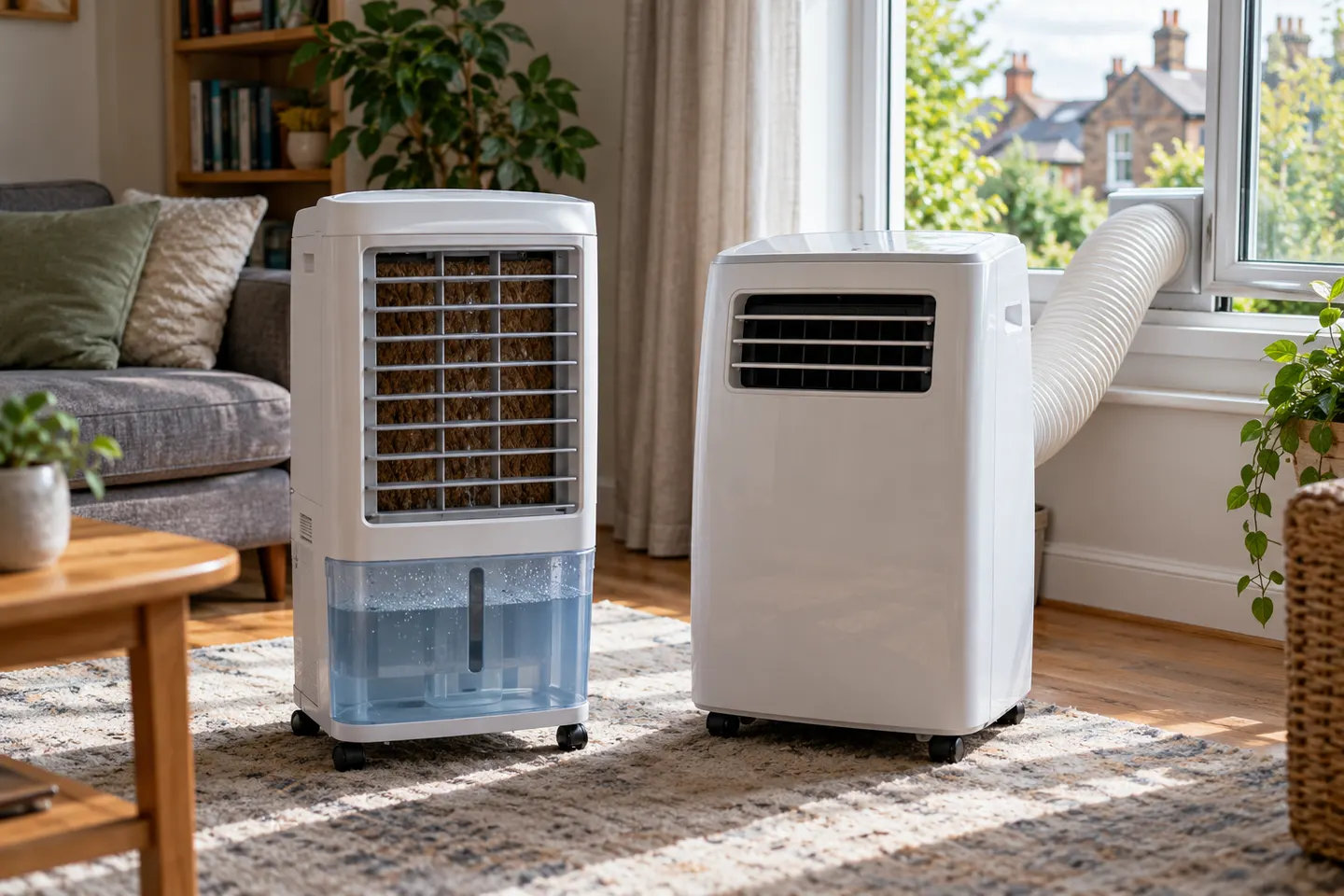
A portable air cooler is not automatically an air conditioner. Check whether the appliance evaporates water, simply moves air or uses a refrigeration system.
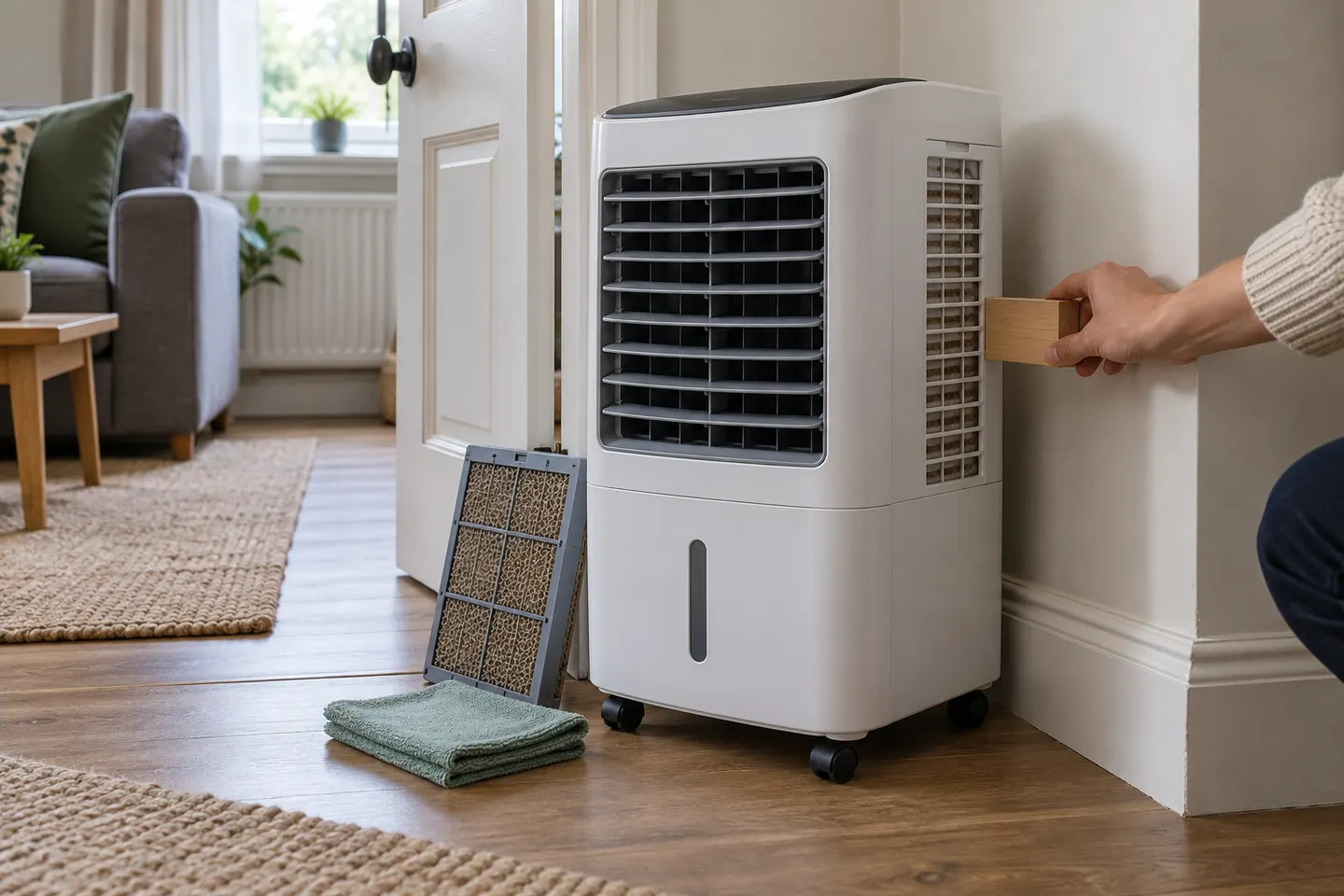
A portable air cooler unit must be practical to live with. Measure its position, plan water access and read the cleaning routine before focusing on extra modes.
The best portable air cooler is one that suits the room's humidity and ventilation. Compare these real evaporative models only after confirming that this cooling method meets your needs.
A portable air cooler can mean an evaporative unit, a fan or a portable air conditioner in shopping results. Identify the cooling method before choosing a model.