How does an air cooler differ from a fan?
A fan moves existing room air. An evaporative cooler moves air across water or damp media, adding moisture and potentially creating a cooler-feeling breeze nearby.

 Best picksBest WiFi Extenders in the UK: Compare Five Practical Options
 Best picksThe Best Dashcams in the UK for 2026
 Best picksBest Portable Air Coolers: Five Models to Compare for 2026
 Best picksBest Meat Thermometers in the UK for 2026
 Best picksBest Headlamp Torches in the UK: Five Choices for 2026
 Best picksBest Winter Gloves in the UK: Five Activity-Based Choices for 2026
 Best picksBest Radar Detectors in the UK: Models Compared for 2026
 Best picksBest Value Cordless Strimmers in the UK (2026)
 Best picksBest Air Purifiers in the UK for Different Rooms and Needs
Gearjury may earn a commission from qualifying retailer links. This does not affect editorial conclusions.
Guide
A fan is simpler and adds no moisture; an evaporative cooler may make nearby airflow feel cooler when conditions suit it.
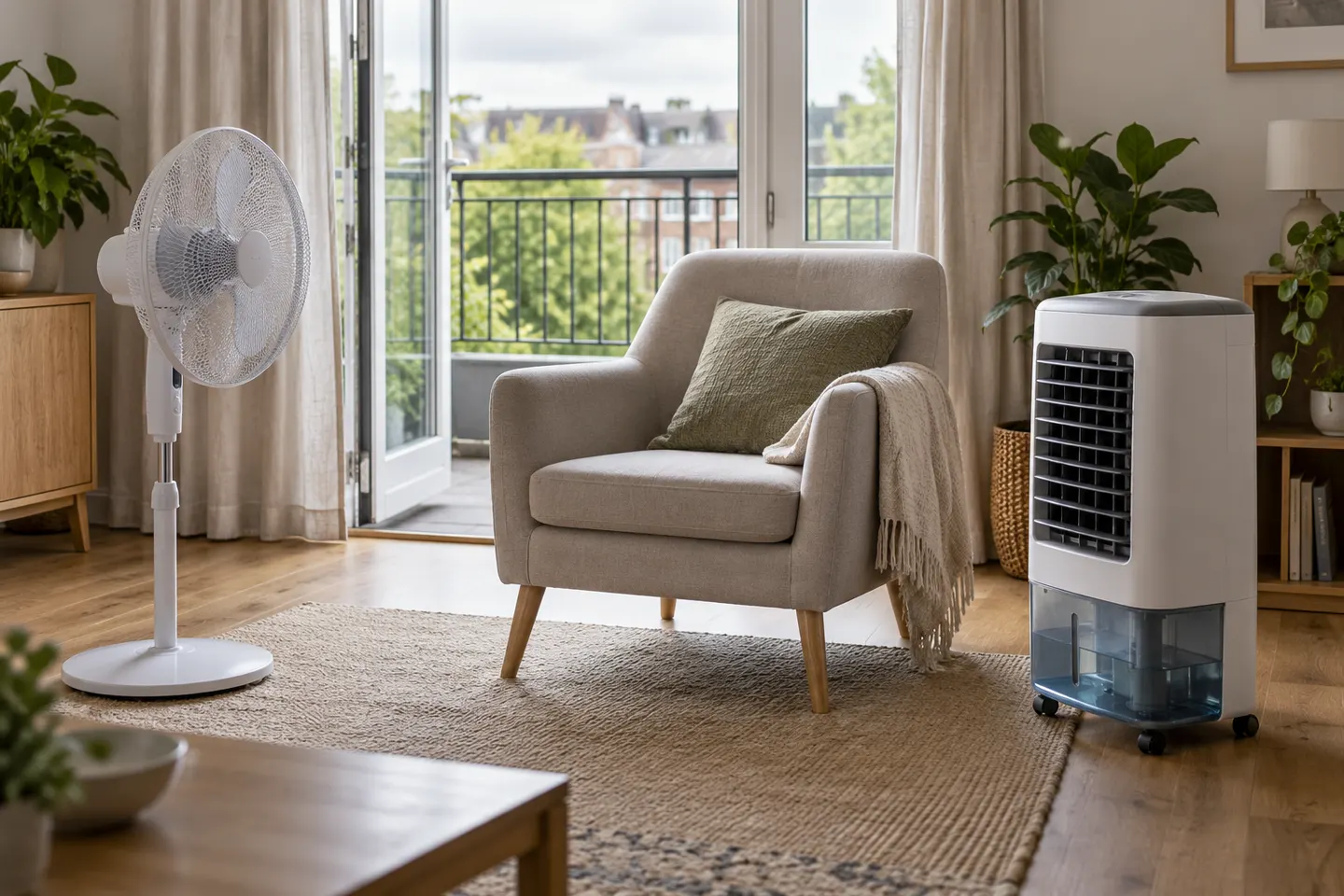
A fan moves existing room air. An evaporative cooler moves air across water or damp media, adding moisture and potentially creating a cooler-feeling breeze nearby.
A fan still circulates air without adding moisture. Evaporative cooling is less suitable when humidity is already high because added moisture can feel uncomfortable.
Neither should be assumed to lower room temperature like compressor air conditioning. A fan changes how air feels on skin; a cooler depends on evaporation and room conditions.
Compare model power data, filter care and cleaning needs. A fan has no water tank to refill, while an evaporative cooler needs tank and media maintenance.
Choose a fan for straightforward air movement or when humidity is a concern. Consider an evaporative cooler for close-range airflow in a suitably dry, ventilated space.
Common questions
It depends on the weather and room. A fan avoids added humidity; an evaporative cooler may feel cooler nearby in dry conditions.
Do not expect the same result as compressor air conditioning. Evaporative units affect airflow and moisture, with results depending on ventilation and humidity.
Check the rated power of each exact model and the intended hours of use. Without comparable product data, a general cost ranking would be unreliable.
Follow the manufacturer ventilation guidance. Evaporative cooling adds moisture, so a closed room may become less comfortable.
Keep exploring
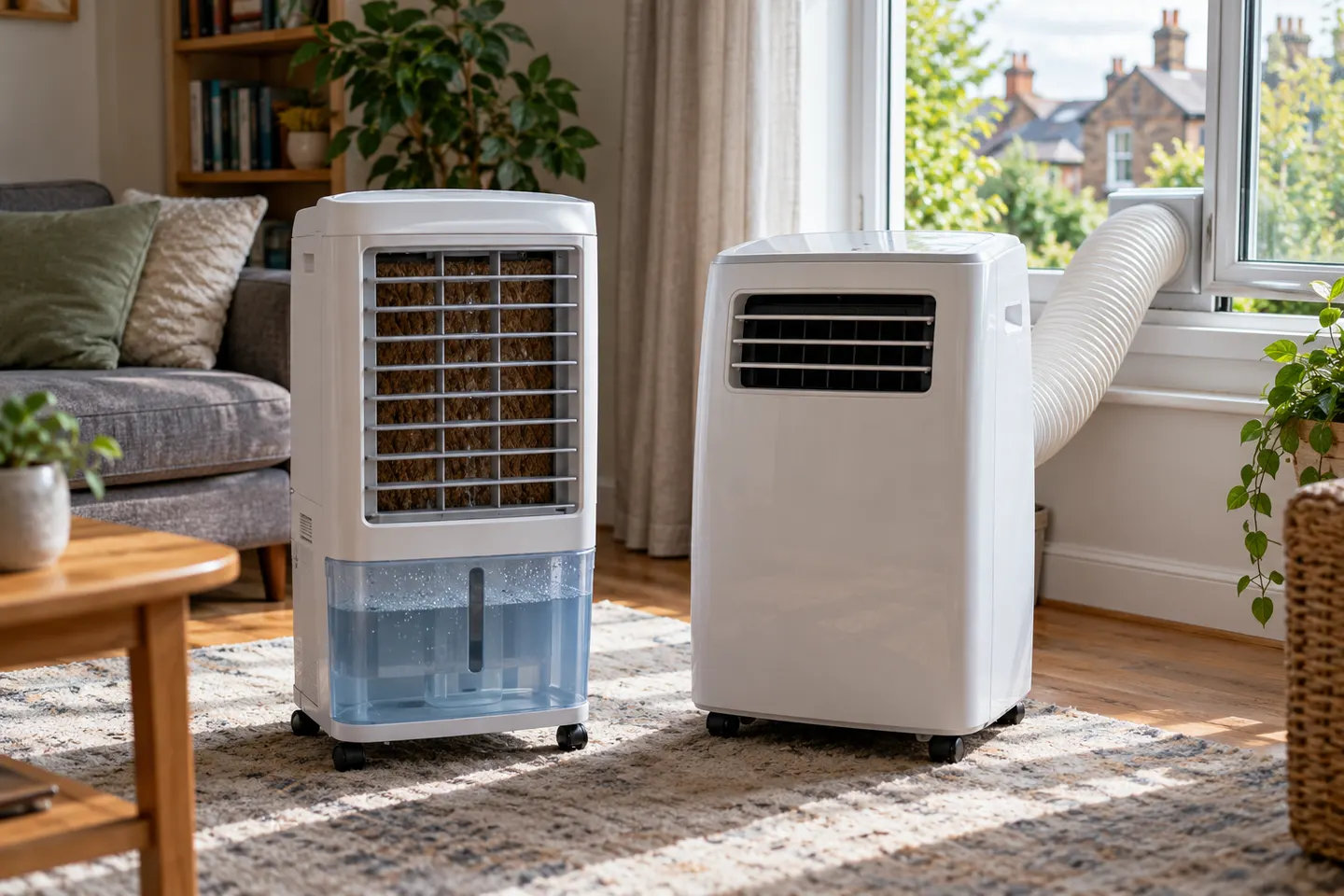
A portable air cooler is not automatically an air conditioner. Check whether the appliance evaporates water, simply moves air or uses a refrigeration system.
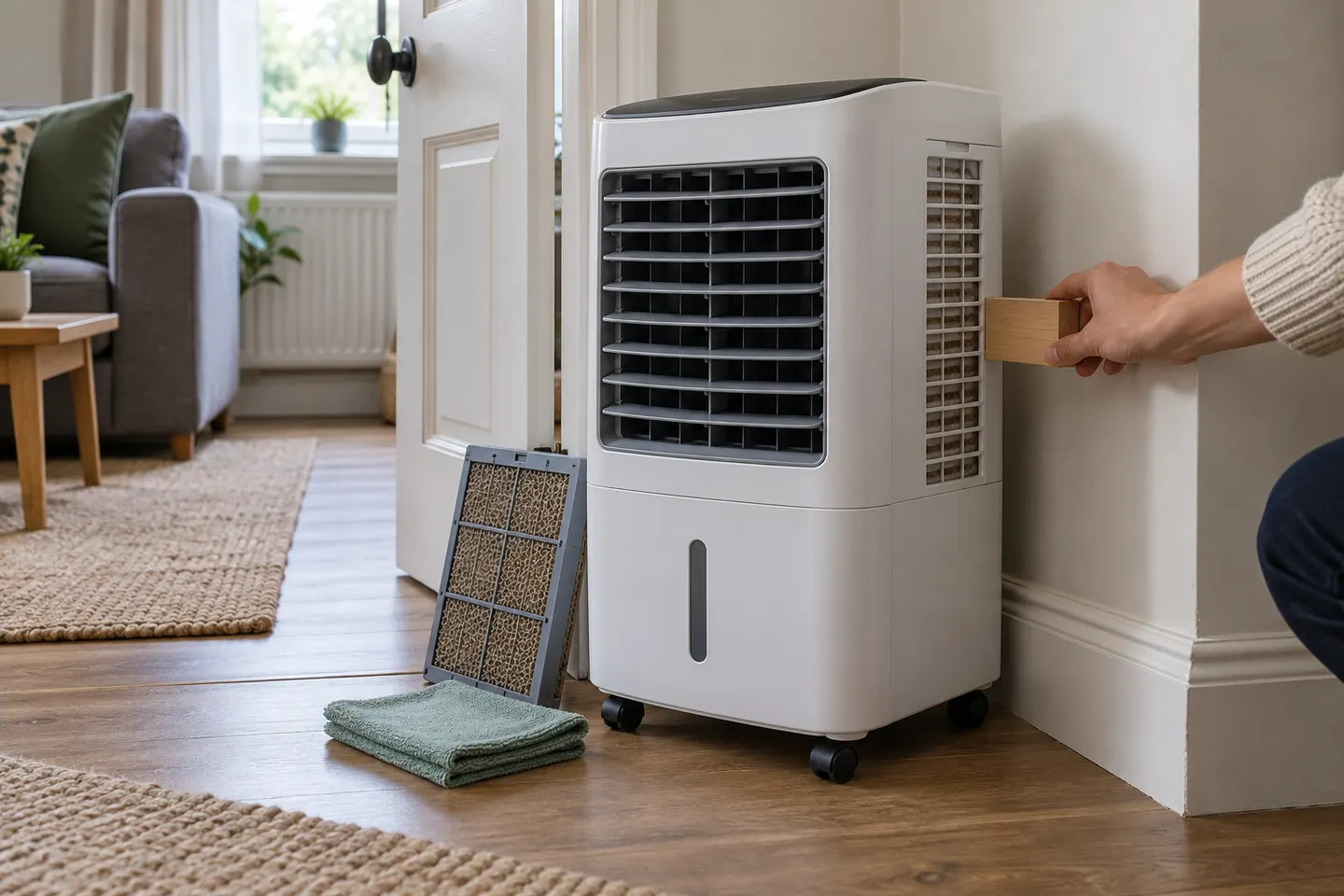
A portable air cooler unit must be practical to live with. Measure its position, plan water access and read the cleaning routine before focusing on extra modes.
The best portable air cooler is one that suits the room's humidity and ventilation. Compare these real evaporative models only after confirming that this cooling method meets your needs.
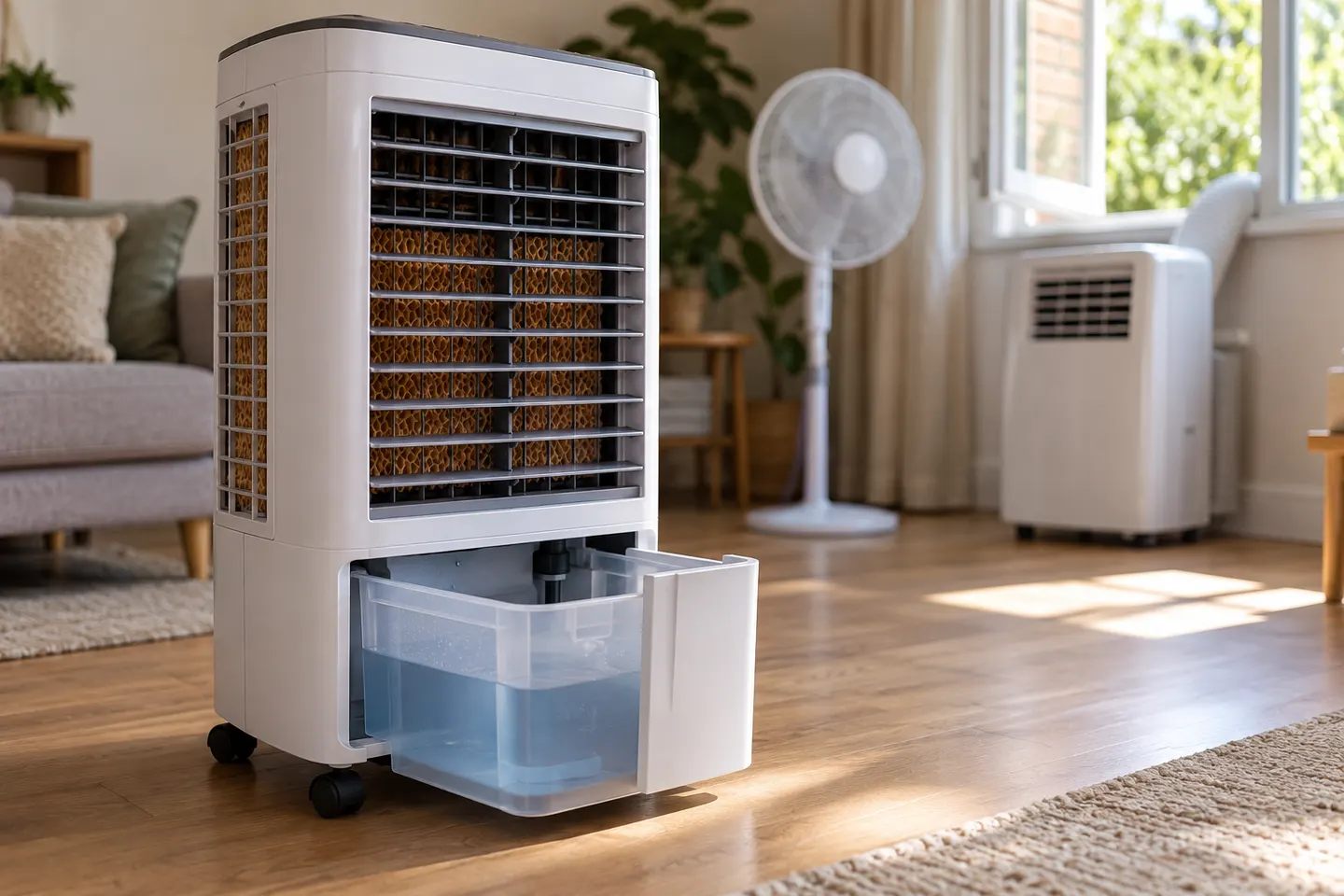
A portable air cooler can mean an evaporative unit, a fan or a portable air conditioner in shopping results. Identify the cooling method before choosing a model.