Gearjury may earn a commission from retailer links. Our guidance is based on the sources cited below.
Guide
The Difference Between an Air Cooler and Air Conditioning
An air cooler uses water evaporation to make moving air feel cooler; air conditioning removes heat from an enclosed room. Your humidity, ventilation and need for a lower room temperature determine which suits you.
GGearjury editorial team · Updated 22 October 2026· 4 min
01
How an air cooler works
A typical evaporative air cooler draws air across a wet pad or water surface. Evaporation can lower the temperature of the outgoing air while adding moisture to it; the effect depends on the incoming air and its humidity. It is not a refrigeration unit.
02
How air conditioning works
An air conditioner uses a refrigeration cycle to transfer heat out of the room, usually exhausting it outdoors. A portable model needs its exhaust hose fitted to a suitable window kit. Many models also remove moisture as they cool.
03
Room temperature versus a cooling breeze
A fan or air cooler can make you feel more comfortable by moving air across your skin; an evaporative model may also deliver cooler air at its outlet. Air conditioning is the more direct choice when your goal is to bring down the temperature of an enclosed room.
04
Humidity and ventilation matter
Evaporative cooling works best in dry conditions, and direct systems add humidity. The US Department of Energy says evaporative coolers work best in arid climates. Provide a route for air to leave and avoid adding moisture where the room is already damp.
05
Which should you choose in the UK?
For a breezy, localised cooling effect with simple setup, consider a fan first. An evaporative cooler may suit a dry room if added humidity is acceptable. For sustained room cooling on warm, humid days, compare air conditioners and check the room guidance, exhaust setup, noise and power requirements.
06
Check the product category before buying
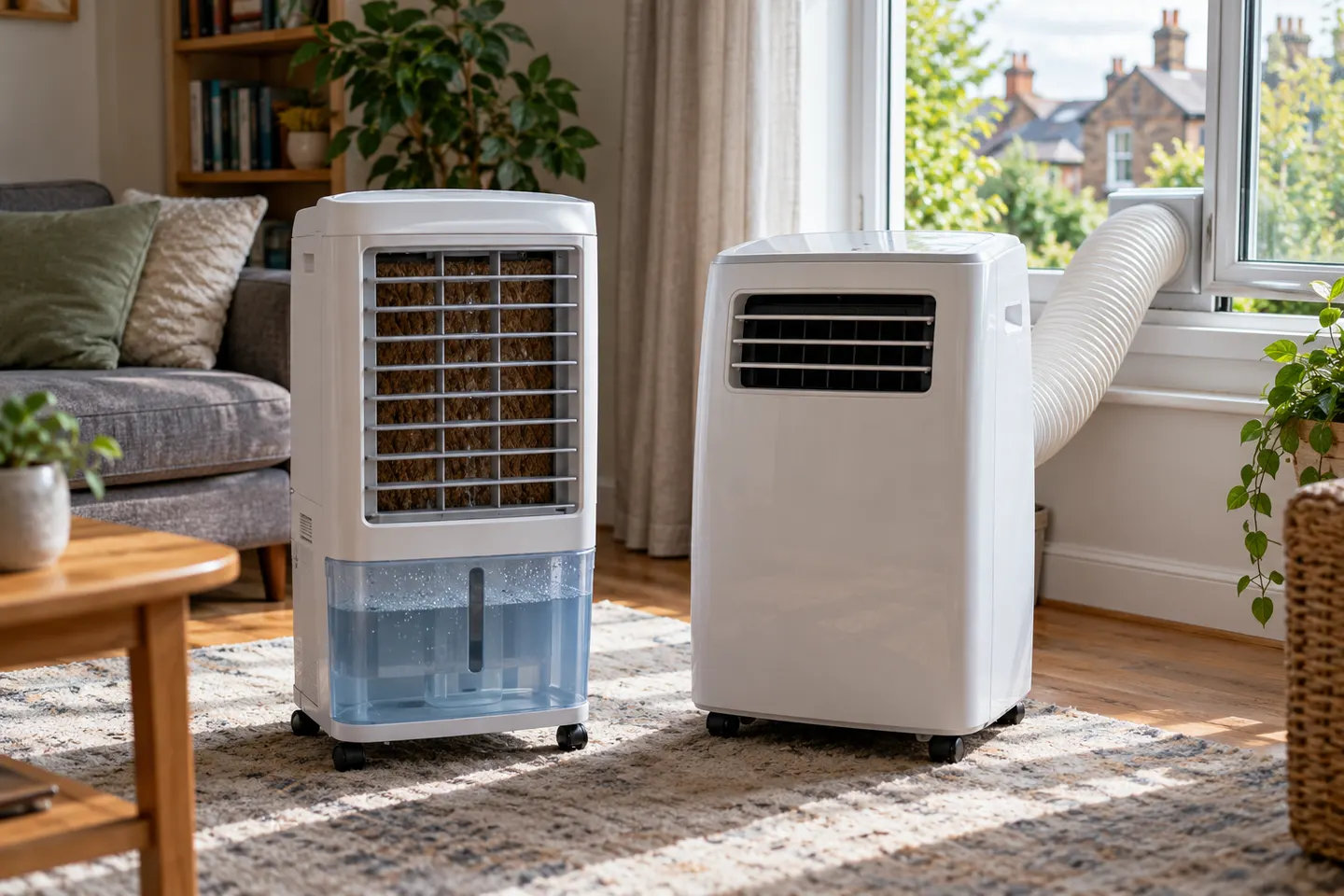
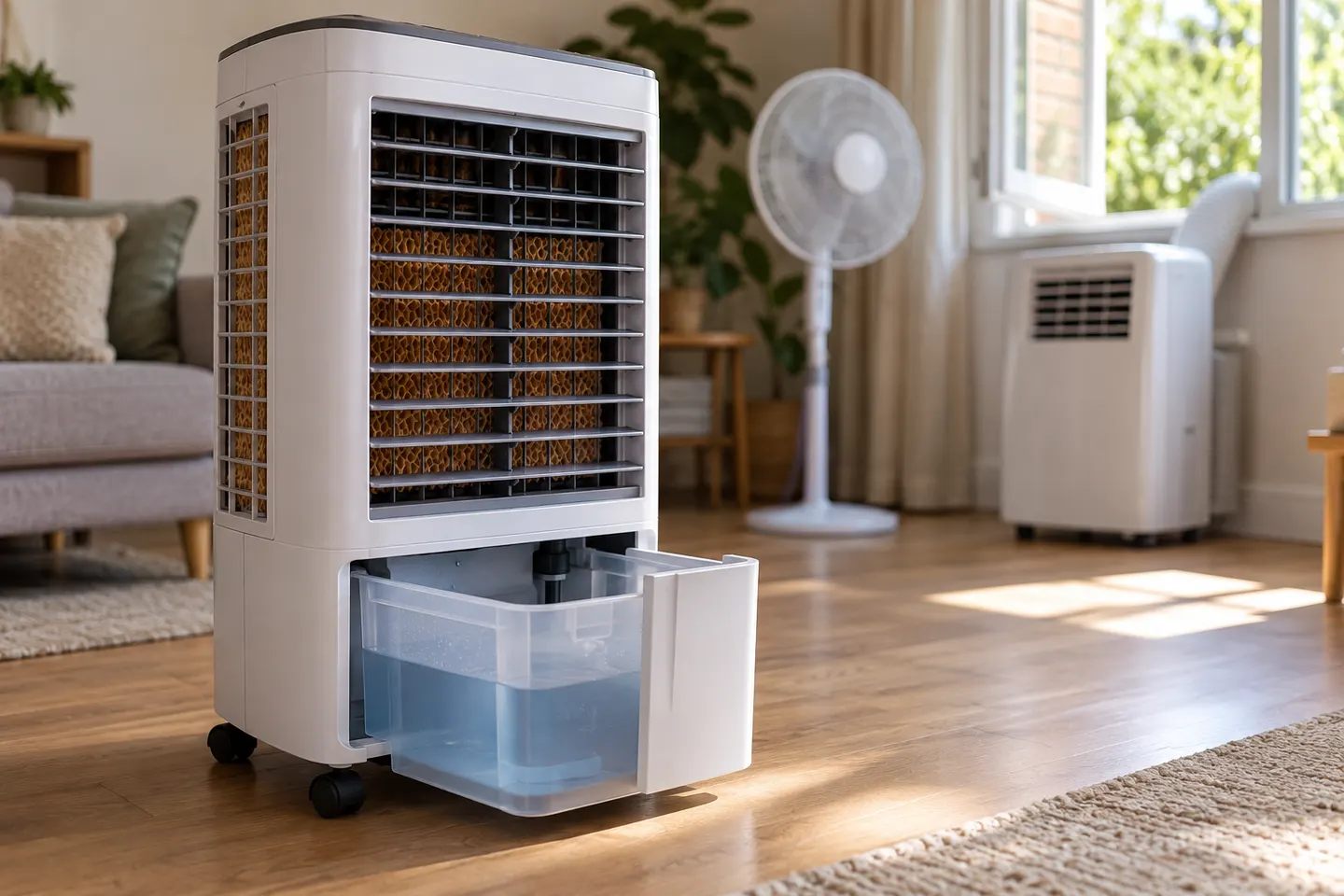
Retail listings sometimes use similar cooling language for fans, evaporative coolers and air conditioners. Look for a water tank or wet cooling pad on an evaporative model, and a stated cooling capacity, refrigerant and exhaust hose on a portable air conditioner.
Common questions
Questions before you buy
Is an air cooler the same as air conditioning?
No. A typical evaporative air cooler uses water evaporation and airflow, while air conditioning uses refrigeration to move heat out of the room. Their cooling effect and ventilation needs differ.
Does an evaporative air cooler lower the whole room temperature?
It can cool the air passing through it, but it does not remove room heat in the same way as an air conditioner. Results depend on humidity, airflow and how the space is ventilated.
Do air coolers work well when it is humid?
Their evaporative effect is reduced when the air is already humid, and direct evaporative models add moisture. Consider a fan or an air conditioner if dampness is already a concern.
Does a portable air conditioner need a window hose?
Most portable air conditioners need an exhaust hose routed outdoors so they can discharge heat. Follow the model's installation instructions and use a compatible window kit.
What is the difference between an air cooler and an evaporative cooler?
In home appliance listings, “air cooler” often means an evaporative cooler, though naming varies. Check for a water tank or wetted pad and read the stated operating method rather than relying on the label alone.
A portable air cooler is not automatically an air conditioner. Check whether the appliance evaporates water, simply moves air or uses a refrigeration system.
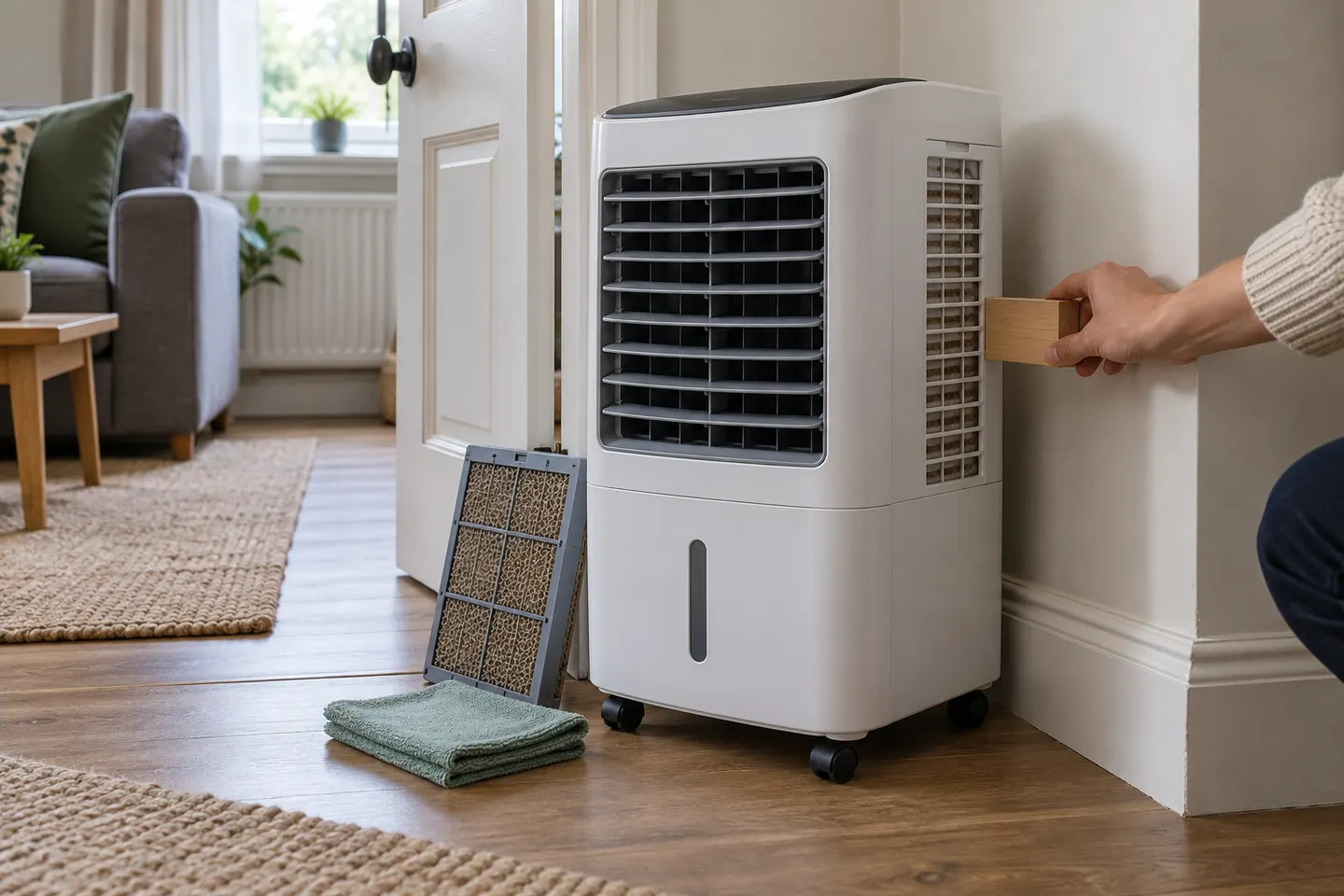
A portable air cooler unit must be practical to live with. Measure its position, plan water access and read the cleaning routine before focusing on extra modes.
The best portable air cooler is one that suits the room's humidity and ventilation. Compare these real evaporative models only after confirming that this cooling method meets your needs.
A portable air cooler can mean an evaporative unit, a fan or a portable air conditioner in shopping results. Identify the cooling method before choosing a model.
Your privacy
We use cookies and similar technologies. Necessary ones keep the site working. With your permission we also use statistics cookies (Google Analytics and Microsoft Clarity) to understand which guides help readers. You can accept all, reject all or choose. You can change your choice at any time from "Cookie settings" at the bottom of every page. Cookie policy