Gearjury may earn a commission from qualifying retailer links.
Guide
How to Use a Portable Air Cooler: A Practical Guide
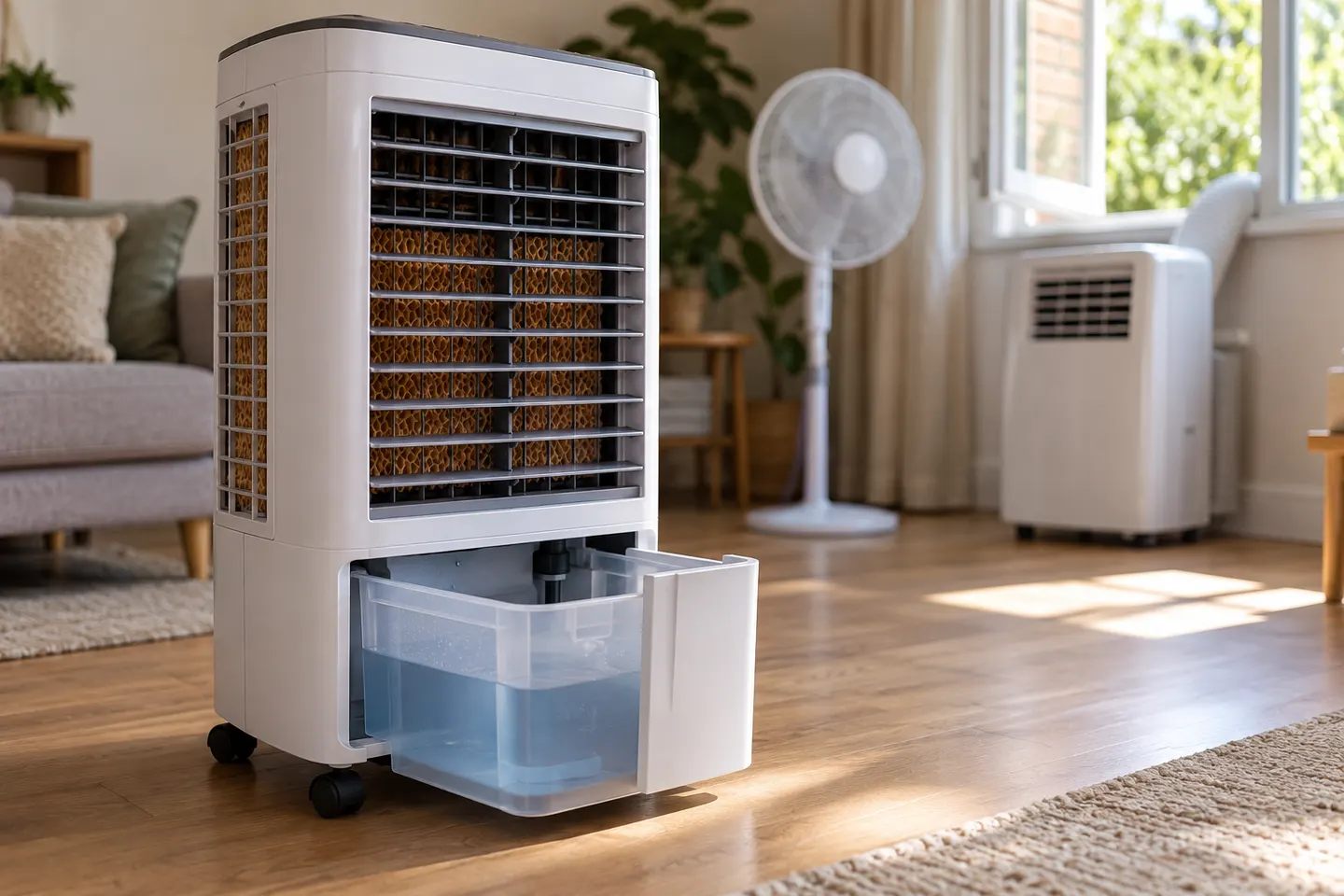
Set up the cooler on a level surface, follow its model-specific water instructions and provide the airflow its evaporative system needs.
GGearjury editorial team · Updated 23 October 2026· 6 min
01
Check the model manual before filling
Find the full model code and read its instructions first. Manuals specify how to fill the reservoir, which modes require water and whether an ice compartment is provided. Do not apply one brand's procedure to another unit.
02
Choose a level position with clear airflow
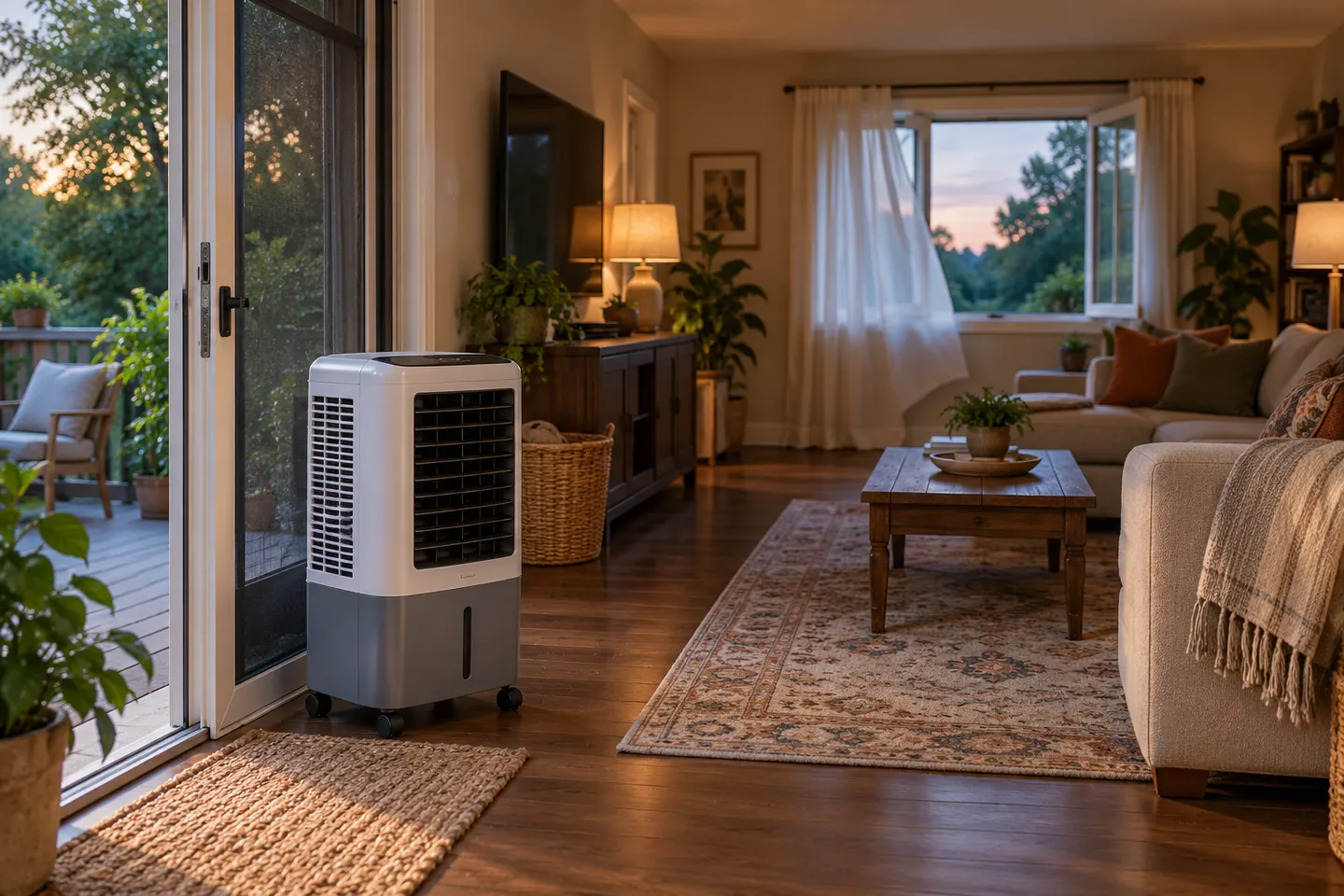
Set the appliance on a stable, level surface and keep the inlet and outlet unobstructed. Leave the clearances stated by the manufacturer, and place it where you can reach the controls and manage water safely.
03
Provide ventilation while evaporative cooling runs
A portable evaporative cooler moves air across water and adds moisture to the room. Follow its ventilation directions and provide a path for air to circulate and leave; stop using it if condensation or damp develops.
04
Fill the tank only to the marked limit
Use the specified fill point and observe the maximum line. Keep water away from electrical controls, and unplug the unit before filling if the manual requires it. Add ice packs only to a designated compartment.
05
Select a mode suited to the conditions
Begin with a suitable fan setting and adjust airflow for comfort. Evaporative cooling is generally less effective in humid conditions, so use the manual's guidance and do not expect refrigerated air-conditioning behaviour.
06
Drain and clean it as instructed
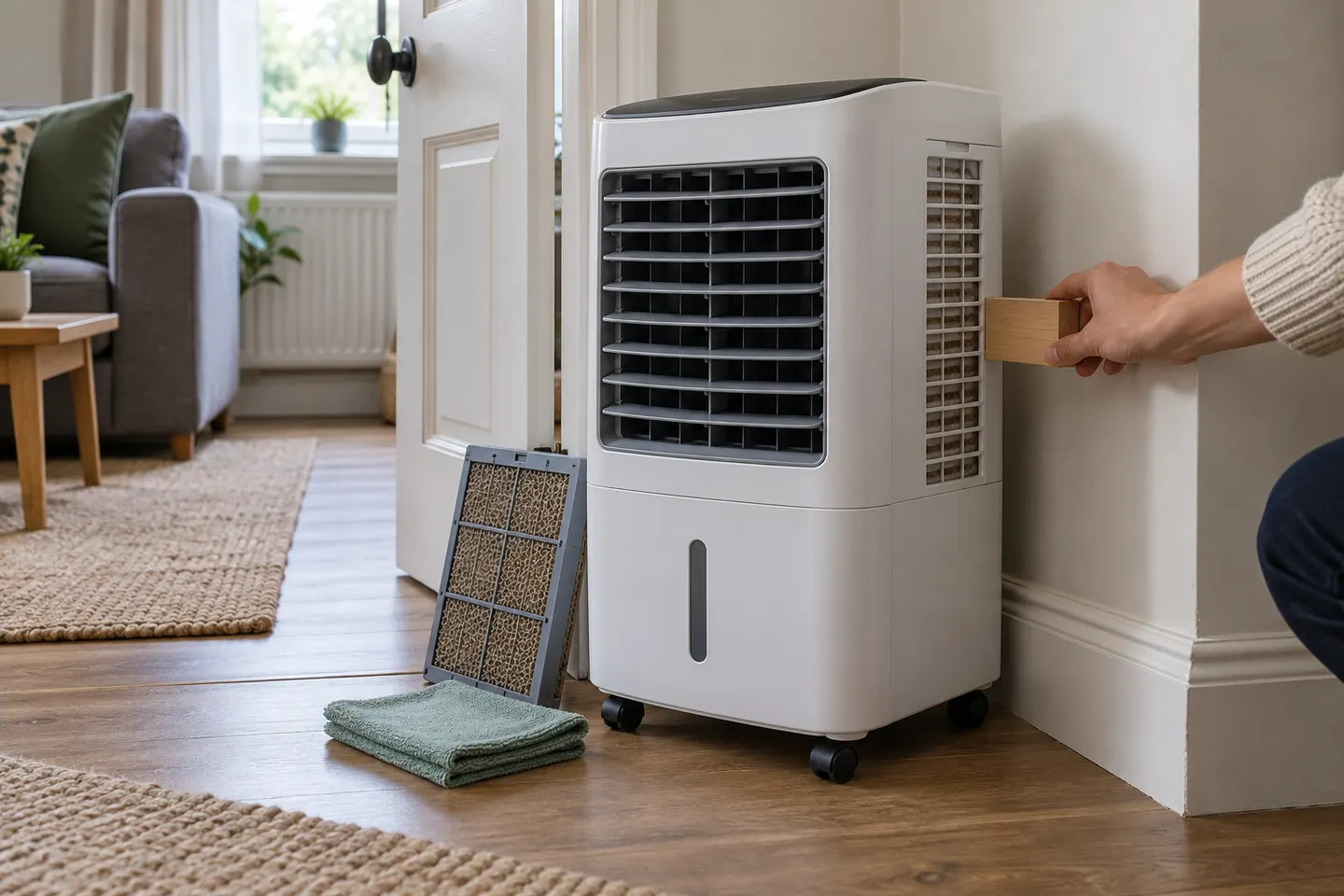
Switch off and unplug the cooler before maintenance. Clean the tank and cooling media on the schedule and with the products specified in the manual; empty and dry it for storage where the manufacturer directs.
Common questions
Questions before you buy
How do I use an Ambiano portable air cooler?
Identify the exact Ambiano model and follow its own manual for filling, ventilation, controls and cleaning. Instructions can differ between models.
How do I use a Honeywell portable evaporative air cooler?
Use the manual for the precise Honeywell model, especially for water filling, ventilation, ice compartments and cleaning. Provide the airflow specified for evaporative operation.
Should a portable air cooler have a window open?
Follow the manufacturer's guidance. Evaporative coolers add moisture, so the room needs suitable ventilation and a route for air movement.
Do I need to add water before switching on an air cooler?
Water is needed for evaporative mode, but check the manual for whether fan-only operation is available and when the pump should run.
Can I put ice cubes in a portable air cooler?
Only if the manual allows it and identifies where ice should go. Do not put ice directly in the tank unless the manufacturer says to.
Why is my evaporative air cooler not cooling?
Check that the mode, water level and cooling media are set up as directed, and consider whether high humidity or poor ventilation is limiting the effect.
Can I leave a portable air cooler on overnight?
Use it overnight only if the manual permits it and required ventilation and clearances are maintained. Consider noise, water handling and signs of damp.
How often should a portable air cooler be cleaned?
Follow the maintenance interval for your exact model. Clean and dry water-contact parts as instructed to prepare the appliance for storage.
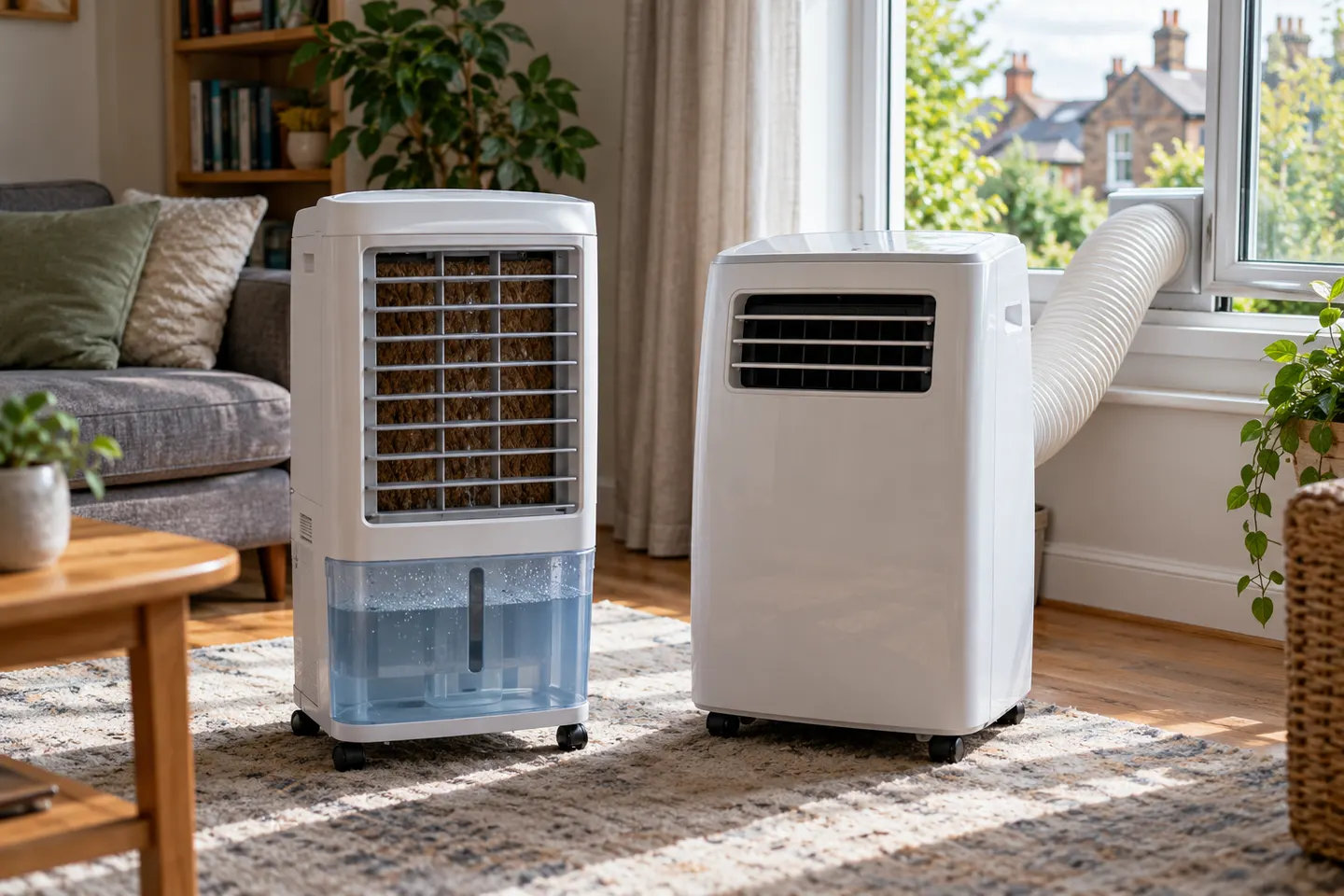
A portable air cooler is not automatically an air conditioner. Check whether the appliance evaporates water, simply moves air or uses a refrigeration system.
A portable air cooler unit must be practical to live with. Measure its position, plan water access and read the cleaning routine before focusing on extra modes.
The best portable air cooler is one that suits the room's humidity and ventilation. Compare these real evaporative models only after confirming that this cooling method meets your needs.
A portable air cooler can mean an evaporative unit, a fan or a portable air conditioner in shopping results. Identify the cooling method before choosing a model.
Your privacy
We use cookies and similar technologies. Necessary ones keep the site working. With your permission we also use statistics cookies (Google Analytics and Microsoft Clarity) to understand which guides help readers. You can accept all, reject all or choose. You can change your choice at any time from "Cookie settings" at the bottom of every page. Cookie policy