Gearjury may earn a commission when you buy through a retailer link. Editorial guidance is based on the sources cited below.
Guide
The Right Meat Thermometer Temperature for Roast Beef
For an intact beef joint, doneness can be chosen to taste once the outside has been properly seared; rolled, minced or mechanically tenderised beef must be cooked through. Measure the centre of the thickest section and identify the type of joint before choosing a target.
GGearjury editorial team · Updated 15 October 2026· 5 min
01
Identify whether the beef is an intact joint
A whole, intact cut can be served pink because contamination is normally confined to the surface, provided that surface is properly seared. Rolled joints, minced beef and meat pierced all the way through can carry bacteria into the centre and need thorough cooking.
02
Choose the meat thermometer temperature for beef safely
For beef that must be cooked through, the Food Standards Agency gives 70°C for two minutes, with approved equivalents including 75°C for 30 seconds. For an intact joint served pink, follow a trusted recipe and make sure every outer surface has been seared.
03
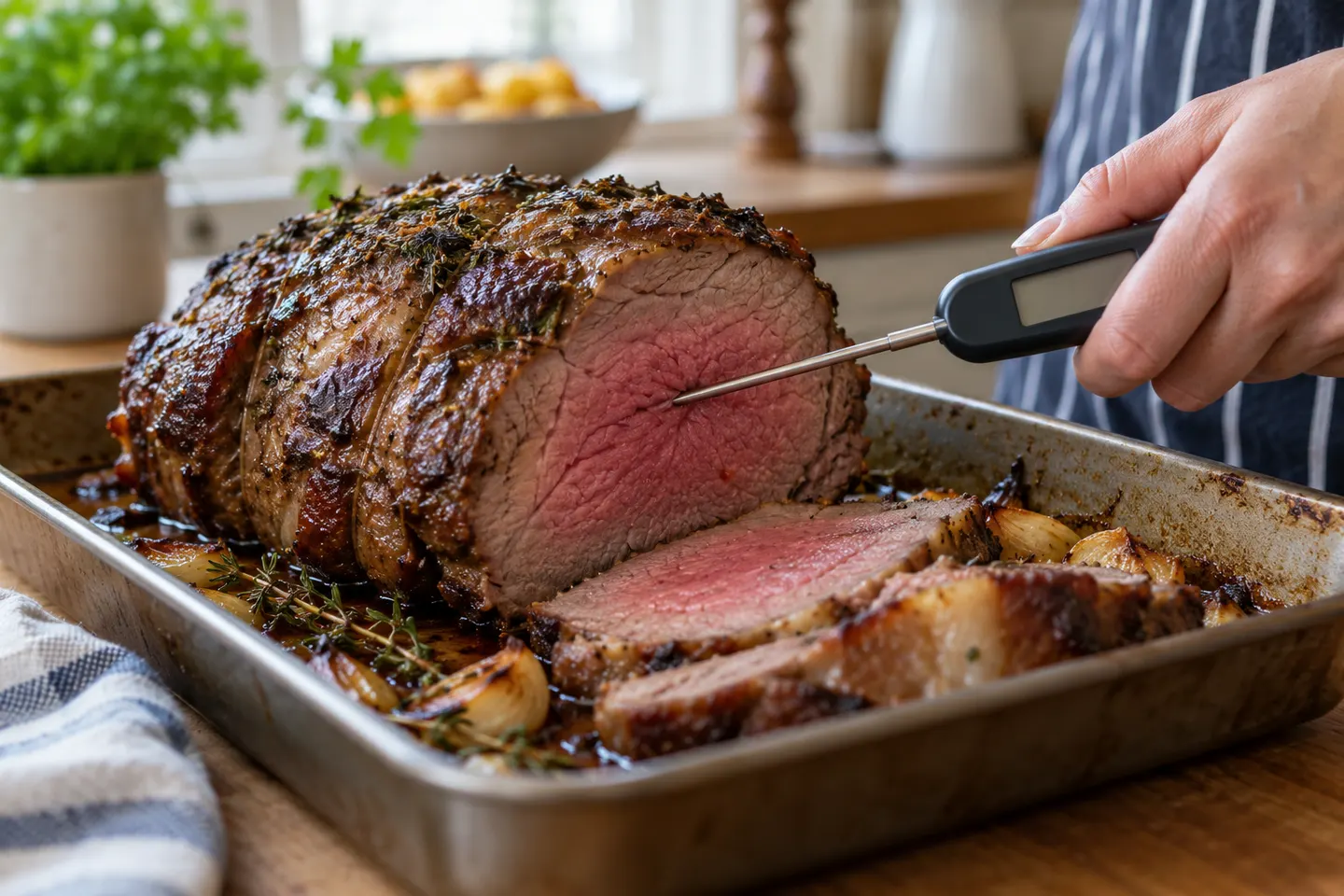
Put the probe in the thermal centre
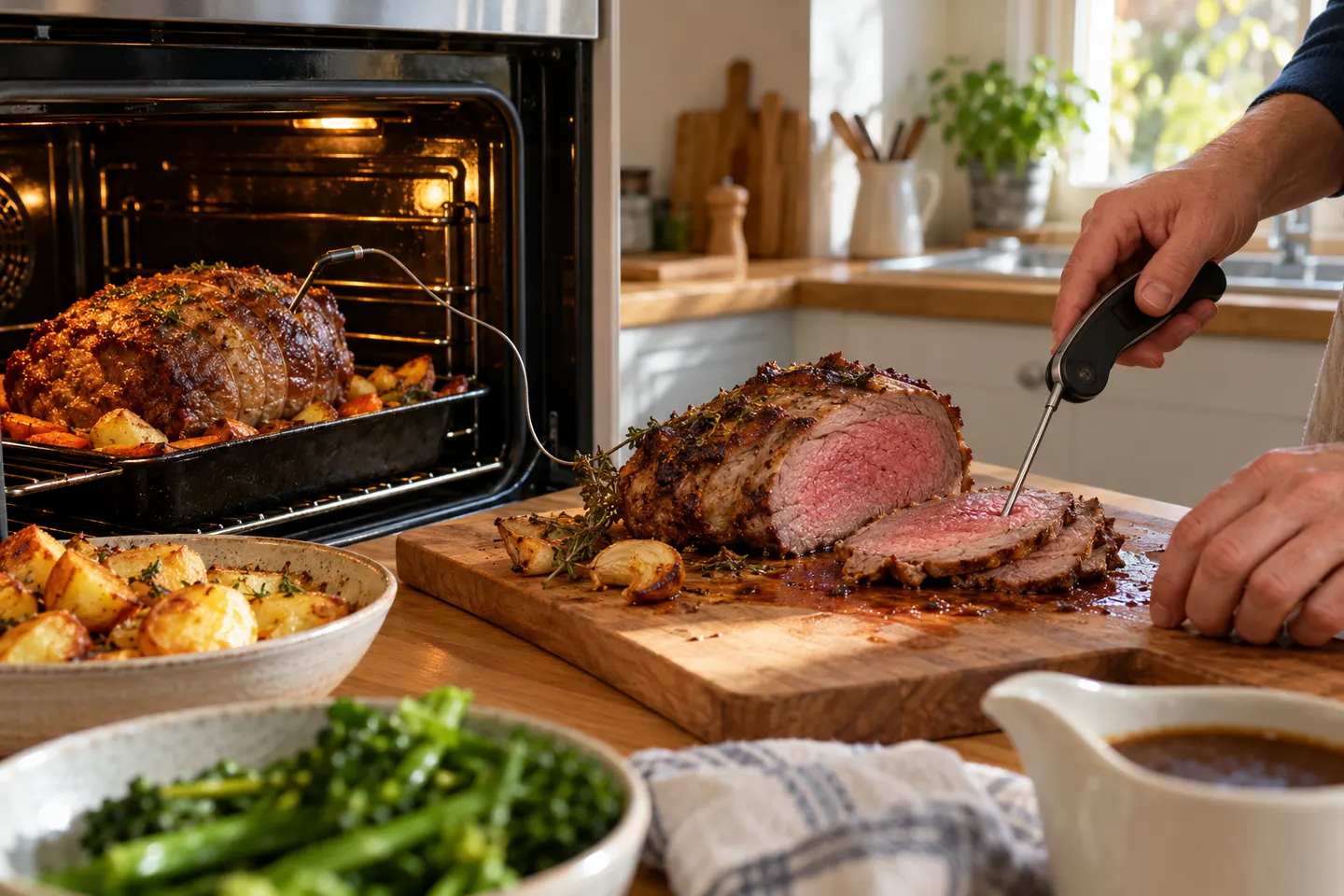
Insert the sensing tip into the centre of the thickest part, away from fat pockets, bone and the roasting tin. Side entry can make the true centre easier to reach in a shallow joint.
04
Check more than one place
Roasts are rarely a uniform shape. Take readings in several thick areas and use the lowest reading; if the numbers differ sharply, reposition the probe to rule out contact with bone or a pocket of fat.
05
Account for the temperature rise while resting
The centre may continue warming after the joint leaves the oven. A larger roast generally retains more heat, but the rise varies with size, shape and cooking method, so do not subtract a fixed amount unless the recipe accounts for it.
06
Clean, check and store the thermometer
Clean and disinfect the probe between checks. Follow its calibration instructions, and replace or service it if readings are implausible or unstable.
Common questions
Questions before you buy
What temperature should a meat thermometer read for roast beef?
It depends on the cut. An intact joint may be served pink after all outer surfaces are seared, while rolled, minced or pierced beef should reach an FSA-approved safe time-and-temperature combination.
Where do you put a meat thermometer in roast beef?
Place the sensing tip in the centre of the thickest part. Keep it clear of bone, large seams of fat and the roasting tin, then check a second location.
Can roast beef be pink in the middle?
An intact whole cut can be served pink to taste when its outside is properly seared. Rolled joints, minced beef and meat pierced through the surface should be cooked thoroughly.
Does roast beef keep cooking while it rests?
Yes, retained heat can continue moving towards the centre after the roast leaves the oven. The change is not fixed, so use a recipe suited to the joint and keep checking rather than guessing.
Should I leave the thermometer in roast beef while it cooks?
Only if it is an oven-safe leave-in probe and the manufacturer permits that use. An instant-read thermometer should be inserted for a check and then removed.
Thermapen ONE is our top all-round pick for fast spot checks. ThermoPro TP19H is the simpler alternative, while DOT and MEATER Pro suit cooks who need continuous monitoring.
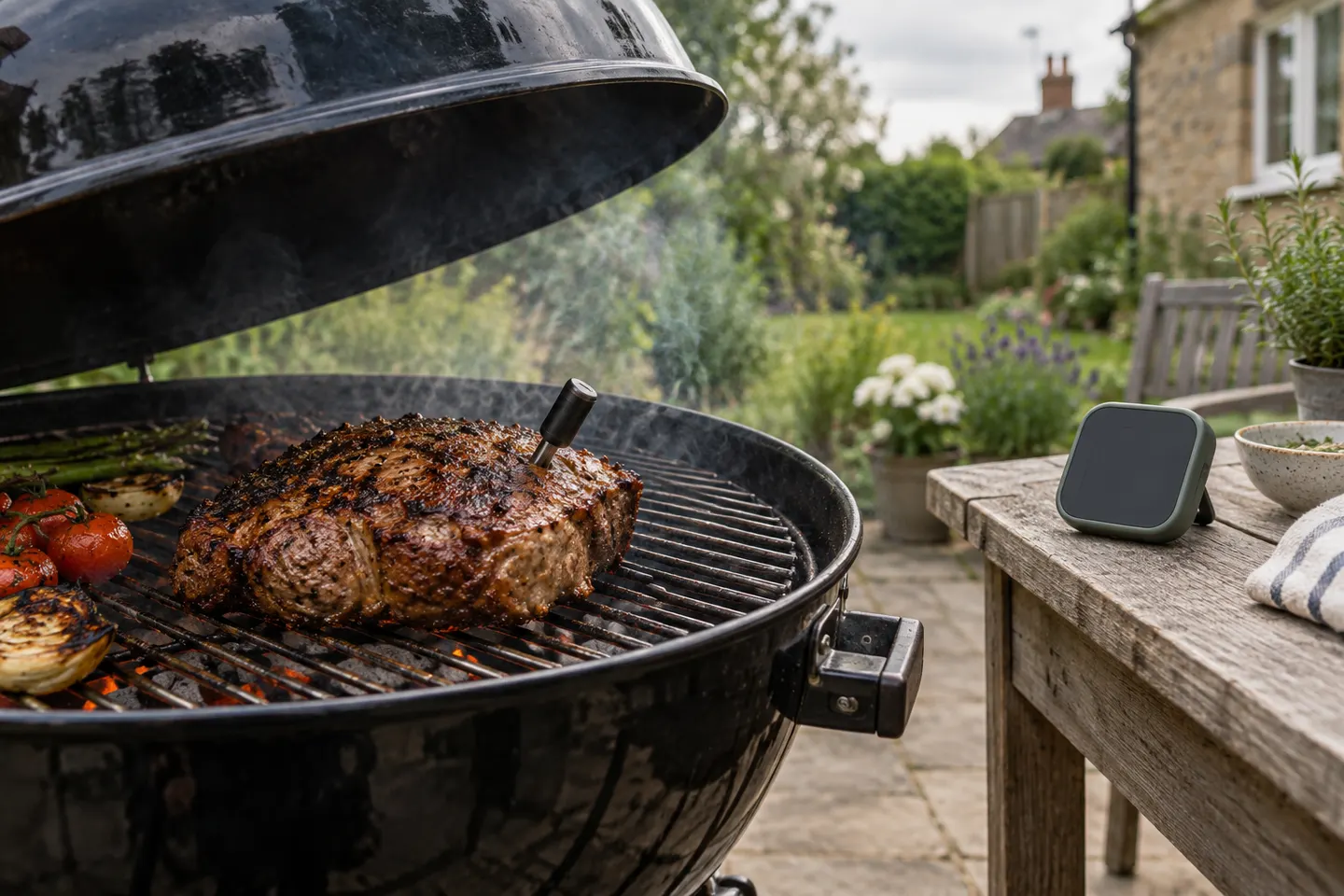
Choose a fully wire-free probe for rotisserie or closed-lid cooking, or a cabled probe with a remote receiver when signal reliability and replaceable probes matter most.
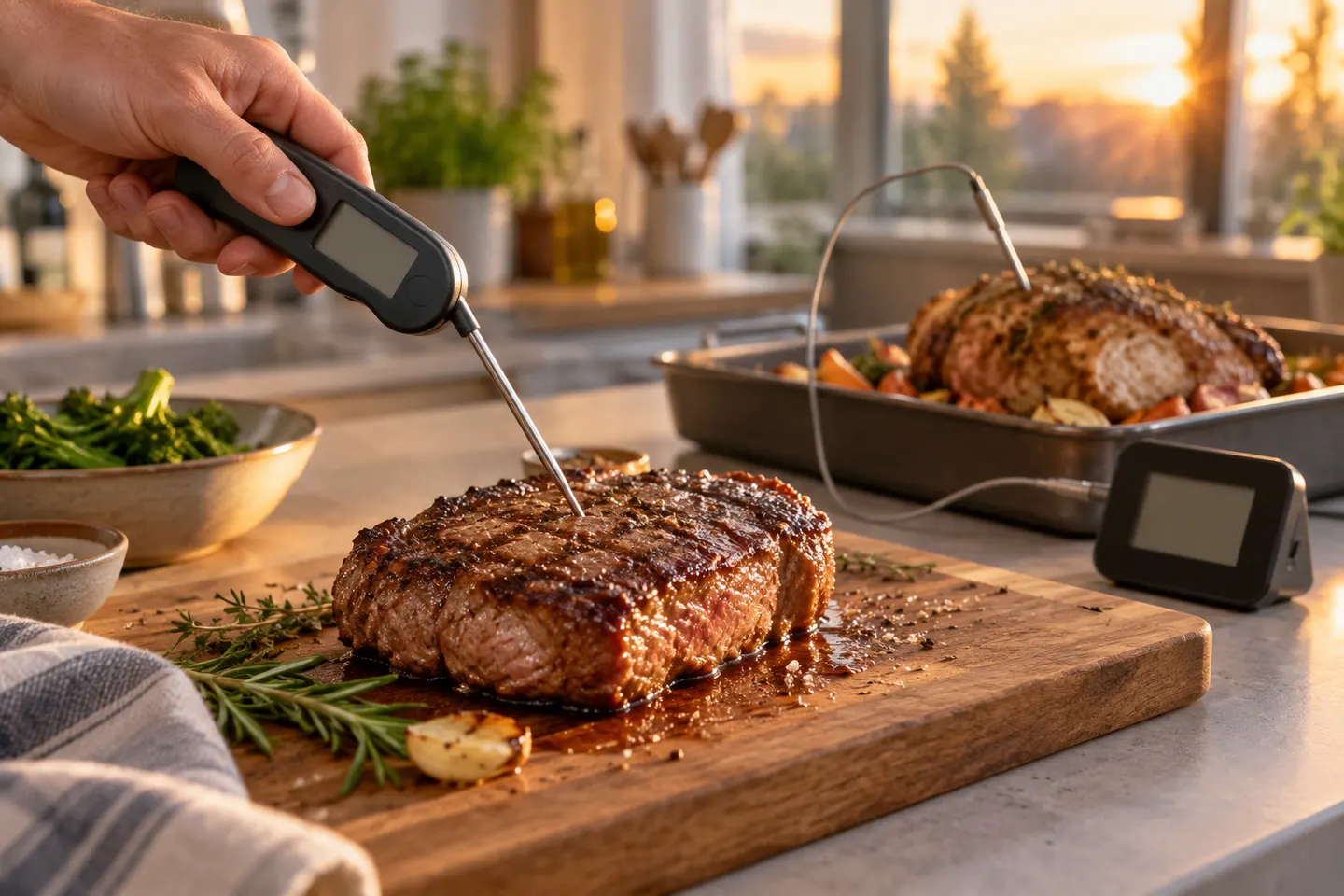
Pick a folding digital thermometer for rapid checks or a leave-in digital probe for alarms during a roast. Accuracy and sensing-tip placement matter more than extra presets.
An instant-read thermometer suits quick checks; a leave-in or wireless probe is better for tracking a roast without repeatedly opening the oven.
Your privacy
We use cookies and similar technologies. Necessary ones keep the site working. With your permission we also use statistics cookies (Google Analytics and Microsoft Clarity) to understand which guides help readers. You can accept all, reject all or choose. You can change your choice at any time from "Cookie settings" at the bottom of every page. Cookie policy