Gearjury may earn a commission from qualifying purchases made through retailer links. This does not affect our editorial guidance.
Guide
WiFi Extenders: How Do They Work Around Your Home?
A WiFi extender connects to your existing wireless network and rebroadcasts it from another spot. It can help devices reach a weak-coverage area, provided the extender itself receives a usable signal.
GGearjury editorial team · Updated 18 October 2026· 4 min
01
What happens when an extender connects?
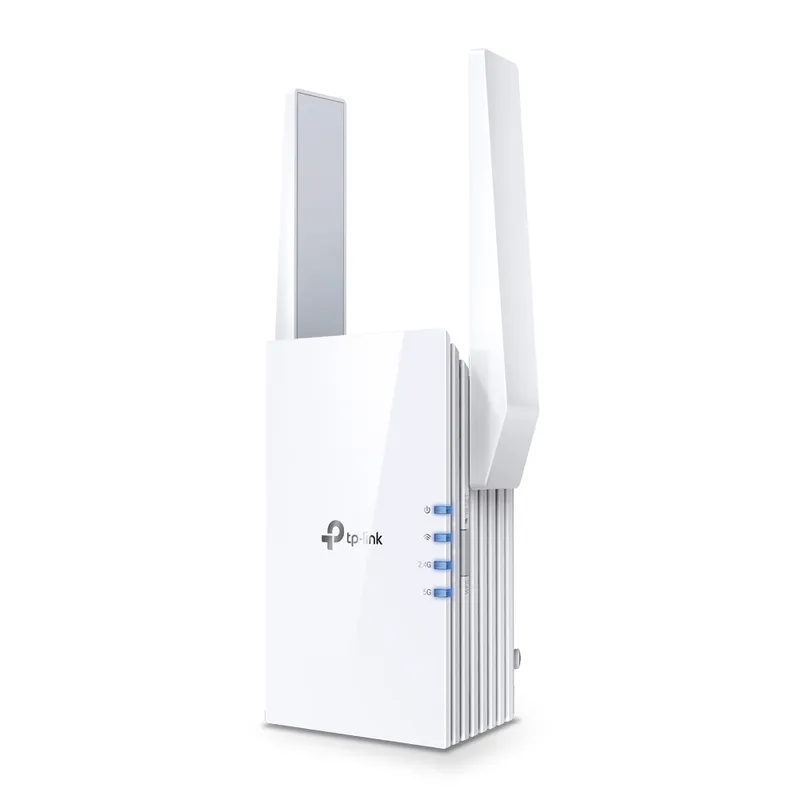
A WiFi extender, also called a range extender or booster, joins the router's wireless network and transmits a signal from its own location. Your phone or laptop can connect to that nearer access point when the router alone does not reach well. The extender still relies on the router for its internet connection.
02
How the router and extender share the link
The extender receives data over WiFi and forwards it between the router and connected devices. That extra wireless hop uses airtime, so an extender does not create a faster internet plan or repair a slow connection coming into the home. Actual results depend on signal quality, interference, device support and network traffic.
03
Where should a WiFi booster go?
Put it between the router and the area with poor reception, where it can still receive a stable signal. A spot deep inside the dead zone gives the extender little usable information to relay. Use the model's signal indicator or setup app, then check coverage in the room you want to reach.
04
How far do WiFi boosters work?
There is no single reliable distance for every home. Walls, floors, building materials, neighbouring networks and the router's placement all change how far a signal travels. Treat advertised coverage as a guide, and judge placement by the connection in your own rooms.
05
Does a range extender make a separate network?
That depends on the model and its settings. Some let you give the extended network the same name and password as the router; others use a distinct network name. A matching name does not guarantee seamless roaming, because devices decide when to move between access points.
06
When is an extender the wrong fix?
If the router's signal is weak everywhere, the incoming service is unstable, or many rooms need consistent high capacity, first investigate router placement, wired access points or a mesh system. An extender is most useful when there is a specific coverage gap and a solid signal nearby.
Common questions
Questions before you buy
How do WiFi extenders work?
They connect to an existing router over WiFi and rebroadcast the network from another location. Connected devices still reach the internet through the original router.
Is a WiFi booster the same as a WiFi extender?
The terms are often used for the same kind of consumer device: one that receives a router's WiFi and extends coverage. Check the product's operating modes, because a wired access point works differently.
How far do WiFi boosters work?
It varies with the building, obstacles, interference and placement. Put the unit where it still receives a useful router signal rather than relying on a universal distance figure.
Does an extender need to be near the router?
It needs to be within reliable range of the router, but it should also be near enough to the weak-coverage area to help. A position between the two is a sensible starting point.
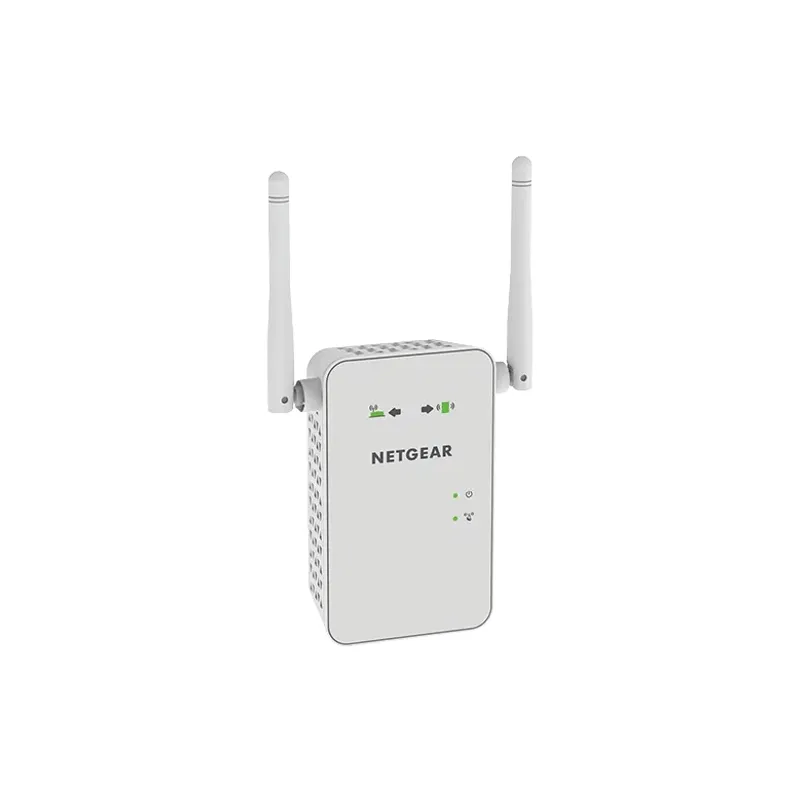
Start with the network standard and location of the dead spot. NETGEAR?s EX6120 is a dual-band AC model, while EAX15 adds WiFi 6; check exact router and firmware compatibility before buying.
The right Wi-Fi extender depends on the router signal at its location, your home layout and whether you need Ethernet, outdoor placement or powerline networking.
A Wi-Fi extender can help reach a weak-signal room when positioned within range of your router. Compare plug-in repeaters, mesh-compatible models, outdoor units and powerline kits by how they connect.
Your privacy
We use cookies and similar technologies. Necessary ones keep the site working. With your permission we also use statistics cookies (Google Analytics and Microsoft Clarity) to understand which guides help readers. You can accept all, reject all or choose. You can change your choice at any time from "Cookie settings" at the bottom of every page. Cookie policy