What an air cooler does
An evaporative cooler draws air through a wet pad or filter. As water evaporates, the outgoing air can feel cooler, while moisture is added to the room.

 Best picksBest WiFi Extenders in the UK: Compare Five Practical Options
 Best picksThe Best Dashcams in the UK for 2026
 Best picksBest Portable Air Coolers: Five Models to Compare for 2026
 Best picksBest Meat Thermometers in the UK for 2026
 Best picksBest Headlamp Torches in the UK: Five Choices for 2026
 Best picksBest Winter Gloves in the UK: Five Activity-Based Choices for 2026
 Best picksBest Radar Detectors in the UK: Models Compared for 2026
 Best picksBest Value Cordless Strimmers in the UK (2026)
 Best picksBest Air Purifiers in the UK for Different Rooms and Needs
Gearjury may earn a commission when you buy through a retailer link.
Guide
They can provide a more comfortable, localised breeze in suitable conditions, but are not a substitute for air conditioning and add moisture.

An evaporative cooler draws air through a wet pad or filter. As water evaporates, the outgoing air can feel cooler, while moisture is added to the room.
It may suit someone who wants portable, local airflow and can ventilate the space. Look for practical controls, accessible cleaning and clear refill instructions.
Evaporation works less effectively in humid conditions, and the appliance does not provide the same temperature control as refrigerated air conditioning. A small personal unit should not be expected to cool a whole home.
A fan moves air without a water tank; an evaporative cooler adds a water-based cooling stage. If you mainly need circulation, a fan avoids raising indoor humidity.
Air conditioning removes heat through a refrigeration cycle and typically needs a way to discharge heat outdoors. An evaporative cooler uses water and needs suitable ventilation.
Empty and clean the reservoir as the manual directs, and let removable pads dry when specified. Regular maintenance helps avoid stale water and prepares the unit for storage.
Common questions
They may help with local airflow in suitable, ventilated conditions. Benefit depends on humidity, room size and expectations; they do not behave like air conditioning.
They can lower the temperature of air passing through the unit, but room-level results vary and humidity rises. Check manufacturer guidance and allow for ventilation.
Their evaporative effect is reduced when the air is already humid. A fan or refrigerant air conditioner may be a better match depending on your needs.
Ventilation is useful because the process adds moisture to indoor air. Follow the model instructions and avoid running it in a closed space that becomes damp.
Keep exploring
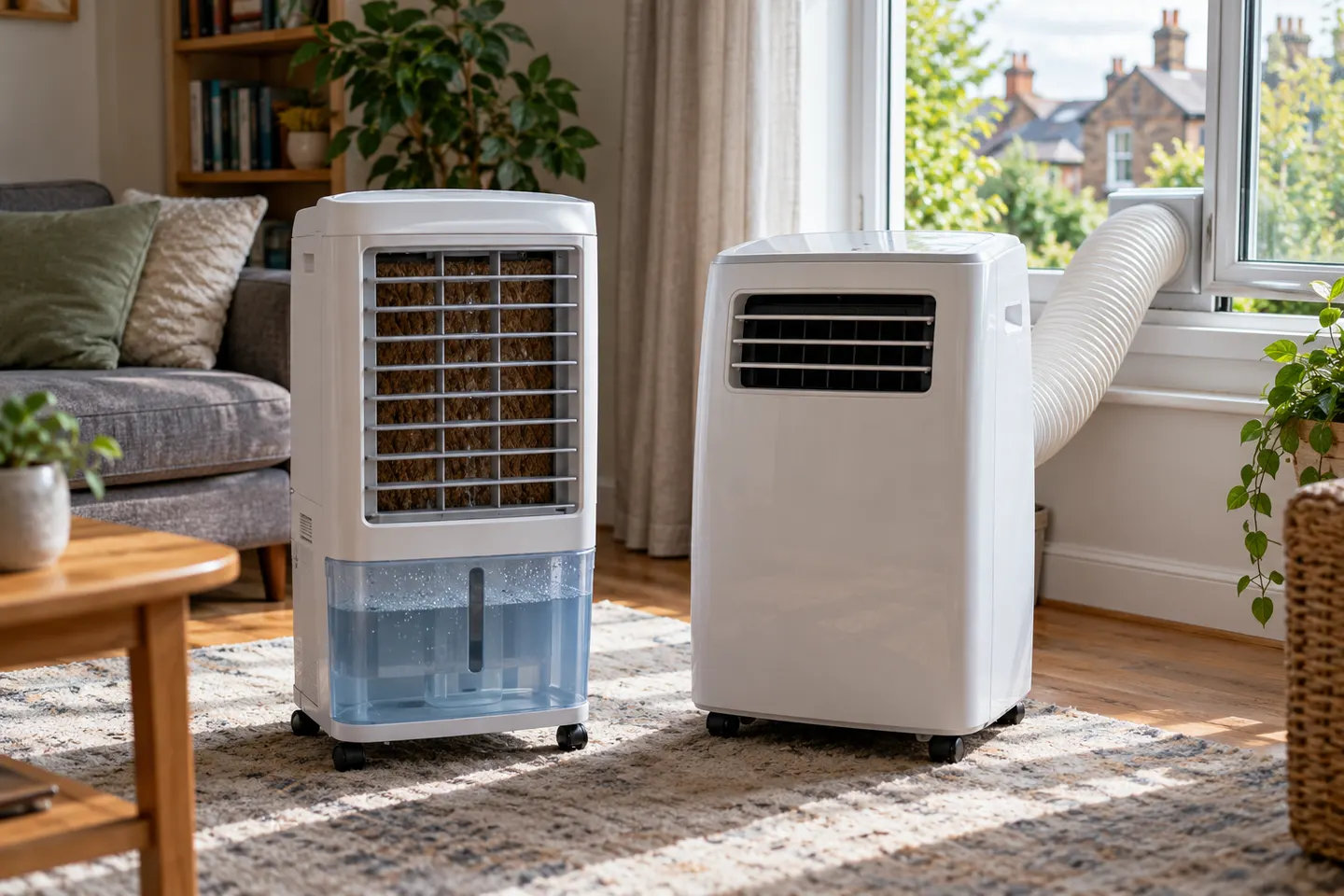
A portable air cooler is not automatically an air conditioner. Check whether the appliance evaporates water, simply moves air or uses a refrigeration system.
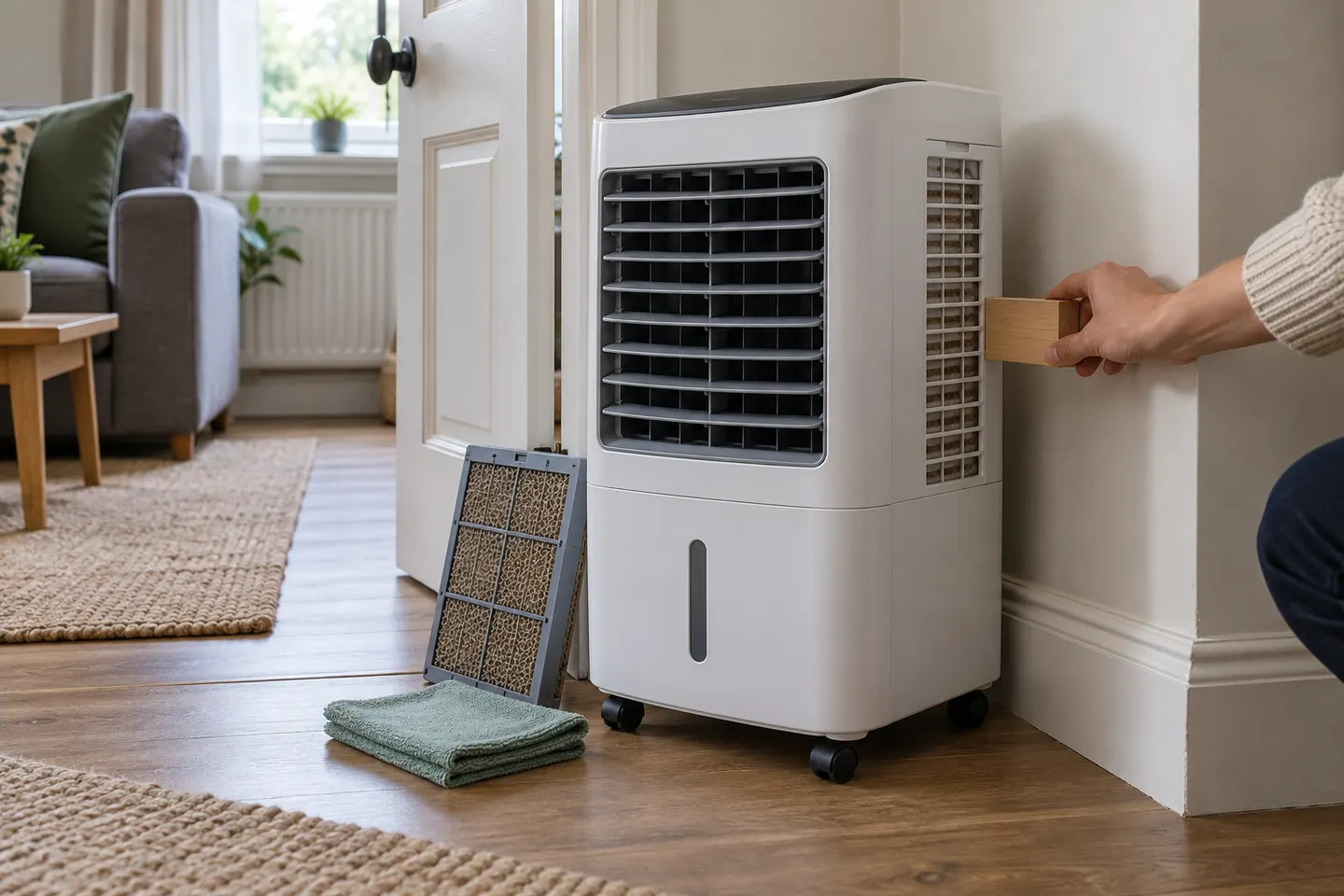
A portable air cooler unit must be practical to live with. Measure its position, plan water access and read the cleaning routine before focusing on extra modes.
The best portable air cooler is one that suits the room's humidity and ventilation. Compare these real evaporative models only after confirming that this cooling method meets your needs.
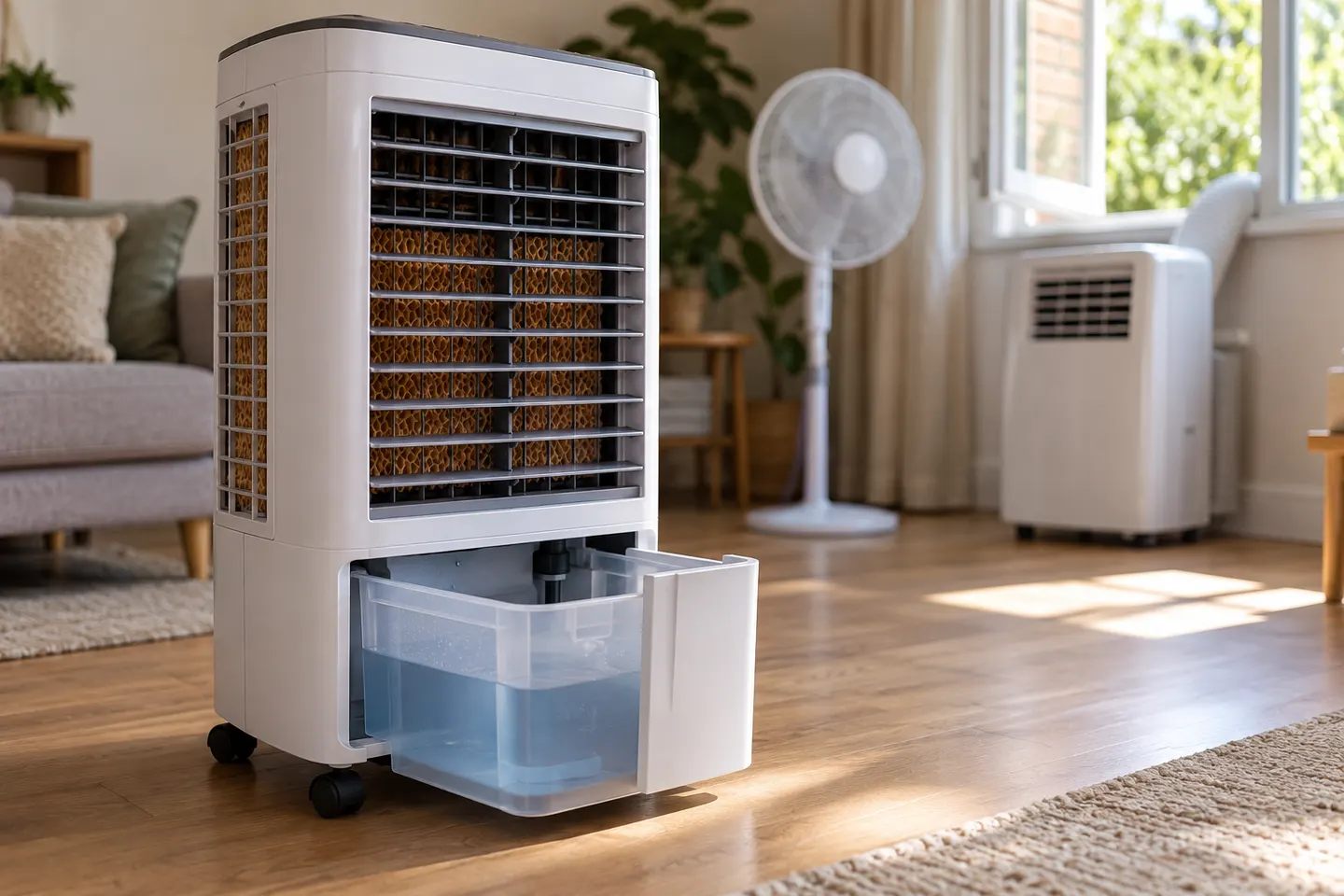
A portable air cooler can mean an evaporative unit, a fan or a portable air conditioner in shopping results. Identify the cooling method before choosing a model.