Gearjury may earn a commission from qualifying retailer links. This does not affect our editorial guidance.
Guide
What Is the Difference Between an Air Conditioner and an Air Cooler?
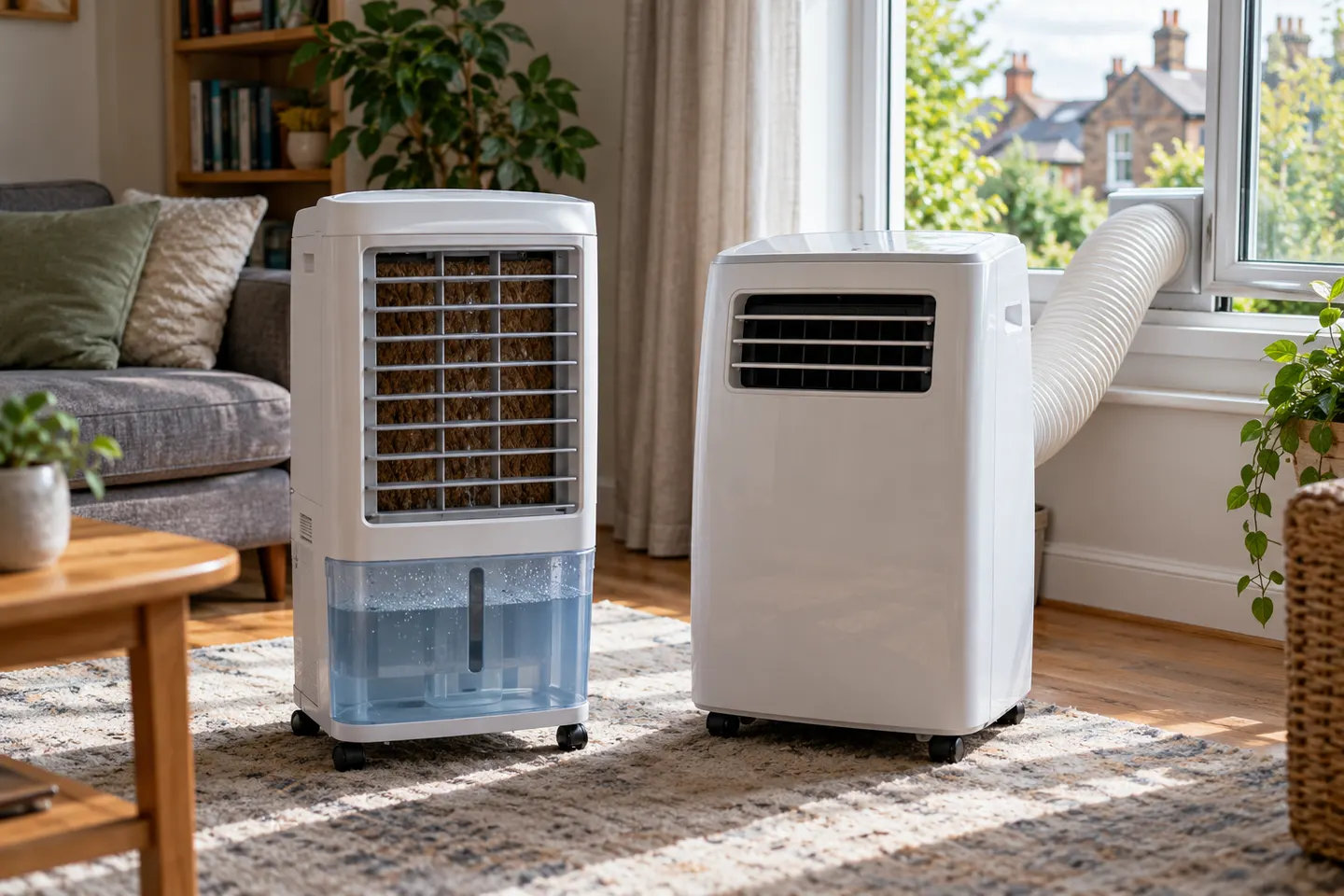
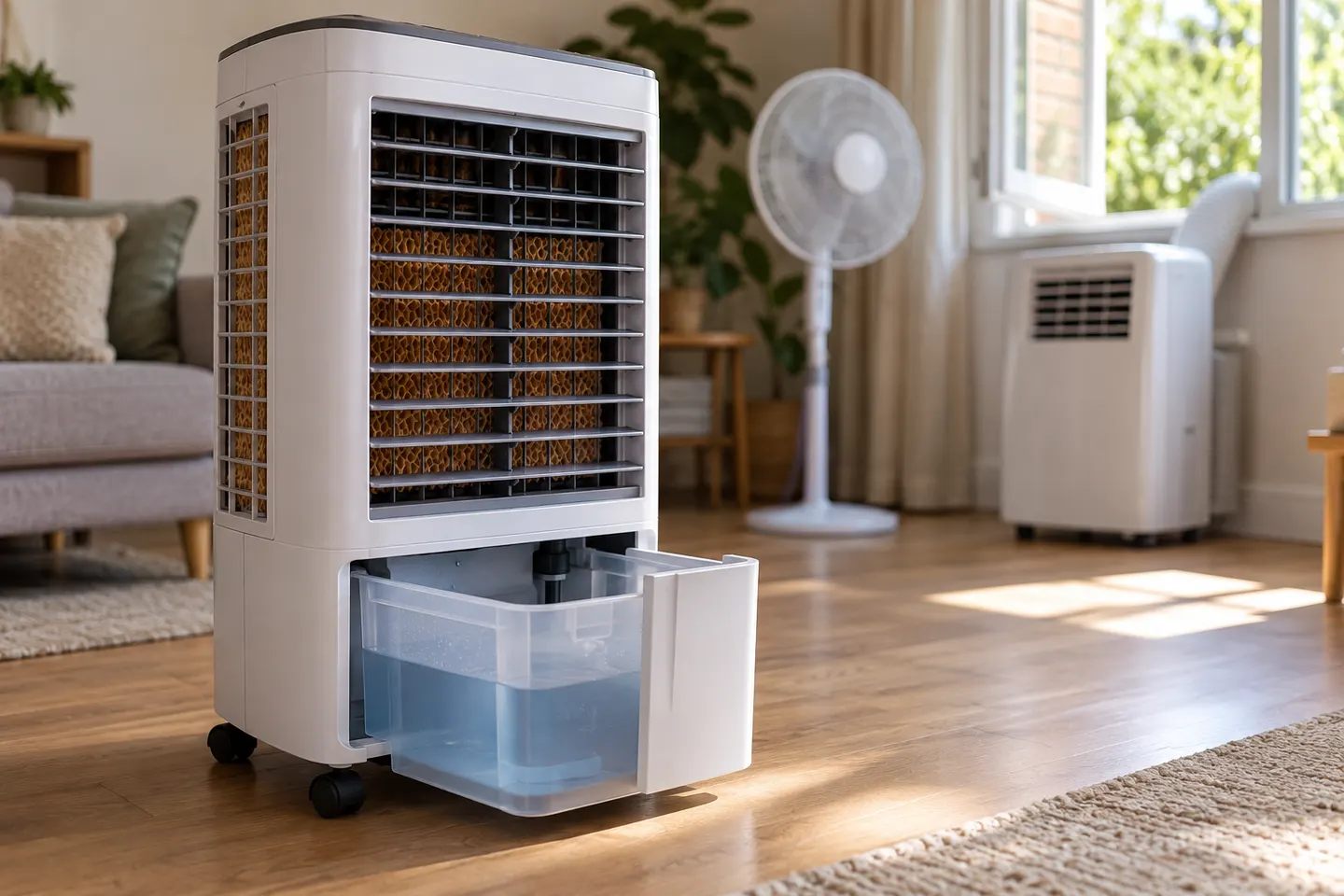
An air conditioner uses a refrigeration cycle to cool and usually dehumidify indoor air. An evaporative air cooler uses water evaporation, adding moisture while cooling nearby airflow.
GGearjury editorial team · Updated 22 October 2026· 4 min
01
How each appliance cools
A conventional air conditioner moves heat through a refrigeration system and rejects it outside the cooled space. An evaporative cooler draws air across water-wetted media; evaporation takes heat from that air and raises its moisture content. These are different processes, despite the similar names.
02
Cooling in humid or dry weather
Evaporative cooling is most effective when incoming air is relatively dry, and it adds moisture as it operates. Air conditioning does not depend on water evaporation in the room and commonly removes moisture as part of cooling. Consider your local humidity and ventilation before choosing.
03
Room setup and airflow
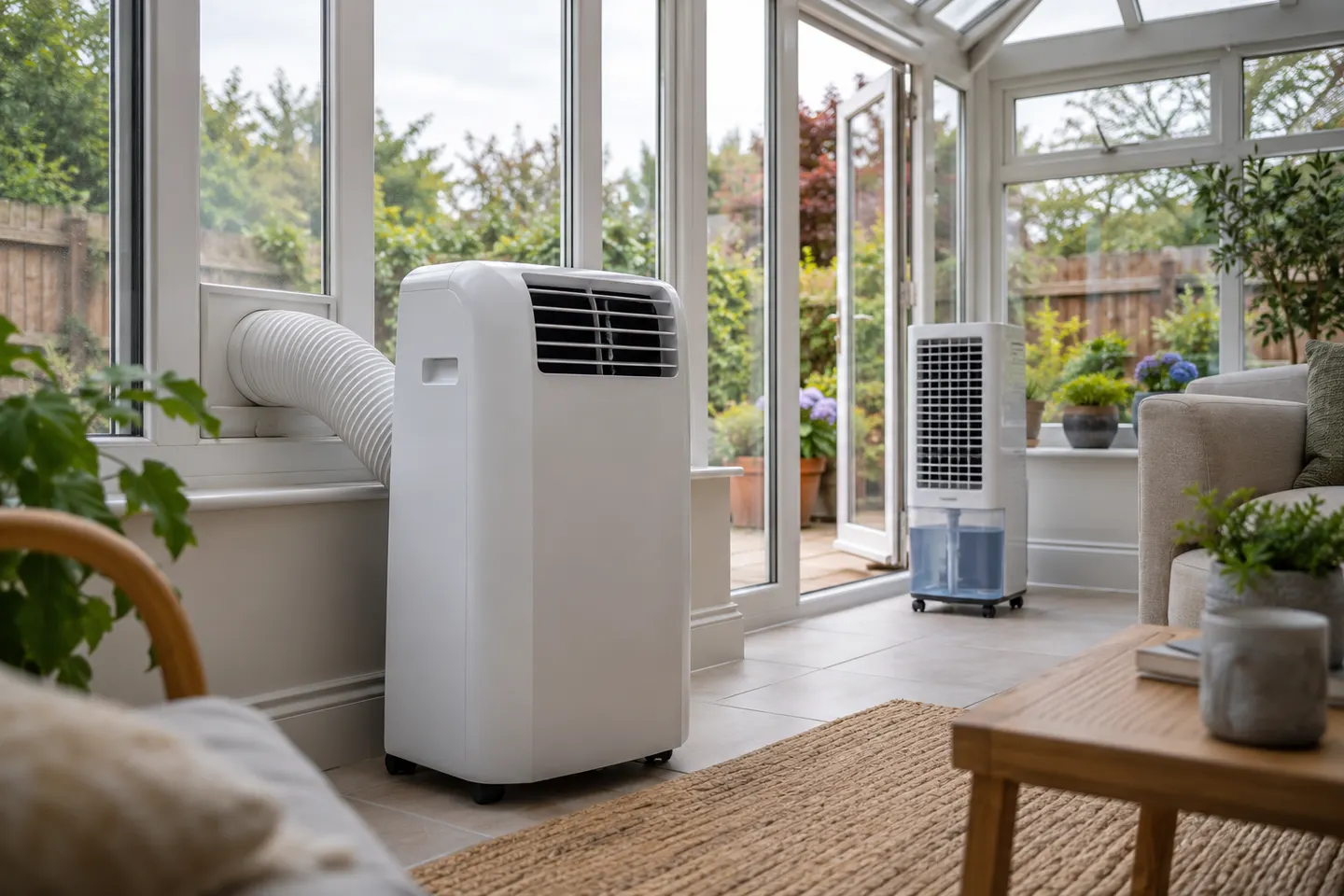
An evaporative cooler needs fresh air and an exit path for humid air, so it is not normally used like a sealed-room compressor unit. Portable air conditioners generally need an exhaust hose routed outside. Check each appliance’s installation instructions and the room layout.
04
What to expect from an air cooler
A portable evaporative cooler directs a stream of cooled, moister air and is often most noticeable near the unit. It does not provide the same kind of controlled room cooling as a correctly sized air conditioner. Avoid relying on a single headline temperature figure without its test conditions.
05
Which one fits your needs?
Consider an evaporative cooler if you want local airflow, can ventilate the room and conditions are not already humid. Consider an air conditioner when you need more controlled cooling or moisture removal, and can accommodate its exhaust or installation requirements. Compare noise, maintenance and operating guidance for the exact model.
06
Running and upkeep
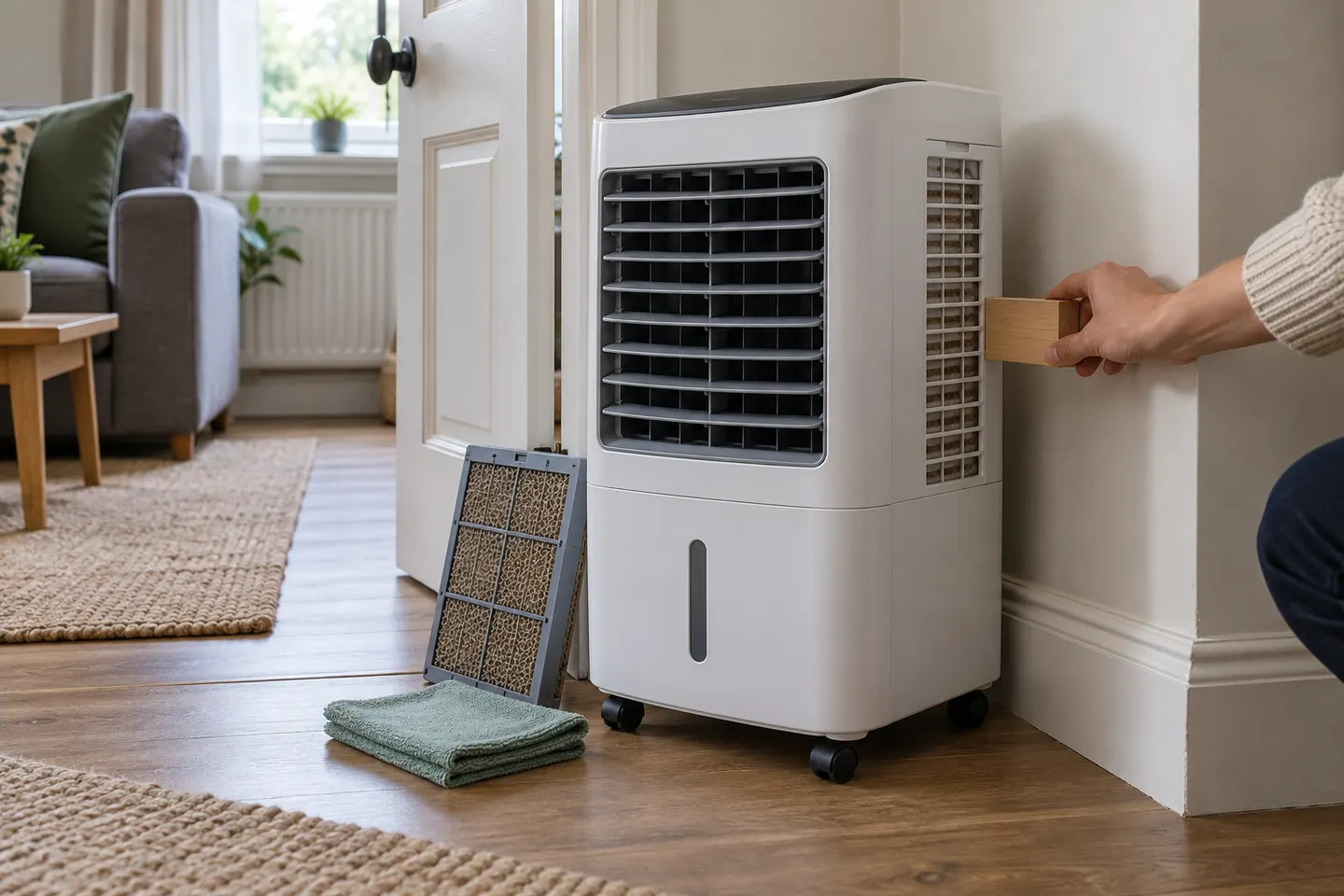
Air coolers need water and periodic reservoir or pad care according to their manuals. Air conditioners require their filters and exhaust or condensate components to be maintained as specified. Energy use depends on the model, operating conditions and duration; compare declared product data rather than assuming one type always uses less.
Common questions
Questions before you buy
Is an air cooler the same as an air conditioner?
No. An evaporative air cooler uses water evaporation to cool and humidify moving air; an air conditioner uses a refrigeration system to transfer heat and often dehumidifies.
Does an air cooler work in a humid room?
Its evaporative effect is reduced when the air is already humid, and it adds further moisture. Ventilation and local humidity matter when deciding whether it is suitable.
Do you need to open a window for an evaporative air cooler?
The room needs ventilation so humid air can leave. Follow the product guidance on openings and airflow for the particular model.
Which is better for cooling a bedroom: an air cooler or air conditioner?
It depends on humidity, ventilation, noise and the cooling you need. An air cooler provides evaporative airflow; an air conditioner offers refrigeration-based cooling but requires its specified exhaust or installation.
A portable air cooler is not automatically an air conditioner. Check whether the appliance evaporates water, simply moves air or uses a refrigeration system.
A portable air cooler unit must be practical to live with. Measure its position, plan water access and read the cleaning routine before focusing on extra modes.
The best portable air cooler is one that suits the room's humidity and ventilation. Compare these real evaporative models only after confirming that this cooling method meets your needs.
A portable air cooler can mean an evaporative unit, a fan or a portable air conditioner in shopping results. Identify the cooling method before choosing a model.
Your privacy
We use cookies and similar technologies. Necessary ones keep the site working. With your permission we also use statistics cookies (Google Analytics and Microsoft Clarity) to understand which guides help readers. You can accept all, reject all or choose. You can change your choice at any time from "Cookie settings" at the bottom of every page. Cookie policy