Gearjury may earn a commission when you buy through a retailer link. This does not affect our editorial guidance.
Guide
How Does a Meat Thermometer Work?
How does a meat thermometer work? A sensor in the probe reacts to heat, and the instrument converts that response into a temperature reading. Put the sensing area in the thickest part of the food, away from bone, and wait for the display or dial to settle.
GGearjury editorial team · Updated 15 October 2026· 6 min
01
How does a digital meat thermometer work?
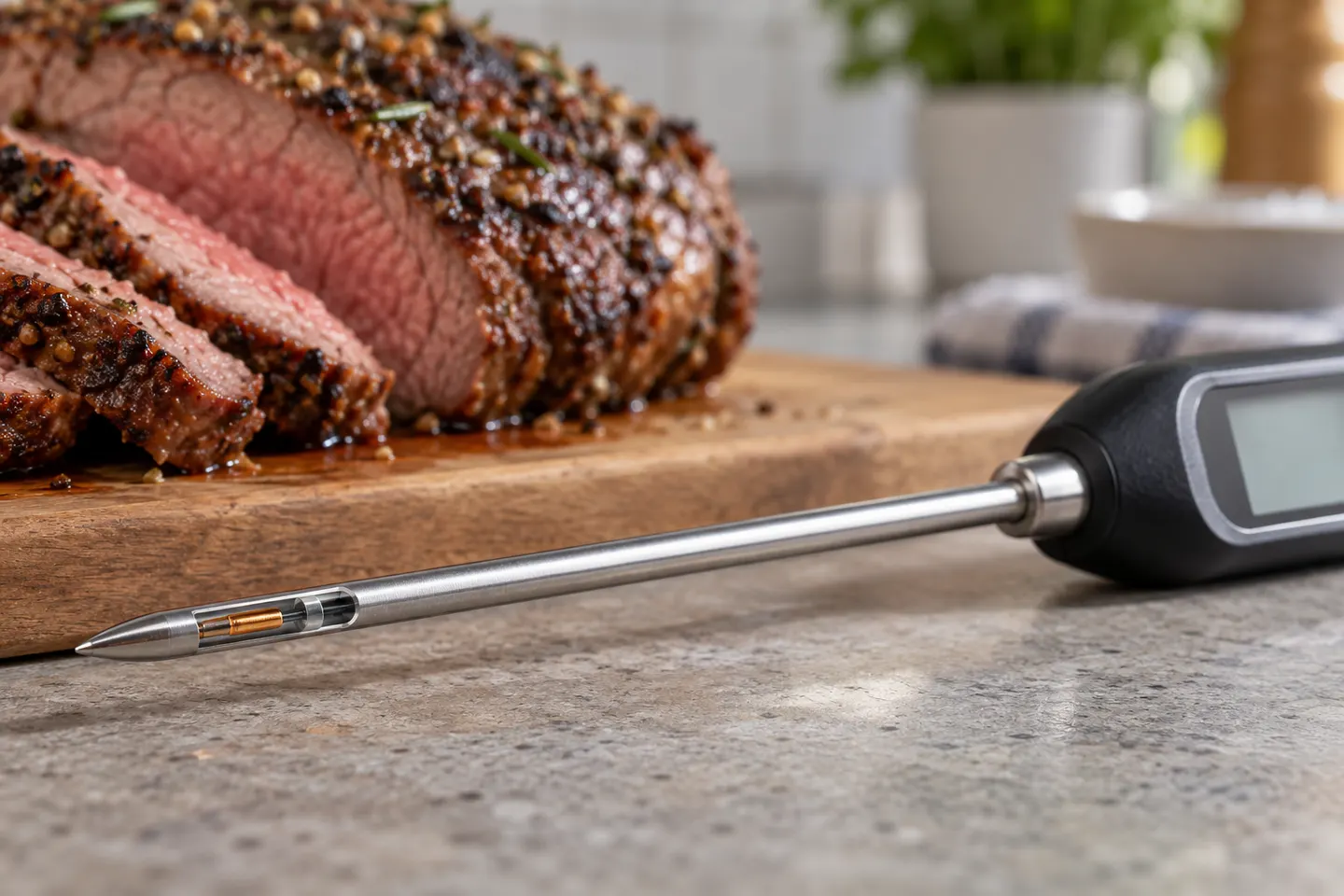
Most digital probe thermometers use a thermistor, resistance temperature detector or thermocouple. A thermistor or resistance detector changes electrical resistance as its temperature changes; a thermocouple produces a small voltage related to the temperature difference. Electronics translate that signal into the number on the display. The reading describes the temperature around the sensing section of the probe, not the whole joint.
02
How does a dial meat thermometer work?
A common dial model uses a bimetal coil made from two bonded metals that expand at different rates. Heating twists the coil and moves the pointer around the scale. Its sensing area can extend along more of the stem than the tiny sensor near the tip of many digital probes, so insertion depth and the manufacturer's instructions matter.
03
Where should the probe go?
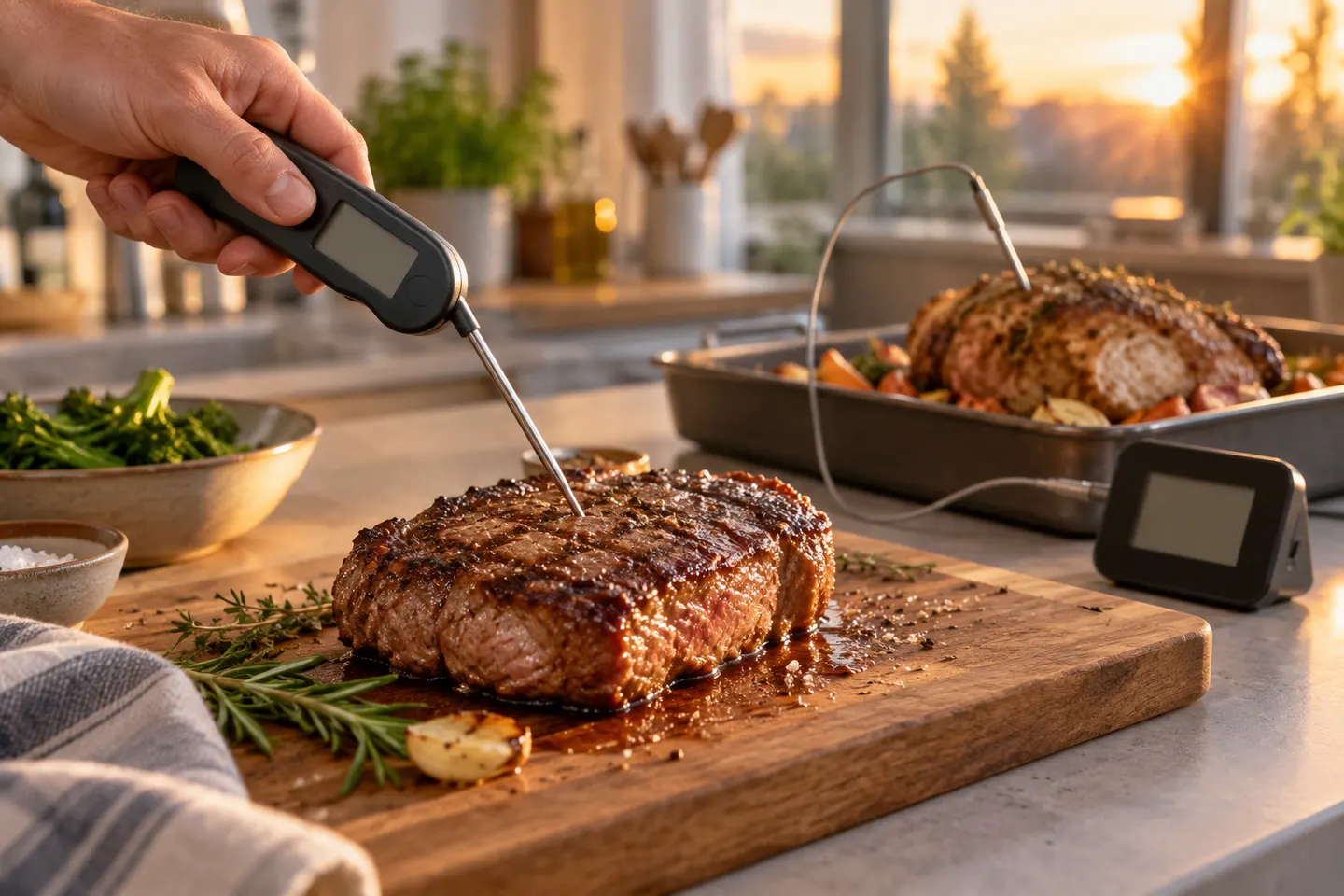
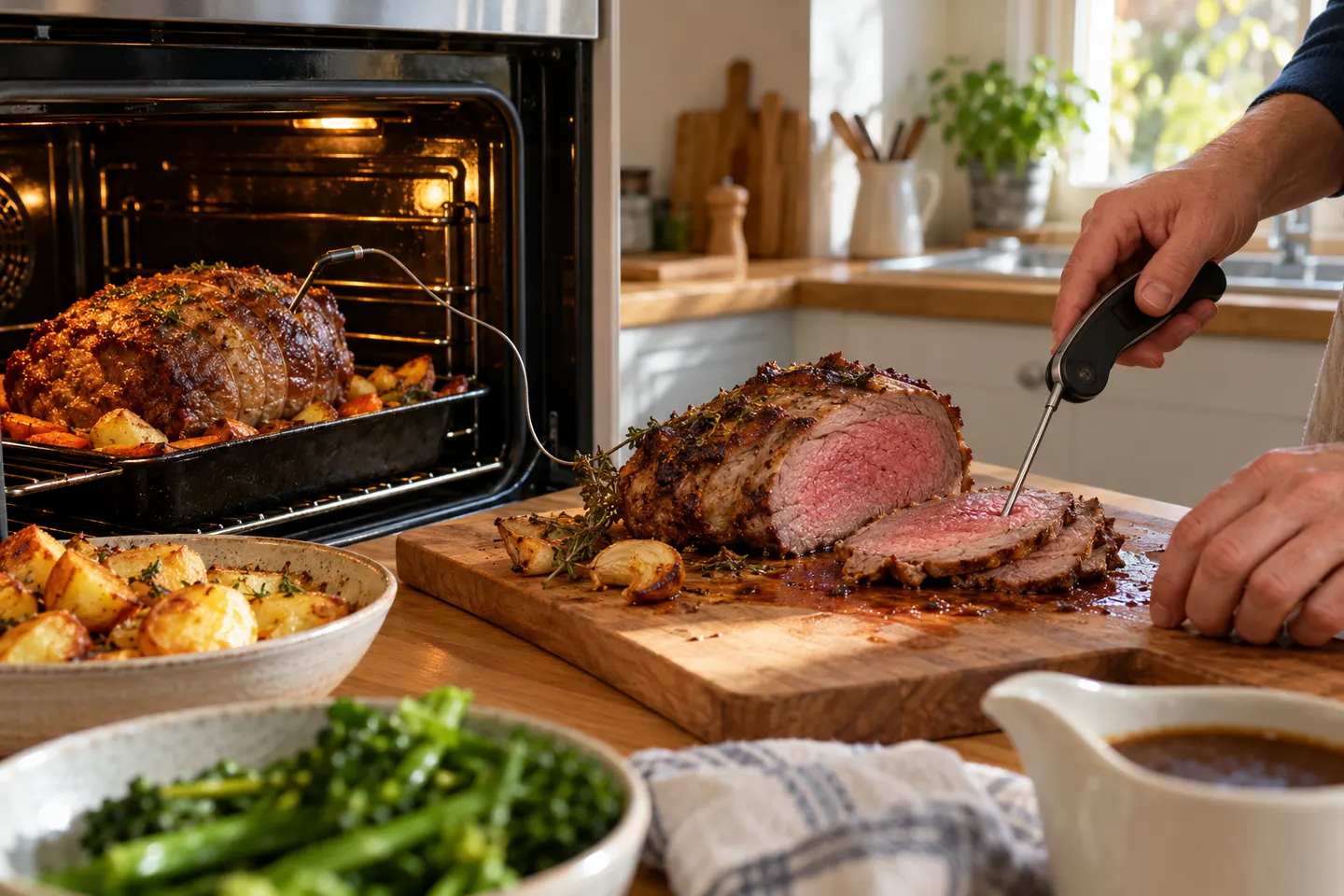
Insert the sensing area into the thickest part of the food, usually towards its centre, without touching bone, a tray or a large pocket of fat. Check more than one place when thickness varies. The Food Standards Agency advises using a clean thermometer and checking the meat itself rather than the bone. Clean and disinfect the probe between uses to reduce cross-contamination.
04
How long does a meat thermometer take?
Response time depends on the sensor, probe construction and contact with the food. A digital thermometer is ready when its display stabilises; an analogue dial probe may need longer. Do not assume that every digital body or cable is oven-safe: only leave a probe in the oven when its instructions expressly allow it.
05
Will a meat thermometer work for water, sweets or air?
It can measure water if the model's stated range and water-resistance instructions permit it and the sensing area is immersed without wetting an unsealed housing. Sugar work can exceed the range of a meat probe, so use one specifically rated for confectionery temperatures. A probe can react to air, but readings are often slow and easily distorted by radiant heat; an oven or ambient probe is the better tool.
06
Why a meat thermometer does not work properly
A flat battery, damaged cable, loose probe connection or temperature outside the instrument's range can cause a blank, implausible or error reading. “LLL” commonly signals a temperature below the model's measurable range or an unrecognised probe, but codes differ, so check that model's manual. If an ice-water check is clearly outside the maker's tolerance, recalibrate only as instructed or replace the thermometer.
07
How we researched this guide
We compared Food Standards Agency instructions for using and cleaning food probes with published explanations of thermistor, thermocouple and bimetal sensing. Model-specific limits, error codes and immersion rules should always be checked in the relevant manufacturer's manual.
Common questions
Questions before you buy
Will a meat thermometer work for water?
Usually, provided the required temperature is within its stated range. Immerse only the sensing area and follow the maker's water-resistance instructions; do not submerge an unsealed display or connector.
Will a meat thermometer work for candy?
Only if its specified range covers the temperature required by the recipe and its probe is suitable for the task. A dedicated sugar thermometer is generally easier to position safely in a pan.
How does a digital meat thermometer work?
Its probe contains a sensor whose electrical behaviour changes with temperature. The circuitry converts that change into the reading shown on the screen.
Will a meat thermometer work for air?
It may produce a reading, but a food penetration probe is not necessarily designed for accurate ambient-air measurement. Use a purpose-made oven or air probe for that job.
What does a meat thermometer look like?
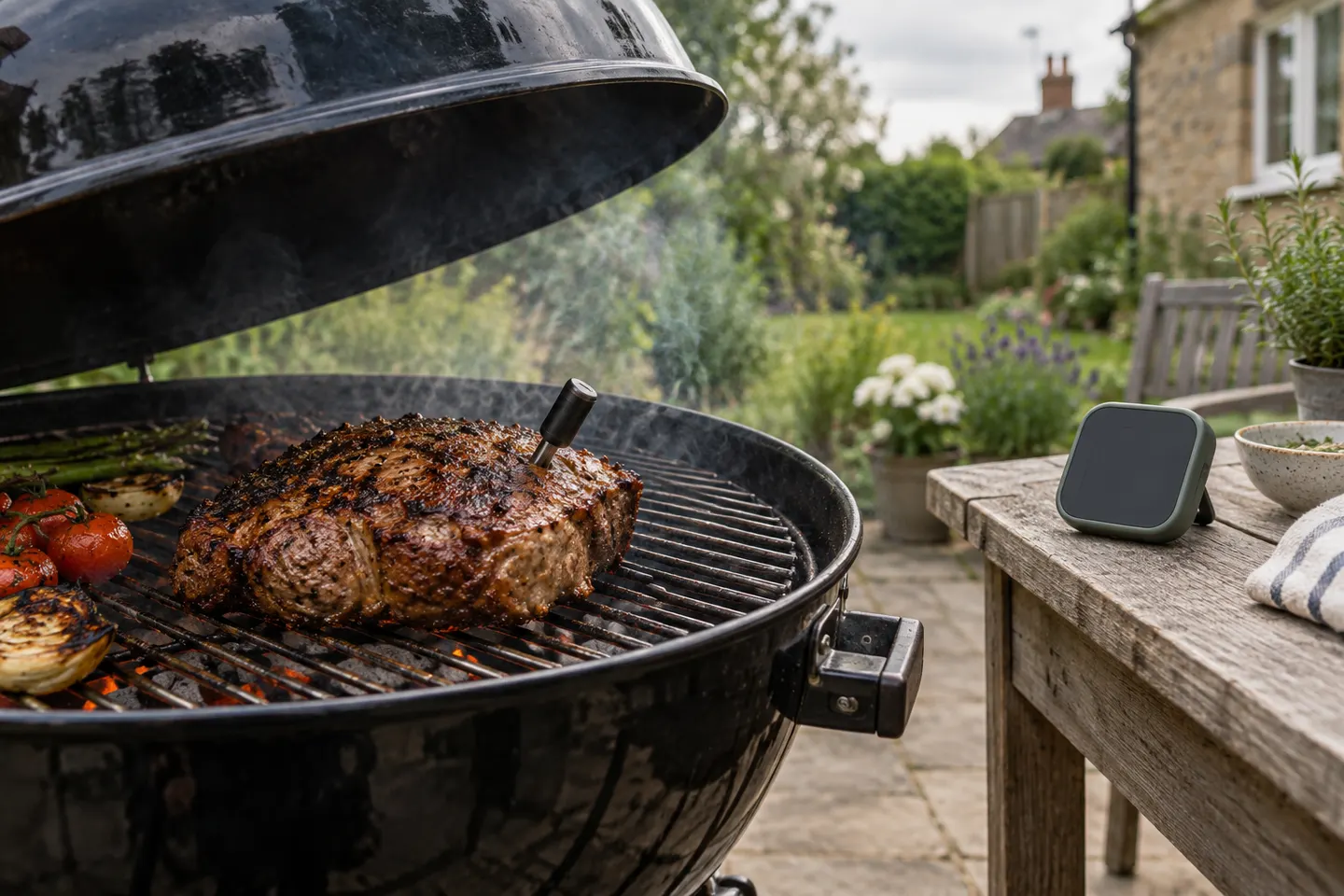
It normally has a pointed metal probe connected to either a digital display or a round dial. Leave-in and wireless systems may use a cable or transmitter between the probe and the readout.
What does LLL mean on a meat thermometer?
It often means the detected temperature is below the instrument's range, or that the base unit cannot read the probe. Meanings vary by model, so reconnect the probe and consult its manual before treating the code as a temperature.
How much does a meat thermometer cost?
Cost varies with sensor type, response speed, construction and wireless features. Compare the stated accuracy, usable range, probe design and warranty rather than choosing from cost alone.
How long does a meat thermometer take?
Wait until a digital display stops changing or for the period stated in the instructions. Dial probes often respond more slowly because a larger section of the stem must reach the food's temperature.
Does a food thermometer work for humans?
It is not a substitute for a clinical thermometer. Kitchen models are designed, shaped and validated for food use, so use an appropriate medical device for body temperature.
Can a cooking thermometer work for humans?
Do not rely on one for a health decision. Its range, accuracy specification, hygiene controls and probe shape are intended for cooking rather than clinical measurement.
Thermapen ONE is our top all-round pick for fast spot checks. ThermoPro TP19H is the simpler alternative, while DOT and MEATER Pro suit cooks who need continuous monitoring.
Choose a fully wire-free probe for rotisserie or closed-lid cooking, or a cabled probe with a remote receiver when signal reliability and replaceable probes matter most.
Pick a folding digital thermometer for rapid checks or a leave-in digital probe for alarms during a roast. Accuracy and sensing-tip placement matter more than extra presets.
An instant-read thermometer suits quick checks; a leave-in or wireless probe is better for tracking a roast without repeatedly opening the oven.
Your privacy
We use cookies and similar technologies. Necessary ones keep the site working. With your permission we also use statistics cookies (Google Analytics and Microsoft Clarity) to understand which guides help readers. You can accept all, reject all or choose. You can change your choice at any time from "Cookie settings" at the bottom of every page. Cookie policy