Gearjury may earn a commission when you buy through a retailer link. Editorial guidance is based on the sources cited below.
Guide
Where Do I Insert a Meat Thermometer in a Turkey?
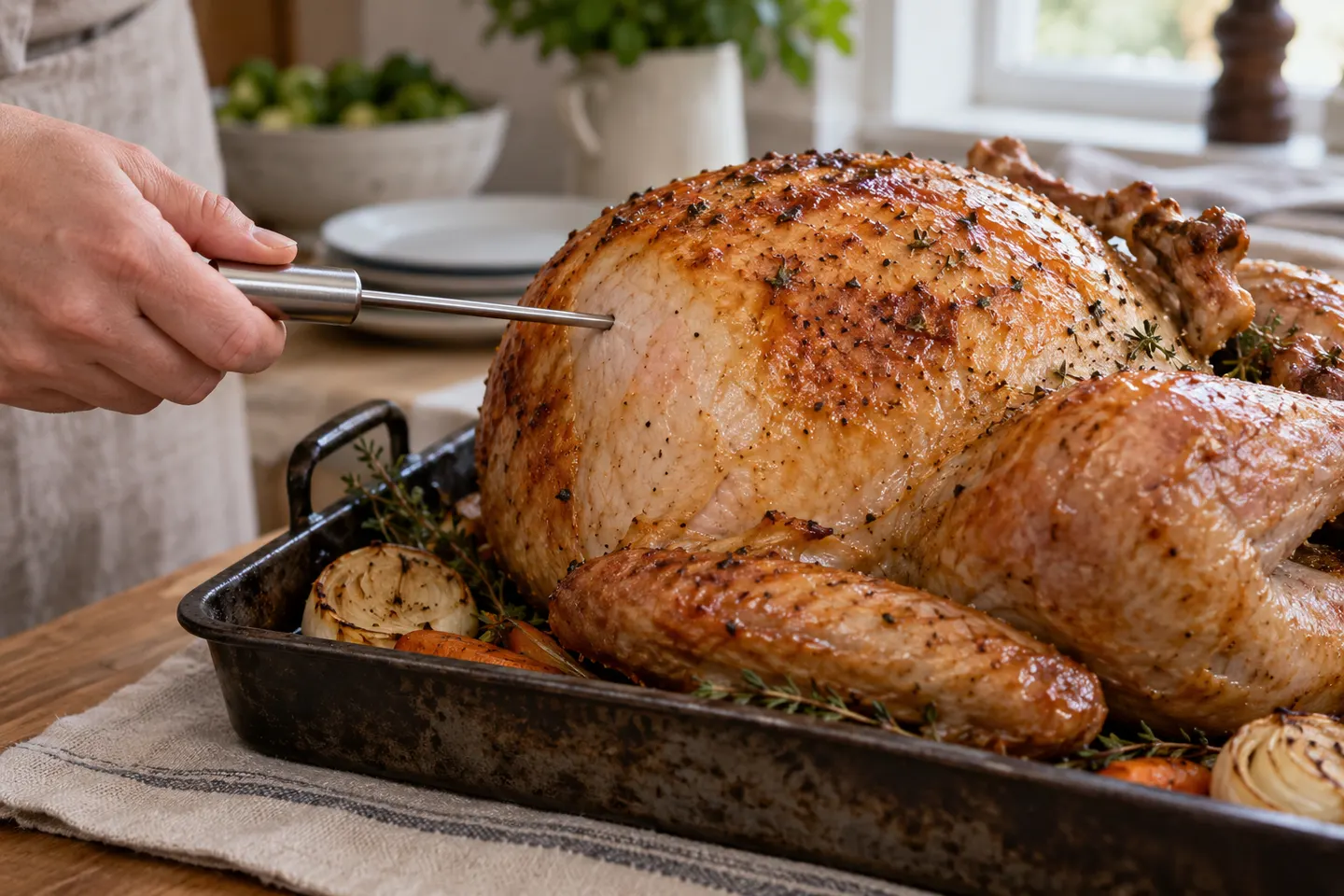
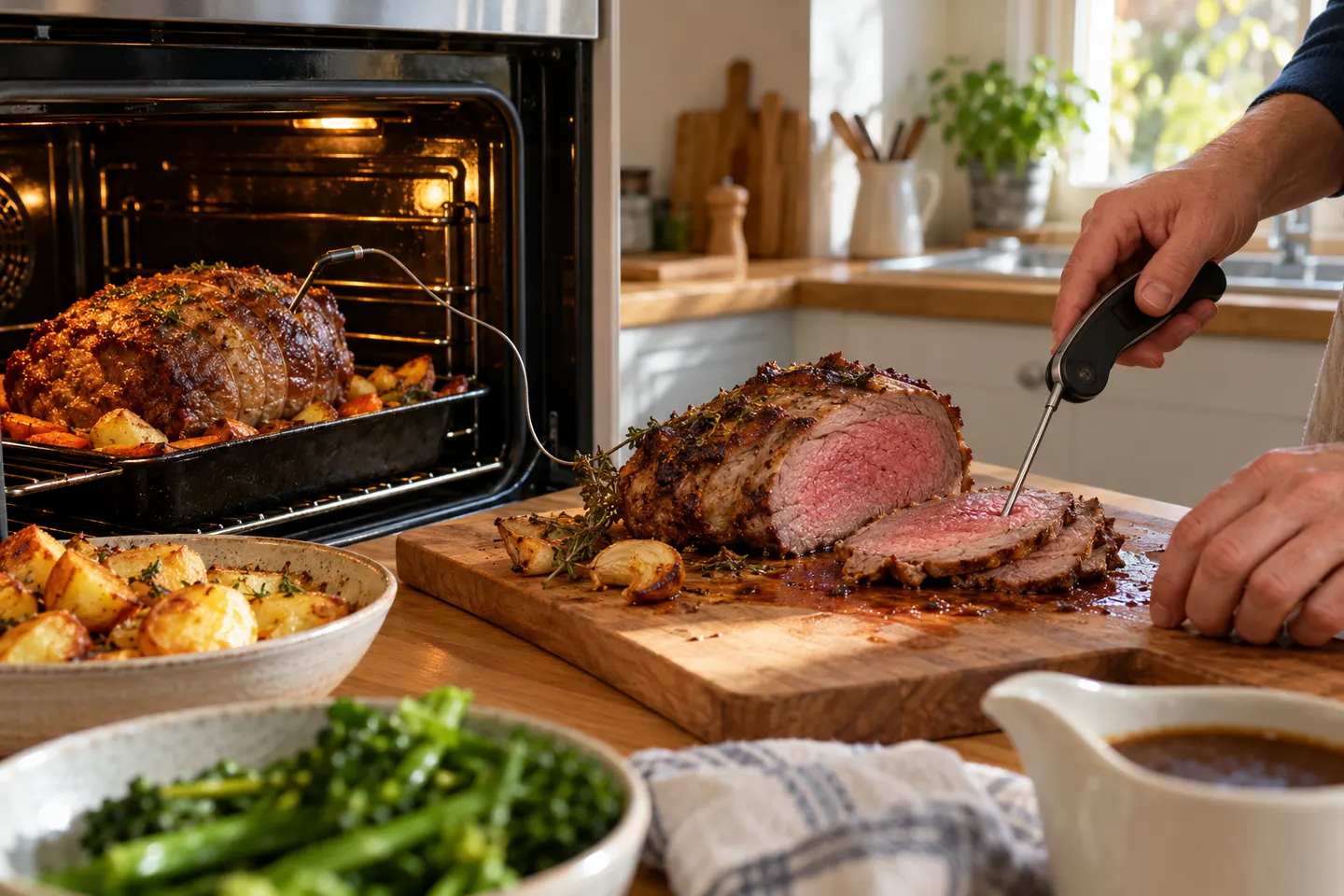
Insert the probe into the thickest part of the turkey, usually where the leg meets the breast, and keep the tip away from bone. Check more than one spot because a whole bird does not heat evenly.
GGearjury editorial team · Updated 15 October 2026· 4 min
01
How to insert a meat thermometer in turkey
Push the clean probe into the thickest area where the leg meets the breast. Aim for the centre of the meat, approach from the side if that gives better control, and stop before the tip reaches bone or the cavity.
02
Keep the sensing tip away from bone
Bone heats differently from the surrounding meat and can distort the reading. If the probe touches bone, withdraw it slightly and take a fresh reading in nearby flesh.
03
Check the breast and the inner thigh
One reading cannot represent the entire bird. Check the thickest breast area and the innermost thigh on both sides, using the lowest result to decide whether cooking needs to continue.
04
Use a safe time-and-temperature combination
The Food Standards Agency says the centre should reach 70°C for two minutes, or another approved equivalent such as 75°C for 30 seconds. Follow the turkey packaging and thermometer instructions as well.
05
Allow for stuffing and uneven thickness
Stuffing slows heat transfer and must be checked separately at its centre. Cooking it in a separate dish makes both the stuffing and the bird easier to assess; never assume the turkey is ready because the outside is browned.
06
Clean the probe between readings
Wash and disinfect the probe after contact with undercooked poultry and before inserting it again. This prevents raw juices from being carried into meat that has already reached a safe temperature.
Common questions
Questions before you buy
How to insert meat thermometer in turkey?
Insert the tip into the centre of the thickest meat where the leg meets the breast. Avoid bone and the cavity, then repeat the check in the breast and both inner thighs.
Should a meat thermometer touch the bone in a turkey?
No. Bone can give a misleading reading, so reposition the probe until its sensing area is surrounded by meat.
Do I check turkey temperature in the breast or thigh?
Check both. A whole turkey cooks unevenly, so take readings in the thickest breast and the innermost part of each thigh and act on the lowest reading.
What temperature should turkey reach in the UK?
The Food Standards Agency gives 70°C for two minutes as its standard advice and publishes equivalent time-and-temperature combinations. Measure at the centre or thickest part with a clean probe.
Where should I check the temperature of a stuffed turkey?
Check the turkey meat in several thick areas and measure the centre of the stuffing separately. The stuffing and the meat must each reach a safe combination of temperature and time.
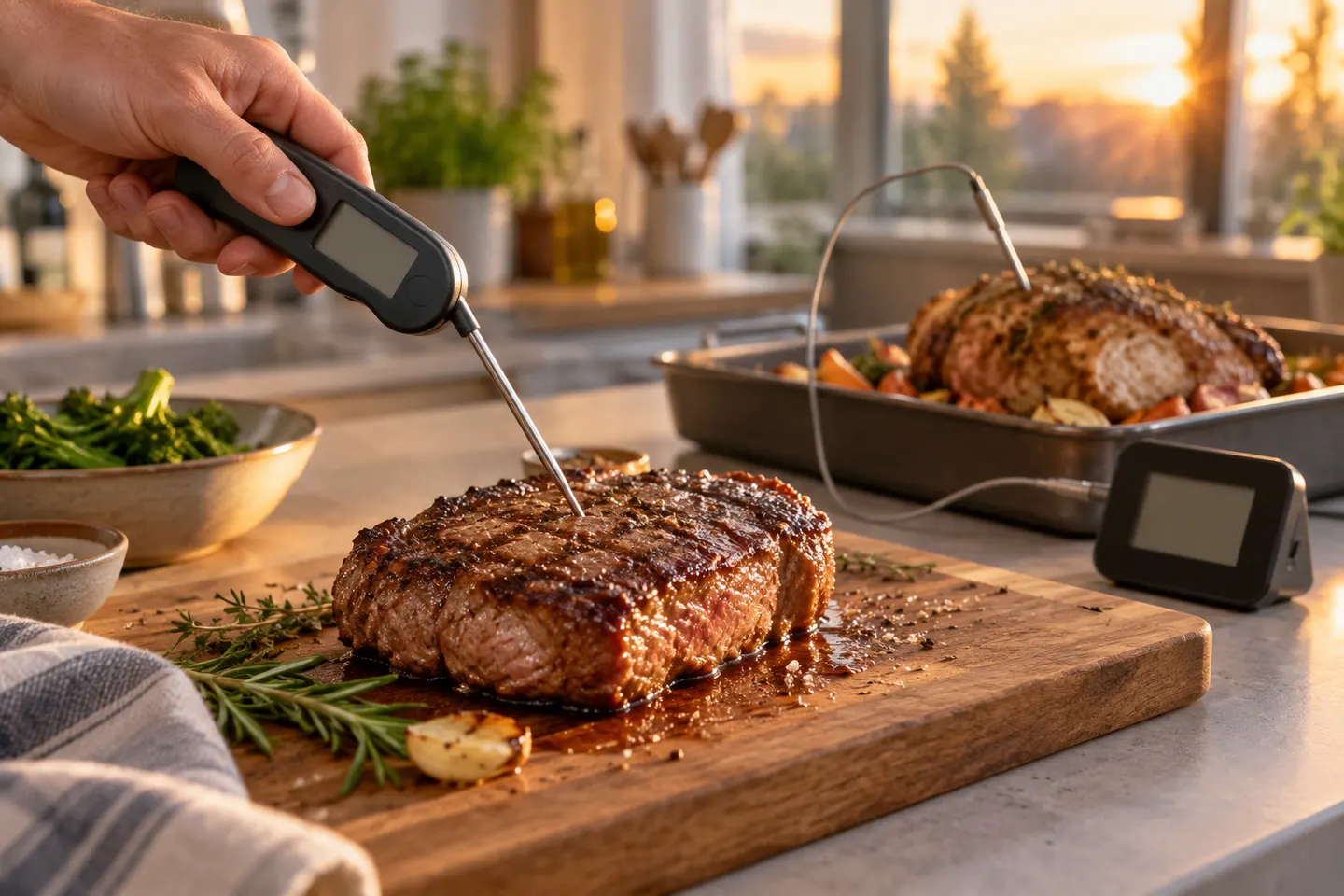
Thermapen ONE is our top all-round pick for fast spot checks. ThermoPro TP19H is the simpler alternative, while DOT and MEATER Pro suit cooks who need continuous monitoring.
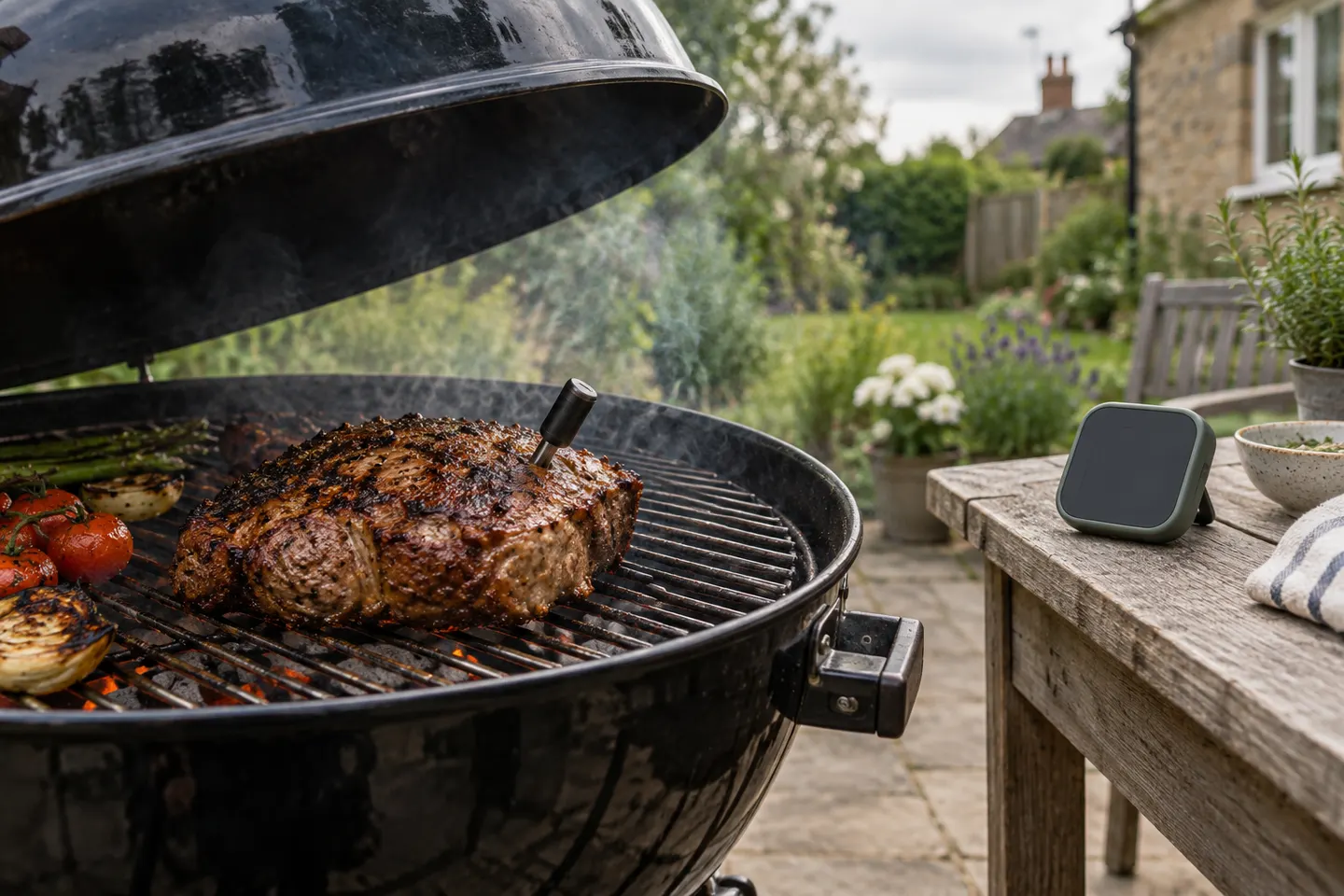
Choose a fully wire-free probe for rotisserie or closed-lid cooking, or a cabled probe with a remote receiver when signal reliability and replaceable probes matter most.
Pick a folding digital thermometer for rapid checks or a leave-in digital probe for alarms during a roast. Accuracy and sensing-tip placement matter more than extra presets.
An instant-read thermometer suits quick checks; a leave-in or wireless probe is better for tracking a roast without repeatedly opening the oven.
Your privacy
We use cookies and similar technologies. Necessary ones keep the site working. With your permission we also use statistics cookies (Google Analytics and Microsoft Clarity) to understand which guides help readers. You can accept all, reject all or choose. You can change your choice at any time from "Cookie settings" at the bottom of every page. Cookie policy