Where should a dash cam be mounted?
Choose a clean patch of windscreen high behind the mirror, inside the swept area of the wipers. Sit in the driving position first: neither camera nor cable should obstruct your view, sensors or mirror movement.

 Best picksBest Dash Cam in Australia: Five Models Compared
 Best picksBest Wi-Fi Extenders in Australia for Different Homes
 Best picksThe Best Meat Thermometer for Every Kind of Cook
 Best picksBest Headlamp Torches for Different Uses in 2026
 Best picksBest Portable Air Coolers to Consider in Australia (2026)
 Best picksBest Winter Gloves for Everyday Wear and Outdoor Use
 Best picksBest Cordless String Trimmers for Australian Gardens (2026)
 Best picksBest air purifier for bedroom in Australia: five models compared
Gearjury may earn a commission when you buy through a retailer link. Our editorial guidance remains independent.
Guide
Mount it high behind the rear-view mirror, keep the driver’s view clear and route the power lead away from airbags. Plug-in fitting is approachable; fuse-box wiring is best left to a qualified installer.
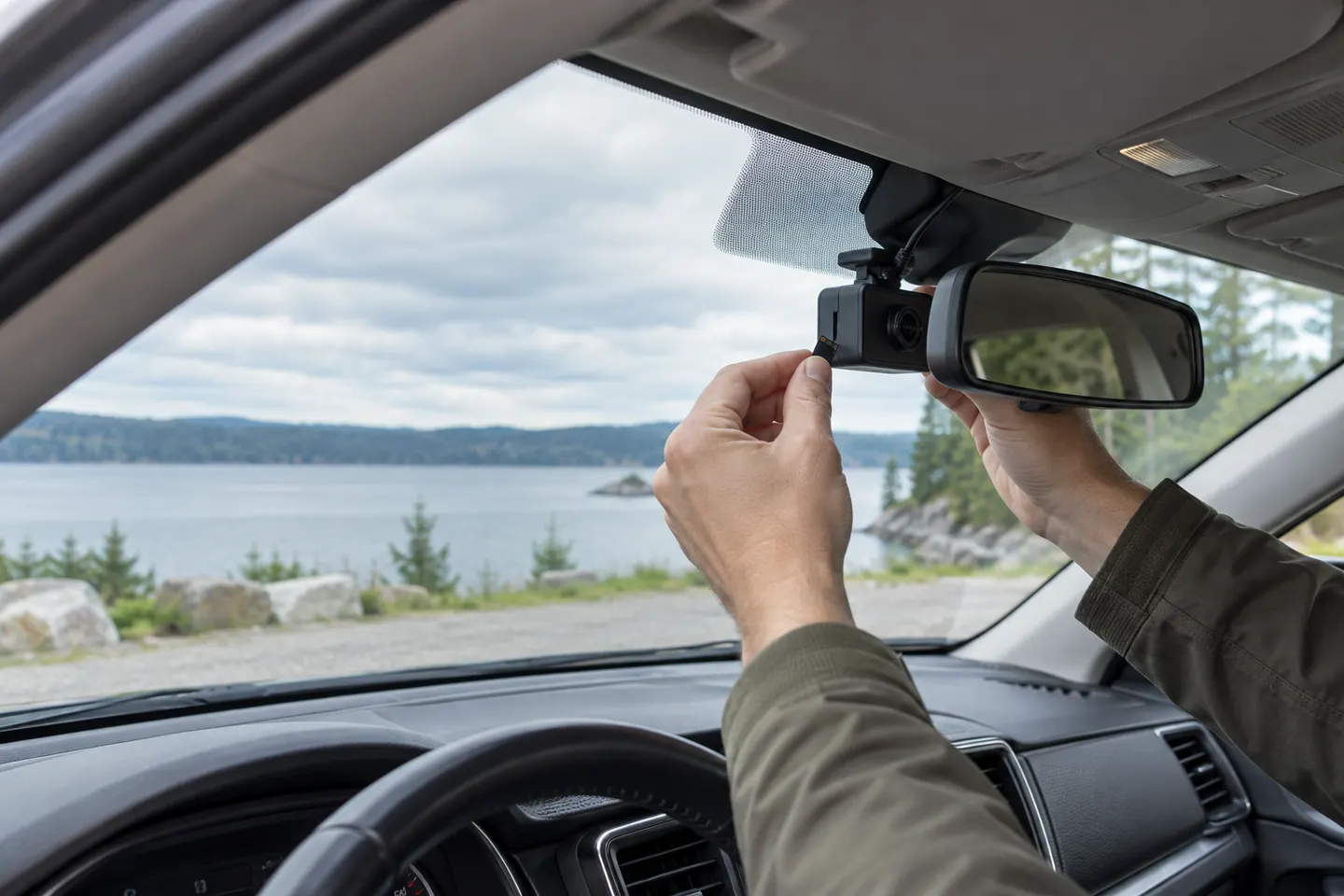
Choose a clean patch of windscreen high behind the mirror, inside the swept area of the wipers. Sit in the driving position first: neither camera nor cable should obstruct your view, sensors or mirror movement.
Switch off the car, clean and dry the glass, insert a compatible formatted memory card and confirm the mount orientation. Test the camera temporarily before pressing an adhesive pad into place.
Tuck the cable along the headlining and trim without forcing it across an airbag deployment path. Follow the vehicle manual around A-pillars; loose cable should be secured clear of pedals, steering and controls.
A supplied lead to a vehicle accessory socket is the simplest reversible option. Parking recording generally needs an approved constant-power cable or battery pack; fuse selection and low-voltage protection require vehicle-specific knowledge.
Place the rear unit where demister lines, trim and moving tailgates will not compromise its view or cable. Route the connecting lead beside existing trim, leaving enough slack at hinges and avoiding curtain airbags.
Start the vehicle, set date and time, frame more road than sky and make a short recording. Confirm both channels save playable files, GPS or app pairing works where fitted, and no warning light appears.
Common questions
Yes, a plug-in front camera can be a straightforward DIY job if you follow both vehicle and camera manuals. Hardwiring or routing near airbags warrants professional fitting.
Not for ordinary driving recording. Hardwiring is mainly used for a concealed cable and supported parking modes.
Use the vehicle maker’s documented route and never lay cable over an airbag. If the trim must be removed, ask a qualified installer.
Review a saved clip: the road ahead should dominate, the horizon should be level and the bonnet should occupy only a small part of the frame.
Keep exploring
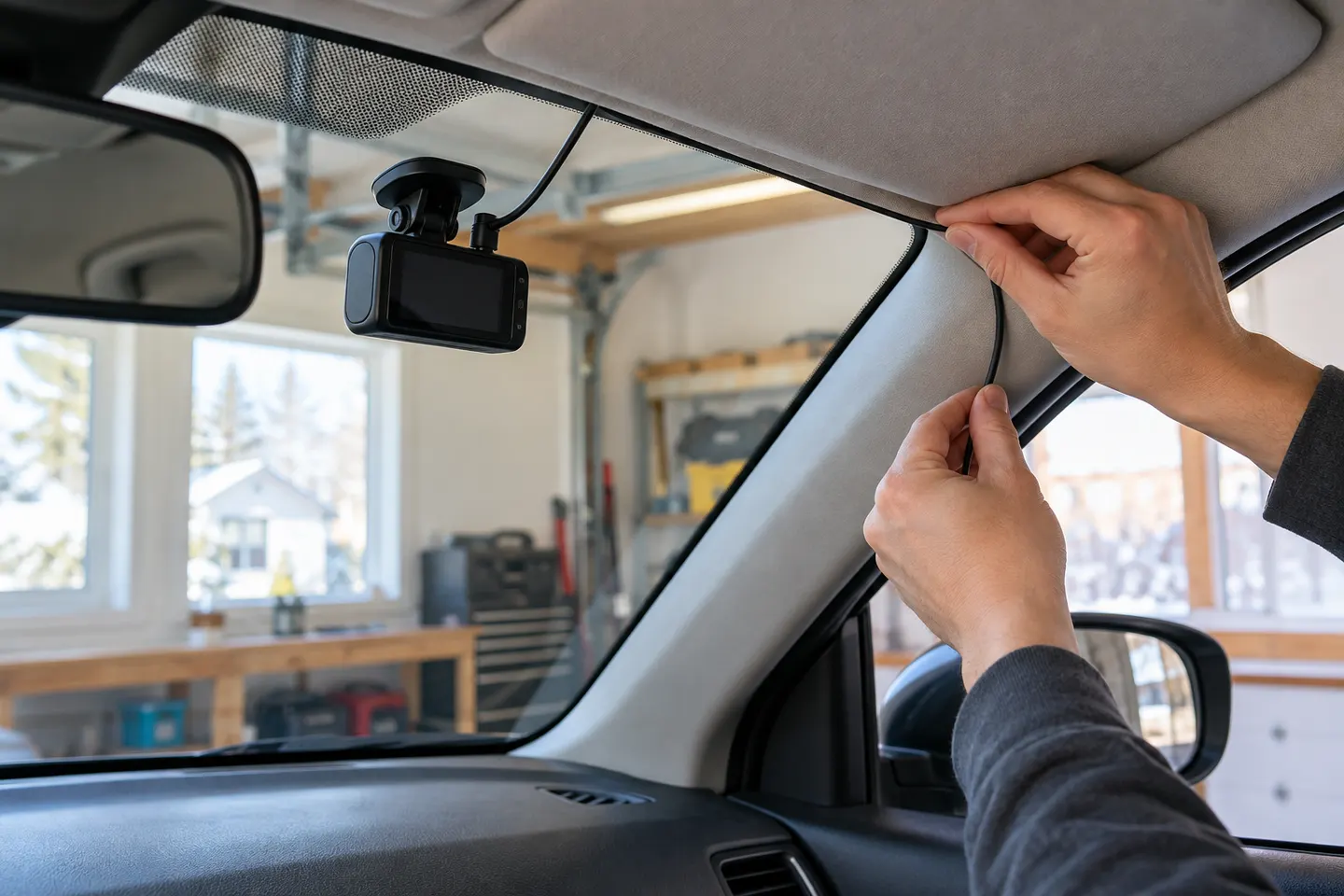
A plug-in installation suits basic driving recording; professional hardwiring is the safer route for neat cabling and parking mode. Keep every camera and cable clear of vision and airbags.
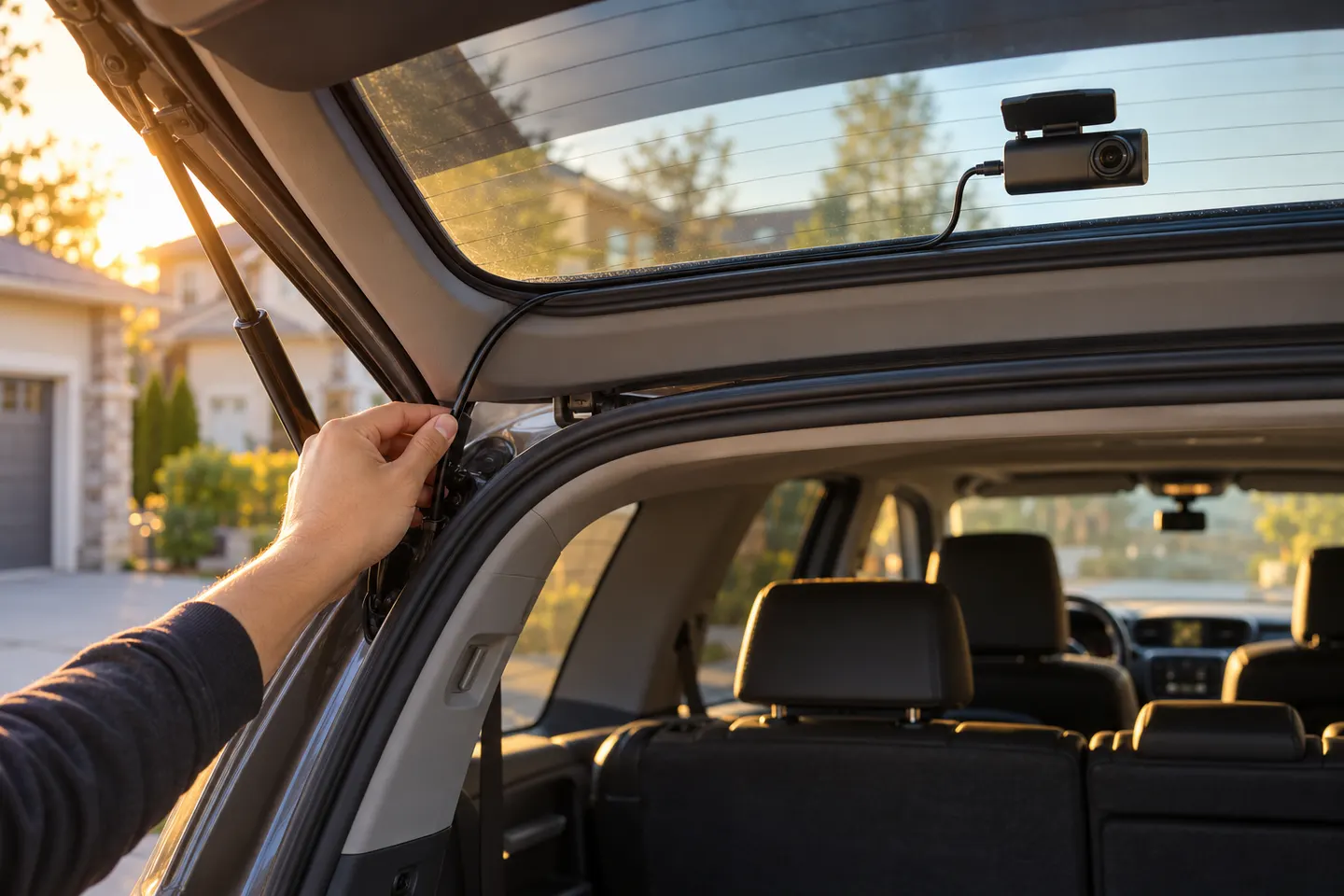
A two-channel system is the clearest choice when you want evidence from both directions. Prioritise rear-camera quality, cable length and an installation that keeps the driver's view clear.
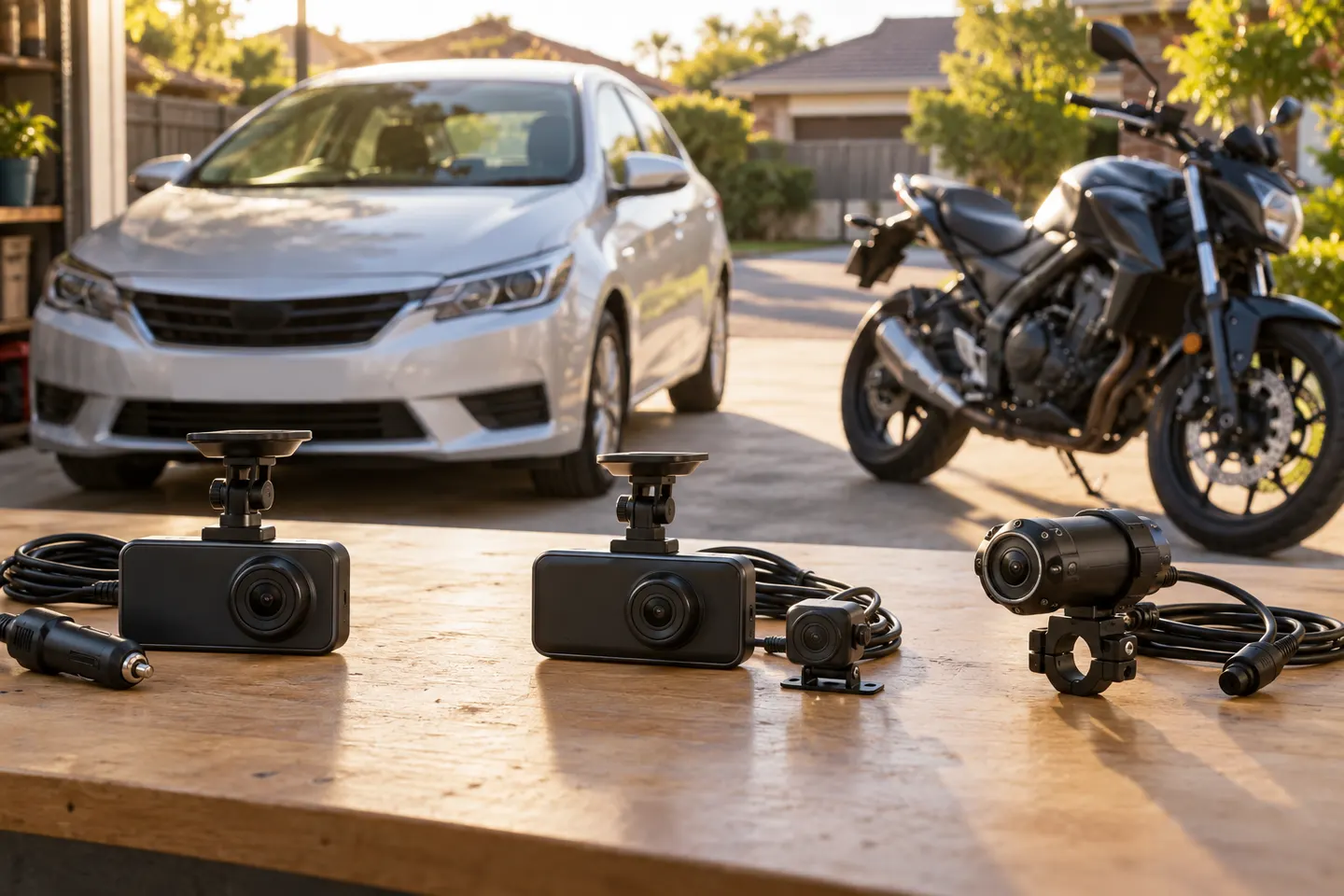
Start with the coverage you need: front-only for simplicity, front-rear for broader evidence, or a dedicated motorcycle system. Then decide how you will power it.